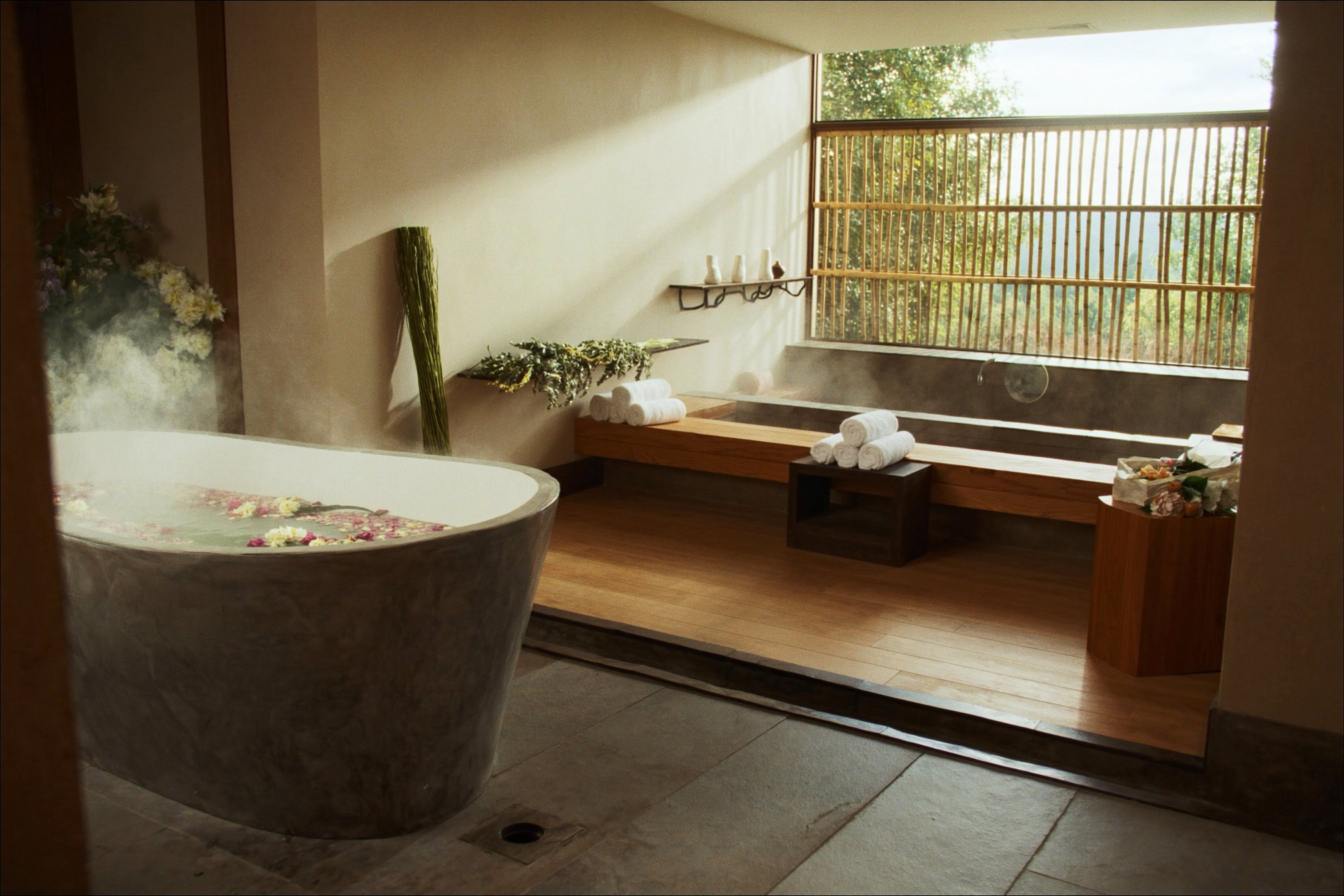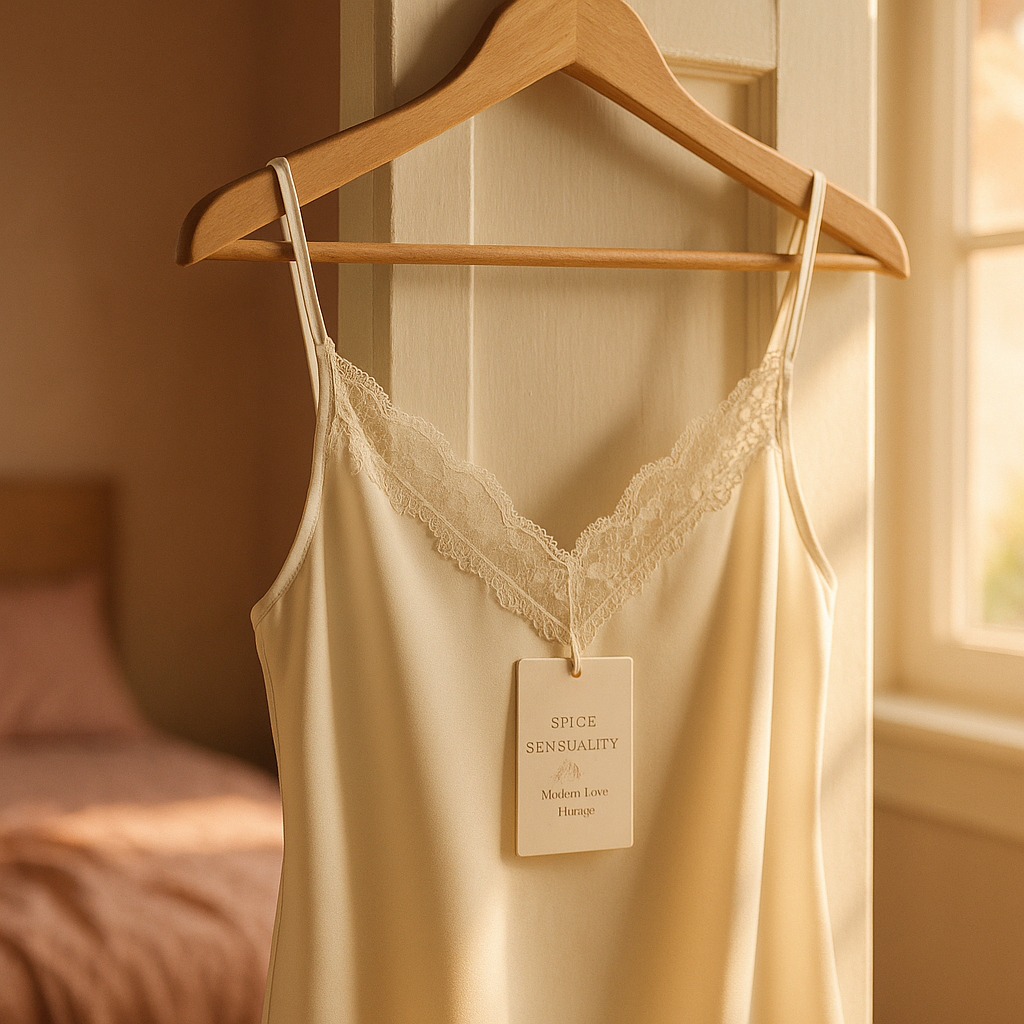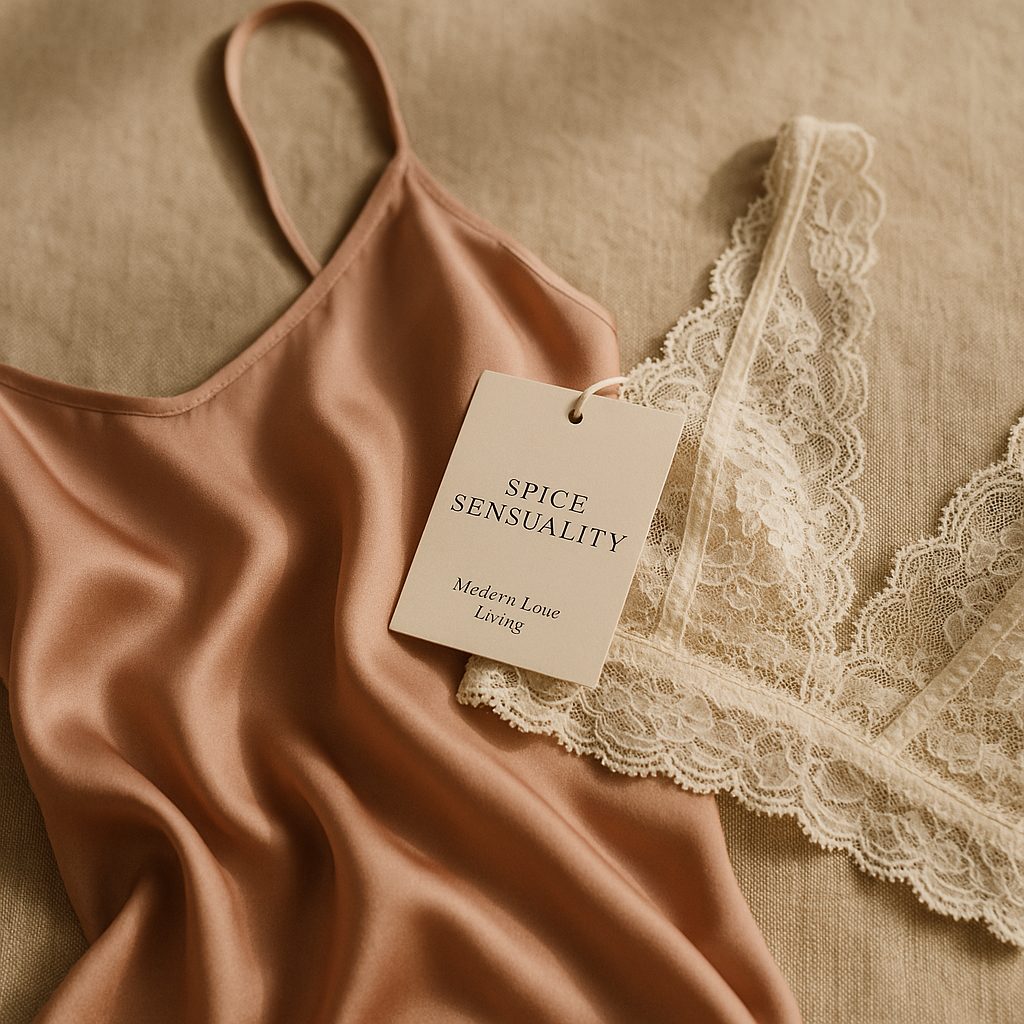
You bought it for a specific night. Maybe it worked, maybe it didn't. But at some point you stopped thinking of it as a prop for someone else's experience and started putting it on for no reason at all. Tuesday morning. Nobody home. Just you, the weight of good fabric, and the particular way it makes you hold your body differently.
That shift is worth paying attention to.
What the Reframe Actually Is
Most intimate dressing gets framed around an audience. You buy the thing for a person, or an occasion, or a version of yourself someone else gets to see. That's not wrong. But it's incomplete.
When you wear something with no one watching, the sensory experience becomes entirely yours to absorb. The stretch of silk across your collarbone. The weight of a robe that's slightly too heavy for the season. The specific way underwire sits when you're upright and moving through your own kitchen. These aren't things anyone else registers. They land in your body.
That's a different kind of pleasure. Not better or worse than the shared version. Just its own thing entirely.
Why the 'For Someone Else' Origin Story Matters Less Than You Think
There's a guilt that can creep in. Like wearing it alone is a consolation prize, or a sad workaround, or evidence of something missing. It isn't.
The origin story of an object doesn't own the object forever. You bought it motivated by one thing. You use it for another. That's just how objects work when they're good. The olive oil you bought for a dinner party that you now put on everything. The playlist that started as road trip music that you now listen to alone at 6 a.m.
What Your Nervous System Is Actually Doing
Texture and compression have a direct line to your nervous system. This isn't metaphor. The weight of fabric, the friction of lace, the warmth that builds under a structured garment — your body reads all of it before your brain assigns meaning.
When you put on something intimate and go about your morning, you're not performing anything. You're giving your body a different set of physical inputs. The output is subtle: slightly more aware of your own shape, slightly more present in your skin, a low-grade attentiveness that changes nothing and somehow changes everything.
Some people call this self-care. That's not quite it. It's more animal than that. It's just: sensation, received.
The Specific Scenarios Worth Naming
The morning after they leave
Partner traveled out of town. You make coffee in the thing you wore last night and don't change. This is not sad. This is reclaiming the frequency. You stay in it because the warmth is yours now, not because you're waiting for anything.
The slow Sunday with no plan
No occasion, no destination. You open the drawer and the slip is right there. You put it on under your robe. You read, you eat something good, you maybe open a window and feel the temperature difference between the room and the outside air. The slip is doing nothing except reminding you that your skin exists.
The act of trying something on that's still unworn
Maybe you bought it and the relationship ended before the occasion arrived. You've had it for a year. You finally put it on, alone, in your bathroom with the door closed. You look. You feel it. You take it off. That's the whole event, and it's complete.
The Mirror Question
There's a version of this practice that involves a mirror and a version that doesn't. Neither is more valid.
Looking at yourself in something that was designed for intimacy is its own specific skill — one that gets easier the more you do it without judgment attached. The piece over at Lingerie for the Mirror goes deeper into that particular territory. But you don't have to go there to start.
Some people find the private wearing practice is most alive when they're not looking at themselves at all. Moving through a room, feeling the hem against their thighs, that's the whole experience. No visual confirmation required.
Does This Change What You Buy?
Yes. Once you're shopping partly for yourself as the audience, your criteria shift.
You start caring about how it feels to move in. Not just how it looks standing still. You think about weight, about the sensation of a seam against skin, about whether the fabric breathes or holds heat. You start buying fewer things and wearing them more.
The Field Guide: Shopping Intimacy with Intention covers the mechanics of that shift. The short version: when you stop buying purely for performance, you end up with a drawer that actually gets opened.
The most-worn piece in most people's intimate wardrobe isn't the showstopper. It's the thing that felt like nothing when they bought it and turned out to feel like everything when they actually lived in it.
— MLL
What This Has to Do With Desire (If You Want to Go There)
Private sensory practice isn't foreplay for something else. But it does keep a kind of pilot light on. When you stay physically attuned to your own body — aware of how your skin responds to texture, heat, the specific drag of fabric — you don't drift as far from your own desire as you might otherwise.
The Horniness-Stress Inversion article talks about how stress doesn't kill desire cleanly: it reroutes it, buries it, makes it unfamiliar. The private wearing practice is one quiet way to keep the signal clear. Not aggressively. Just: maintenance.
And if it connects to solo wellness in a more direct way, that's its own complete circuit too. The Toy Drawer, Demystified is there if you want that thread.
The Permission You Don't Actually Need
Nobody is going to tell you that you're allowed to wear the thing you bought for your ex, alone, on a Thursday, while you drink tea and look out a window. But apparently some of us need to hear it.
You're allowed.
The occasion was always you. You just didn't know that when you bought it.