Most of what we put on our bodies has an audience. Even when we say it doesn't.
The oversized tee you sleep in — that's comfort performing for no one, sure. But the lace set you bought last February? That had a face in mind when you clicked add to cart. The silky robe you keep folded on the bathroom hook? Somewhere in that choice is a version of yourself you want someone else to see.
There's nothing wrong with that. Desire is relational. But there's an entire category of dressing most of us have never actually tried: choosing something for the sheer physical fact of wearing it. Not how it photographs. Not what it signals. Just how it feels when it lands on your skin and you close the door.
The Difference Between Dressing Sexy and Dressing for Desire
Dressing sexy is outward-facing. It has a grammar: show this, suggest that, frame the parts that read well in a glance. It's a conversation you're having with someone else, even if they're not in the room yet.
Dressing for your own desire is different. It's not about what reads. It's about what lands — the weight of a thick robe across your shoulders, the cool drag of satin down your thighs, fabric that sits on your skin like it has an opinion about you.
One is a performance. The other is a physical conversation you're having with your own body. Those are not the same thing, and most people have only ever had one of them.
What Your Body Actually Responds To
This requires paying attention in a way we're not really trained to do. We've been taught to evaluate clothing from the outside in: the mirror, the photo, the compliment. Dressing for your own desire asks you to evaluate from the inside out.
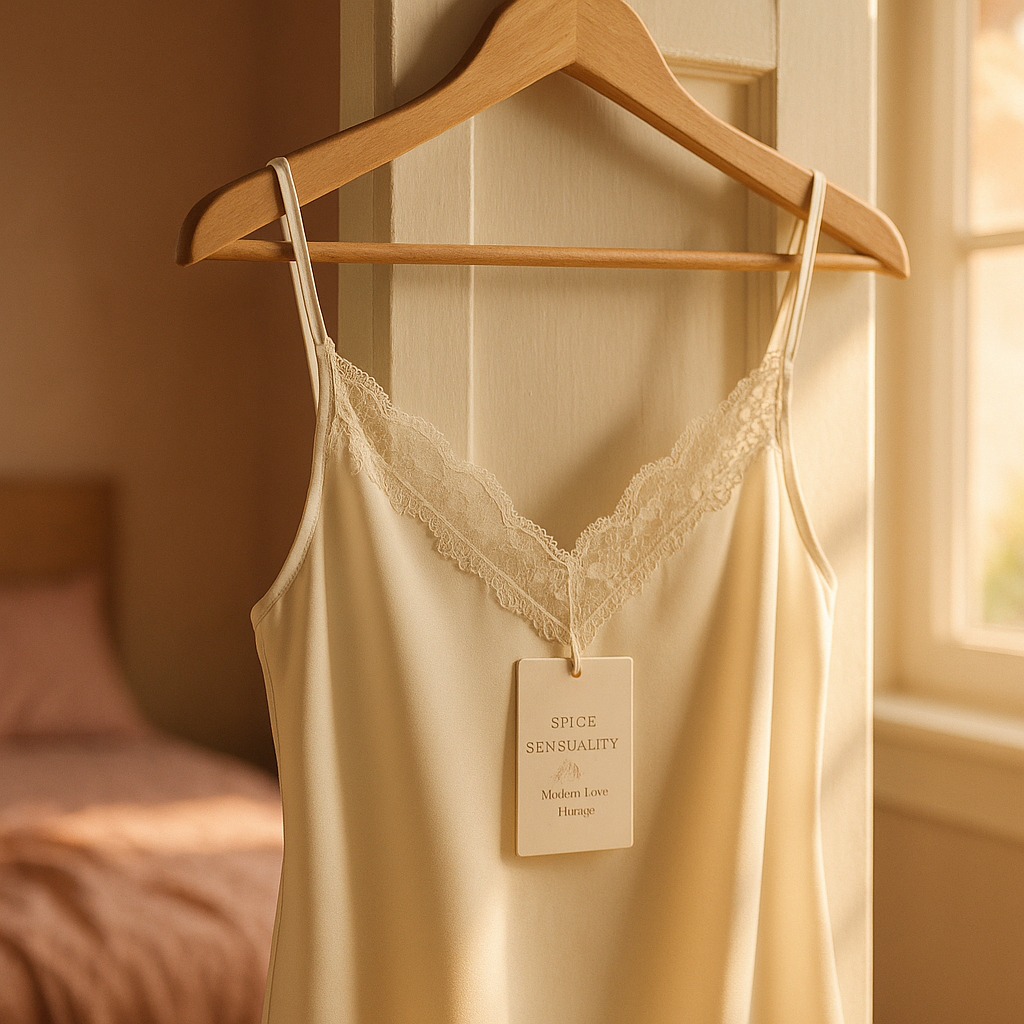
Some bodies wake up in structure. A fitted slip, something with a defined waist, fabric that holds rather than drapes. The containment feels like being held, and that maps onto arousal in a specific, grounded way.
Other bodies want release. The oversized silk shirt that grazes your hips when you move. The robe that's almost too heavy, worn over nothing. The sensation of warmth pooling where the fabric gathers.
Neither is a statement about what you want from a partner. Neither is a personality. It's just feedback from your nervous system, if you're quiet enough to hear it.
The Ritual Part
Here's a specific scenario. You've had a long week. Not tragic, just dense. You come home Thursday evening, pour a glass of something cold, and take a shower long enough to actually feel like a different person on the other side.
Now: what do you put on? Not for dinner, not for someone coming over. For the next two hours alone in your apartment or house or bedroom.
Most people reach for the familiar default — the soft shorts, the worn-in shirt. And sometimes that's exactly right. But sometimes the default is just avoidance. A way of not making a choice about your body at all.
Choosing something intentionally for those two hours is a small act with a disproportionate return. Not because the garment is magic, but because the choosing is a signal: my body is worth attending to tonight, even when no one is watching.
Self-desire isn't a spa concept. It's just the decision to be present in your own skin before you're asked to be present for someone else's.
— Modern Love Living
Why the Mirror Keeps Getting in the Way
The mirror is not neutral. The second you look at yourself in something, you've introduced an audience: you, watching yourself, through the inherited lens of every other audience you've ever dressed for.
This is why dressing for your own desire sometimes means deliberately skipping the mirror. Put something on and feel it before you look at it. Walk around. Sit down. Notice what your body does. The evaluation comes from inside the garment, not outside it.
This sounds simple. It's actually hard. Body confidence isn't a before photo, and it's not something you arrive at by thinking your way through it. It's something that accumulates in small sensory moments like this one.
What This Has to Do with Desire (The Real Kind)
Sexual desire in a long relationship often goes quiet not because people stop wanting each other, but because they stop wanting themselves. Not dramatically. Just gradually: the body becomes a machine for getting through the day, and somewhere in the commute and the calendar and the dinner dishes, the fact that you live inside a physical self that can feel things gets quietly shelved.
Dressing for your own desire is one of the smallest possible ways back. Not because silk is an aphrodisiac. But because it interrupts the pattern of treating your body as utilitarian. It reintroduces your nervous system to the idea that sensation is available.
And when sensation is available to you, you bring that somewhere. Into how you touch someone. Into how you ask for what you want. Into whether you actually want what you'd been performing wanting.
A Few Things Worth Trying
The one-garment experiment. Buy or pull out one piece of lingerie, loungewear, or any garment that has no practical purpose except feeling deliberate on your body. Wear it alone for an hour with no destination. No plans, no audience.
The texture question. Before you reach for your default, ask: what does my body actually want to feel tonight? Weight or lightness. Warmth or cool. Structure or release. Let the answer direct the choice.
The mirror pause. Put something on before you look. Walk, sit, stretch. Check in with your body's response first. Then look if you want to. The order matters.
The separation from occasion. Stop saving the nice things for when someone's there to see them. The silk slip is for a Tuesday evening with a book. The weighted robe is for Sunday morning coffee. The point isn't the witness. The point is you.
The Larger Thing This Points To
This isn't really about clothes. It's about the question underneath: when did you last do something purely because your body responds to it? Not because it performs wellness or projects confidence or signals to a partner that you're in the mood.
Just because you felt it, wanted it, and gave it to yourself without needing a reason.
That's the practice. The fabric is just how you start.