You've washed your face. You're not expecting anyone. The night belongs entirely to you — and you're standing in your closet reaching for the same oversized thing you've worn so many times it no longer has a color.
That's not a problem to fix. But it's worth noticing.
Because what you wear when no one is watching isn't neutral. It's actually one of the more honest signals your life sends about how much room you're giving yourself.
The Performance vs. the Private
Most of us have two wardrobes operating at once. The one we curate for exits into the world — and the one we collapse into the moment the door closes.
The collapse wardrobe is usually functional. Sometimes it's punishing. Ratty elastic, stretched fabric, things kept out of habit rather than comfort. We tell ourselves it doesn't matter because no one sees it.
But you see it. You feel it. Against your skin, for hours, on the nights that are just yours.
The clothes you wear alone aren't the absence of dressing. They're the truest version of it.
— Modern Love Living
Intimate dressing — not lingerie-for-a-night, not occasion dressing — is the category nobody really names. It's the robe you pull off the hook at 9 PM. The slip you'd wear if you trusted yourself to just wear a slip. The soft waistband, the right weight of cotton, the fabric that doesn't ask anything of your body.
Texture Is the Point
There's a reason certain things feel like exhaling. Texture is the most direct line from the outside world back into your own body.
Brushed cotton against your lower back. The cool drag of satin across your shoulder. A knit that's just heavy enough to feel like something without trapping heat. These aren't luxuries. They're inputs your nervous system is actually processing all night.
What most people call comfort is really just absence of irritation. What actual comfort feels like is presence — fabric you're aware of because it feels good, not because it's pulling or bunching or reminding you it's there in the wrong way.
The Robe Problem
The robe has become a joke. A punchline for domesticity, for letting yourself go, for not trying anymore.
Which is a shame. Because a genuinely good robe — weighted, warm, long enough — is one of the most body-affirming things you can own. It's also one of the clearest markers of whether someone is tending to themselves or just surviving their evenings.
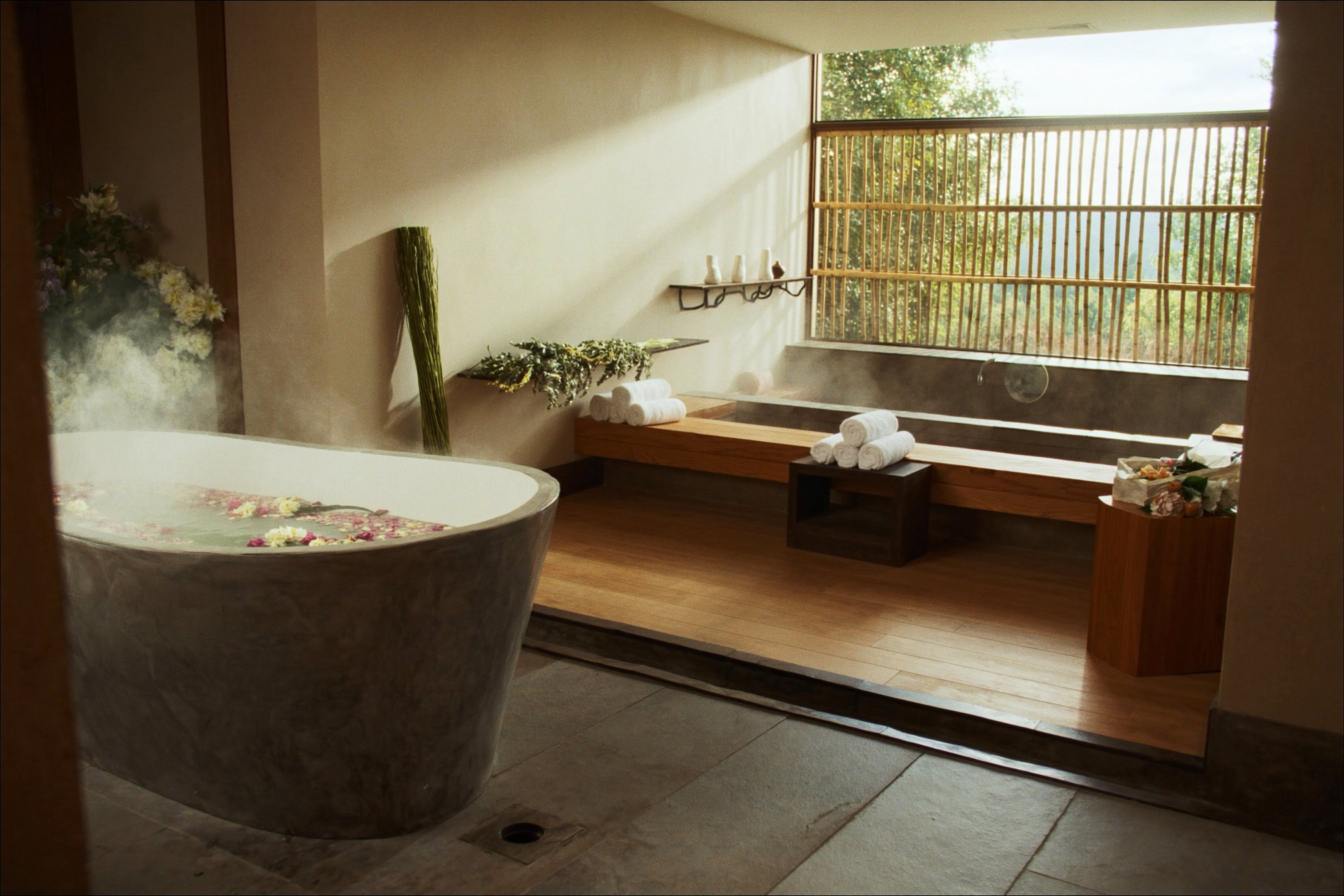
The waffle robes at Solage. The heavyweight terry ones that Indian Springs stocks in every room. You put one of those on and something in your posture actually changes. You're not performing relaxation. You're in it.
The robe you actually want exists at a different price point than the one you've been tolerating. That gap is worth examining.
Lingerie Isn't Just for Someone Else
Here's where people get tripped up. The idea that lingerie requires an occasion, an audience, a reason. That it's automatically performative — something you wear for someone.
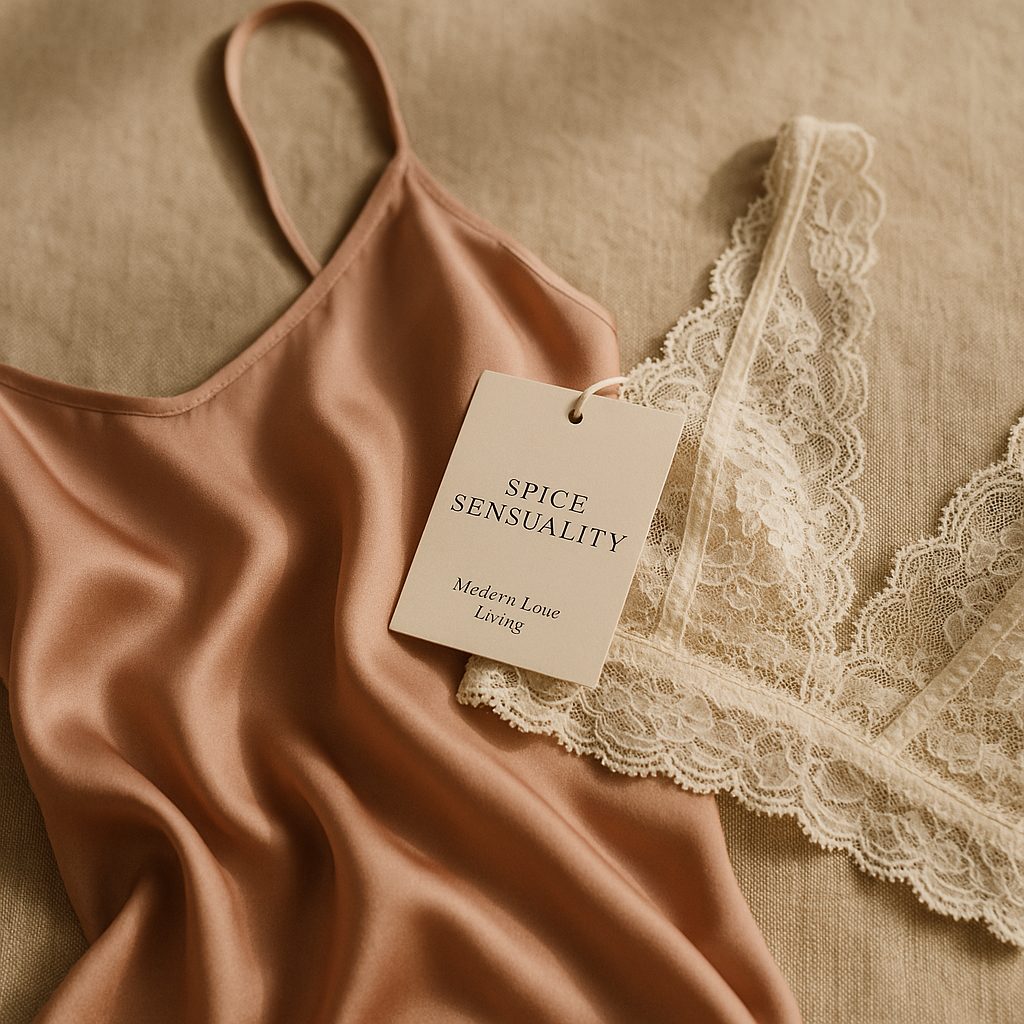
But a silk slip worn alone on a Thursday, with a glass of whatever you opened last weekend — that's not performance. That's contact. You wearing something that touches your body as if your body deserves that.
The mirror isn't judgment. It's data. What you see in something that actually fits and feels deliberate is a version of yourself that already exists; you're just giving it room to show up.
There's a whole piece to be written about this — the distinction between dressing for the mirror and being seen by it. (See: Lingerie for the Mirror.)
What an Ordinary Night Actually Calls For
Not an occasion. Not a partner. Just: it's 8:45 PM, the dishes are done, you have two hours of actual quiet.
What do you reach for? Be honest. Not what you think you should reach for — what you actually grab.
For a lot of people, that grab happens on autopilot. The same shorts that have been in the rotation since a relationship ended. The t-shirt with the faded graphic that stopped meaning anything years ago. Comfort through familiarity. Fine. But also: a kind of sleepwalk.
The small upgrade isn't about spending more. It's about one deliberate choice. A real fabric. A waistband that doesn't dig. Something that when you catch your reflection in the bathroom doesn't make you look away.
Sensory Real Estate
You're in your body for every hour of every evening. That's a lot of sensory real estate to abandon to whatever's on the floor.
Skin-facing fabric matters the same way your sheets matter, the same way room temperature matters, the same way the weight of a good duvet matters. These aren't indulgences. They're the texture of your actual life.
If you've spent time thinking about your skincare routine — the oil you press in, the specific order of things — you already understand the logic. Touch applied to skin, intentionally, returns you to yourself. Clothing is just touch that lasts all night.
A Few Specific Things Worth Having
A robe with actual weight. Waffle-knit or heavyweight terry. Long enough. Something you consciously choose to put on rather than defaulting to.
One silk or satin slip. Not for anyone. Just for the way it feels when you move through your own apartment at night. The cool, the quiet slide of it. That's the whole point.
Soft waistbands that don't negotiate with your body all evening. Wide-band cotton, Modal, anything that sits at the hip without reminding you it exists every twenty minutes.
Socks, actually. Cold feet kill presence. Warm feet at the end of a long day is one of the smallest and most underrated sensory returns on earth.
The Real Question
What does it say about how you're treating yourself that the clothes you wear in your most private hours are the ones you've thought least about?
Not a judgment. A genuine question.
The version of you who puts on something that feels deliberate, even alone — that version trusts that the night is worth showing up for. That your body is worth the friction of a small, real choice.
You don't have to perform anything. You don't need a reason or an audience. You just have to decide, once, that ordinary evenings count.
They do. You already know they do.