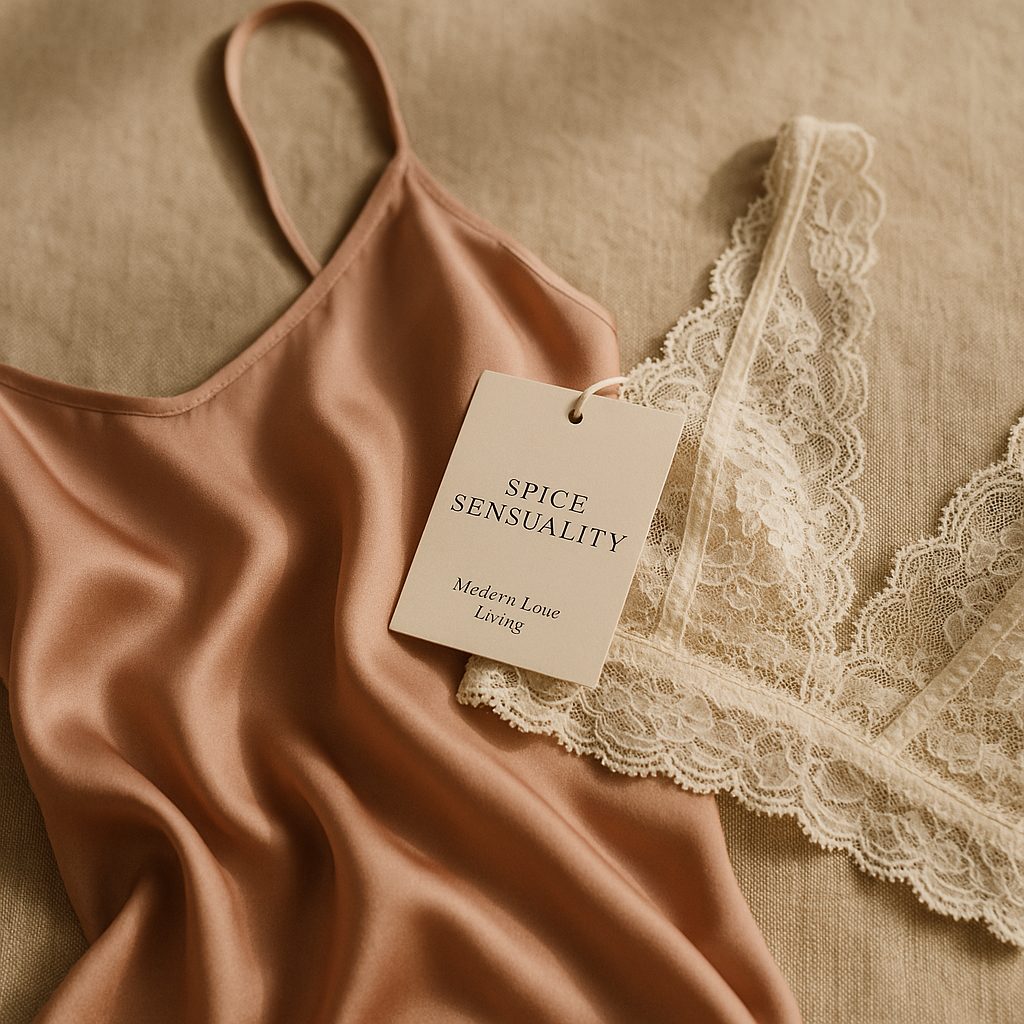
There's a slip in your drawer you bought for a specific version of yourself. You know the one. It was on sale, or it was a gift, or you tried it on in good lighting and thought: yes, that's the person I'm becoming. It has been in that drawer for eight months. You've worn it twice.
This is not a failure of discipline. It's a failure of wardrobe logic. We shop for bodies that are aspirational, or rested, or a different size, or a different mood. Then we stand in front of our actual bodies — on an actual Thursday, with actual bloat and a stiff lower back — and nothing fits the moment.
The intimate wardrobe is the most personal wardrobe you own. It should be the most honest. It almost never is.
The Problem With Shopping for Your Best Day
Most people build an intimate wardrobe around peaks. The date night. The anniversary. The version of yourself after three days of decent sleep and a workout that actually happened.
That's a capsule wardrobe for a fantasy life. Real intimacy — the kind that happens in actual bedrooms, on actual schedules, with actual bodies — doesn't wait for peaks.
It happens on the Tuesday you're tired and still interested. The Sunday you feel softer than usual and want something that holds you instead of showcasing you. The morning after eleven years together when the stakes are low and the warmth is high. That's when your wardrobe either works or it doesn't.
Your Body Has Moods. Your Wardrobe Should Too.
Some days you want to be seen. Some days you want to feel held. Some days you want something that disappears the moment it's touched. These are different physical states, and they call for different things.
The showcasing day. You feel good. You want your body acknowledged. This is when the structured bra and the cut-out bodysuit earn their place. The point isn't revealing — it's deliberate. You dressed for this.
The held day. You're bloated, or tired, or just need weight and softness. This is a different body. Not a worse one — a different one. It needs a wide-strap bralette with a little give, or a robe heavy enough to feel like an embrace, or a knit set loose enough to forget you're wearing it.
The invisible day. You don't want to think about it. You still want to feel something. This is where fabric matters more than fit. Silk against skin. Nothing that pinches. Nothing with underwire. Just sensation without a wardrobe announcement.
Most intimate wardrobes are built for the first kind of day only. The other two don't have representation. So they go unaddressed.
The Mirror Isn't the Audience
Here's the thing about lingerie specifically: most of us buy it for the mirror moment and forget it's going to be worn in actual light, at actual angles, while actually moving around a bedroom.
The mirror moment is real. It matters. But it's five seconds. The next hour — or the next twenty minutes, or the next morning — is what the piece actually has to do.
Confidence in intimate clothing is about fit that holds without gripping, fabric that moves with your body, and zero moments where you're thinking about the waistband.
— MLL
Which means the checklist isn't: does this make me look good in the mirror? The checklist is: does this feel right when I'm not thinking about it? Does it work on the held day? Would I reach for it on a tired Thursday?
What an Actual Intimate Wardrobe Looks Like
Not a wish list. Not a collection of things bought for occasions that didn't repeat. An actual working wardrobe has maybe eight to twelve pieces that cover the full range of what your body asks for.
Two or three showcasing pieces. The ones that require confidence to wear. The ones you put on when you feel good and want to announce it. These can be aspirational — just not exclusively.
Two or three soft-hold pieces. The bralettes, the modal sets, the satin shorts with a loose waistband. Things that feel good without asking anything from your body in return.
One or two sensation-first pieces. These are about fabric, full stop. A silk slip with no structure. A cashmere-blend robe you'd wear for the weight of it alone. Something that makes contact with your skin and makes you slightly more aware of being in your body.
One thing you bought for no occasion. The piece with no event attached to it. The one you bought because you liked it, not because it fit a fantasy. These tend to be the most worn.
The Audit Question Nobody Asks
Pull out what you have. Not to judge it — to ask one thing: when was the last time I actually reached for this?
Anything you've reached for zero times in three months gets a real look. Not guilt. Just honesty. If it doesn't fit the body you have on a typical day, it's not serving you. It's just taking up drawer space and making you feel vaguely inadequate every time you see it.
That's a tax. An intimacy tax. You're paying it every time you open the drawer and feel the gap between what's in there and what you actually want.
Buying Differently Going Forward
Before you buy, ask yourself which day you're buying for. Peak day, median day, or low day. Then check what your wardrobe already has for each. Shop the gap, not the aspiration.
Touch the fabric before you commit. Silk and modal feel completely different from modal blends. Lace that looks soft can behave like fine wire after an hour. Your skin will tell you more in thirty seconds than the product description will.
Buy one size up if you're between sizes. The piece that holds without gripping is the piece you'll actually wear. The one that requires the right posture to look right will stay in the drawer.
And stop buying pieces that require a specific body version to work. You have one body. It has different days. Both things are true at the same time, and neither one is a problem to be solved.
The Point Isn't Settling. It's Accuracy.
This isn't about lowering expectations. It's about pointing them in the right direction.
The goal of an intimate wardrobe isn't to manufacture a version of yourself for someone else to receive. It's to have something that makes you feel present in your actual body, on an actual day, without a gap between the fabric and the truth.
That's not a smaller goal. That's a more demanding one. Most wardrobes can't do it. Yours can, if you build it that way.
The silk slip that works on a Tuesday in February, when nothing is peak and everything is real: that's the one worth buying.