You're not burned out. You're just tired. There's a difference, you tell yourself, the way you've told yourself all year.
You'll rest after this project. After this trip. After things slow down, which they will, soon, definitely. You've been saying it since March. It's October.
This is the thing nobody names clearly: high-functioning people don't skip rest because they're lazy or oblivious. They skip it because somewhere along the way they learned that rest is something you earn. A reward at the end of a productive enough stretch. A permission slip that always requires one more signature.
The signature never comes. And the cost of waiting for it shows up in places you didn't expect.
What "I'll rest later" actually looks like
It doesn't look like collapse. That's the trick. It looks like competence. You answer emails fast. You follow through. You're the person people rely on, which is a compliment and a trap at the same time.
But there are tells. You lie down and your mind immediately starts listing. You get into bed with your partner and feel nothing — not bad, not good, just a kind of dull static where desire used to be. You snap at small things. You're fine at work and hollow at home.
Your nervous system has been running hot for so long it doesn't know another gear. It's not that you don't want to relax. You've genuinely lost access to it.
What it costs in bed
Desire needs a nervous system that isn't on alert. That's not poetic — it's physiological. Cortisol and arousal are in direct competition. Your body doesn't distinguish between "stressed about quarterly projections" and "stressed about being chased by something large." It just knows: not now.
So you stop initiating, or you go through the motions, or you find yourself checking out mid-way through and feeling vaguely guilty about it. And because you're high-functioning, you manage that guilt efficiently too: you file it away, tell yourself you'll deal with it when things slow down, and move on.
This is also in our piece on the horniness-stress inversion — the way stress doesn't just lower desire, it actively rewires what your body reaches for. But the deeper issue is simpler: you can't be present in your body if your body has been treated like a productivity vehicle for six months.
Skin stops feeling like skin. Touch becomes another task to process. The weight of someone else's hand on your back, which used to mean something, now just registers as warm and vaguely there.
What it costs in love
Your partner knows. Maybe they haven't said it in those words. But they've felt it: the version of you that shows up at 9 PM is running on fumes, distracted, going through the relationship's routines the same way you go through your work ones.
You're present in the room. You're not present in the room.
The small rituals that hold people together — the real question at dinner, the unhurried touch that isn't going anywhere, the conversation that doesn't have a point — all of those require spare capacity. The kind you've been running without.
The relationship doesn't get the depleted version of you because you love it less. It gets that version because it's safe enough to receive it. Which is its own kind of damage.
— MLL Editors
Over time, your partner starts to feel like the thing you're also managing, which is not how anyone wants to be loved. They feel it even if they can't articulate it. You probably feel it too, underneath the tiredness.
The belief underneath the behavior
Here's the part worth sitting with: most high-functioning people don't consciously think "I don't deserve rest." They just feel, viscerally, that resting without having earned it is irresponsible. Indulgent. A little embarrassing.
Rest as reward is learned. It comes from environments — families, schools, early workplaces — where productivity was the only legible form of value. Where being busy was proof you mattered.
And so the pattern becomes: do enough, then rest. Except the threshold for "enough" is a moving target. It recedes as you approach it. You never quite catch it.
The reframe isn't motivational. It's mechanical: rest is not the reward for output. It's the input that makes output possible. Your body doesn't work the other way around, no matter how much you've convinced your schedule that it does.
What actual recovery looks like (not what it's sold as)
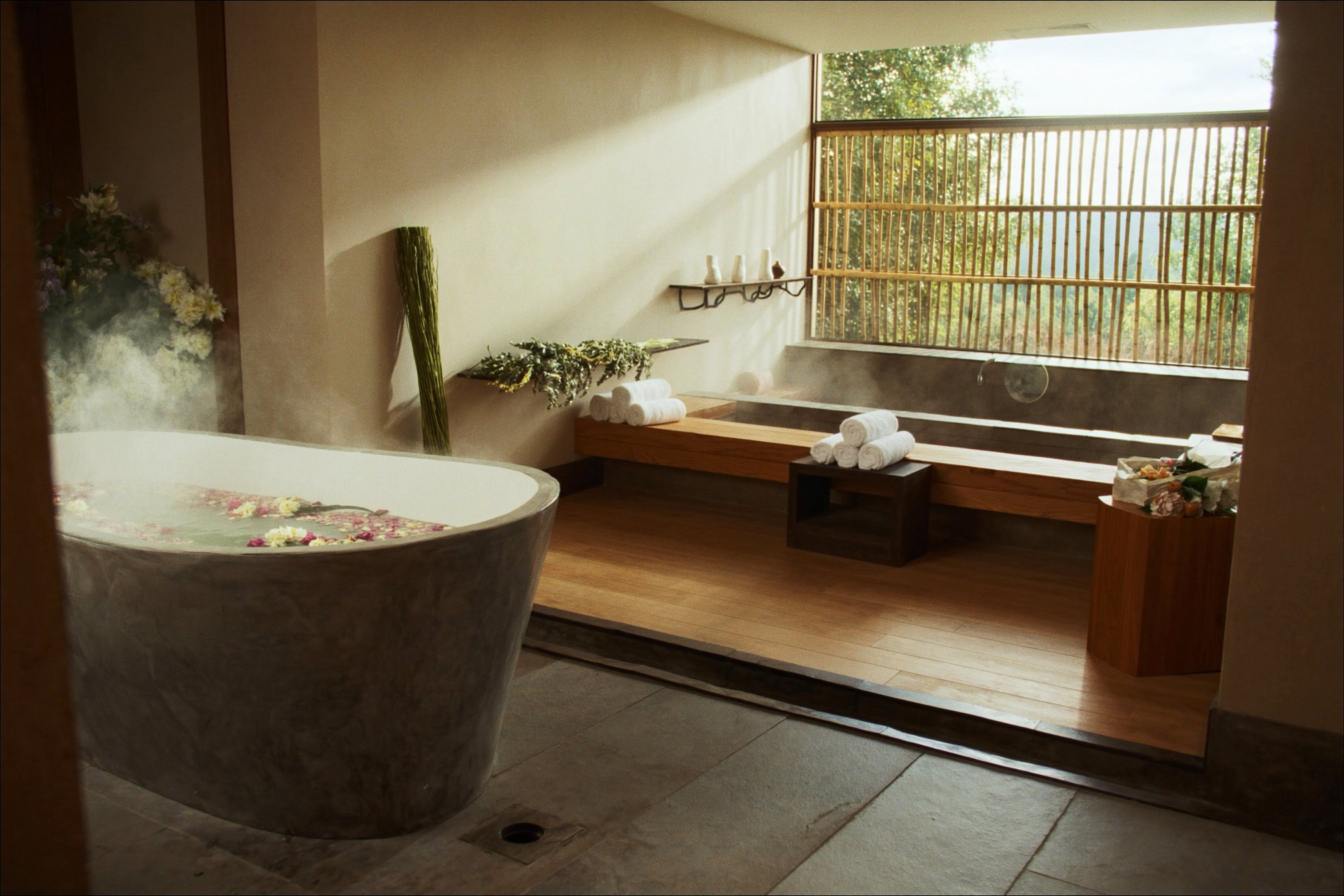
It's not a spa weekend in Calistoga, though that's not nothing. It's not a sleep tracking app. It's not a supplement stack.
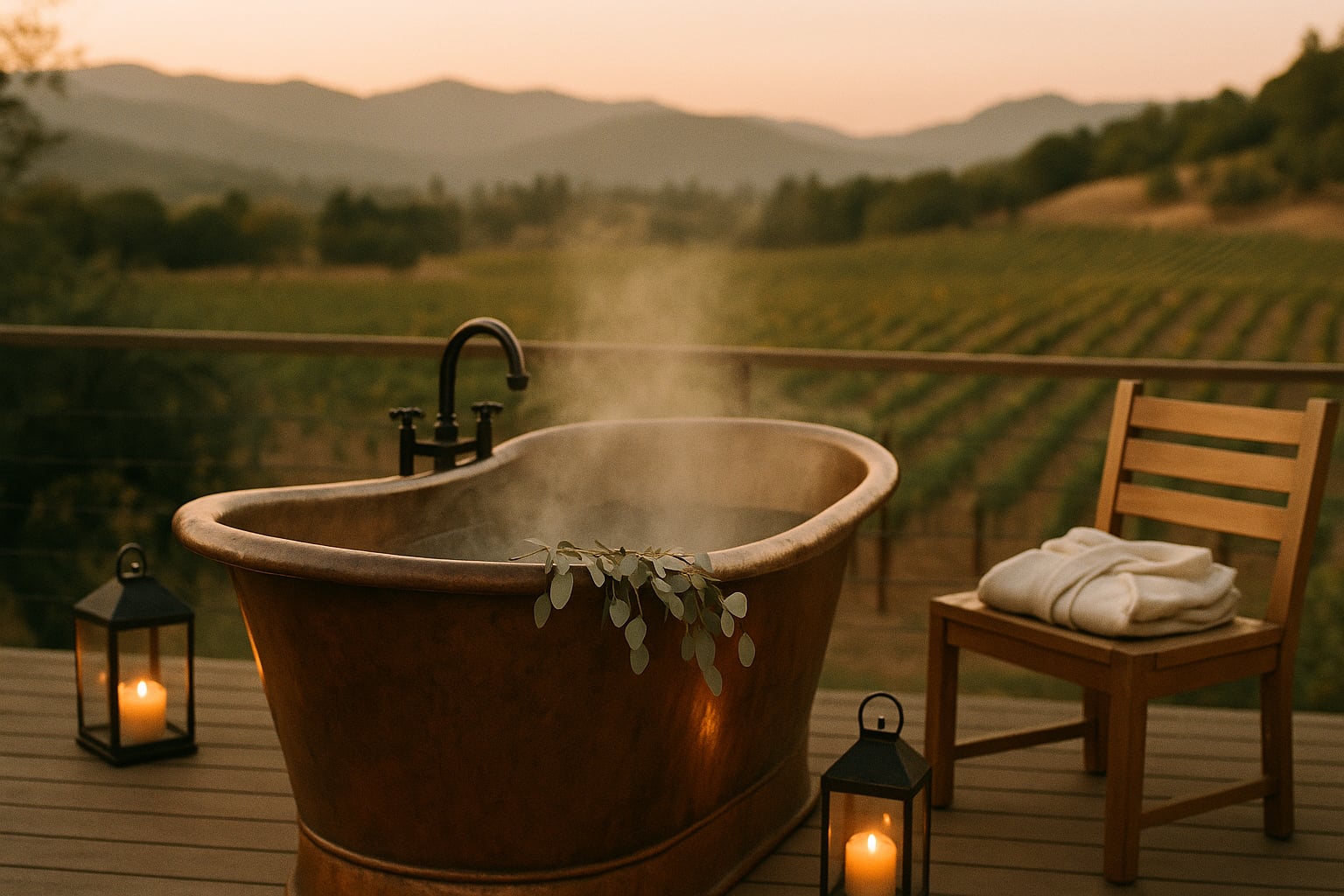
It's smaller and less photogenic than that. It's the Saturday morning where you don't pick up your phone first thing. The dinner where you sit down before you're fully done with the day. The bath that isn't a productivity hack — just hot water and the smell of something cedar-adjacent and twenty minutes of nothing in particular.
It's lying next to your partner without an agenda. Not making it lead somewhere. Not making it mean something. Just weight and heat and breath slowing down to the same rhythm.
That last one is harder than it sounds when your nervous system has been sprinting. You have to be willing to be bored for about twelve minutes before your body remembers what safe feels like. Most people check their phone in those twelve minutes. Don't.
The part about desire coming back
It does come back. Not all at once, and not on demand. But when your nervous system gets consistent, genuine downtime — not compensatory sleep debt payments, actual recovery — the static clears.
You start to notice things again. The way your partner smells after a shower. The shift in room temperature when they walk in. The details that got drowned out by cortisol.
Desire is largely attention. Attention requires a nervous system that isn't fully allocated elsewhere. This is what sleep is foreplay is actually about: not the sleep itself, but the permission to be in your body again.
There's a version of a long weekend in wine country — a slow drive down a Sonoma backroad, a porch somewhere near Healdsburg with no itinerary — that isn't really about the wine country. It's about what happens when you genuinely stop. When the architecture around you makes productivity feel impossible and recovery feel earned. The body takes about a day to believe you're serious. Then it starts to open back up.
The question worth asking
Not "when will things slow down." They won't, or they will briefly and you'll fill it before your body can use it.
The question is: what would it cost to rest this week, without having finished enough first? And is that cost real, or is it just what deprivation sounds like when it's been living in you long enough to feel like a personality?
You're not waiting for permission. You're giving it — or not.