At some point tonight you will change out of whatever you wore all day. And there's a 90% chance you'll reach for the same soft wreckage you always reach for. The shirt with the hole near the hem. The shorts that technically fit but exist in a size category called surrender.
Nothing wrong with that. Comfort is real and it counts.
But here's the thing worth sitting with: that automatic reach, that same-thing grab — it's a ritual too. Just one that's never been examined. You made it default without deciding.
The Audience Problem
Most of us dress in one of two modes. For others. Or for absolute no one. There isn't much in between.
The for-others mode gets thought, effort, intention. You think about fabric against skin, about silhouette, about what the neckline does. You consider yourself from the outside in.
The no-one mode gets the leftovers. The things that are clean enough or close enough or already on the floor. You stop considering yourself at all.
And what gets lost in that gap is a version of you that nobody else has to witness for it to matter.
What "Deliberate" Actually Means Here
Deliberate doesn't mean dressed up. It doesn't mean lingerie on a Wednesday if that's not where you are. It means chosen rather than defaulted to.
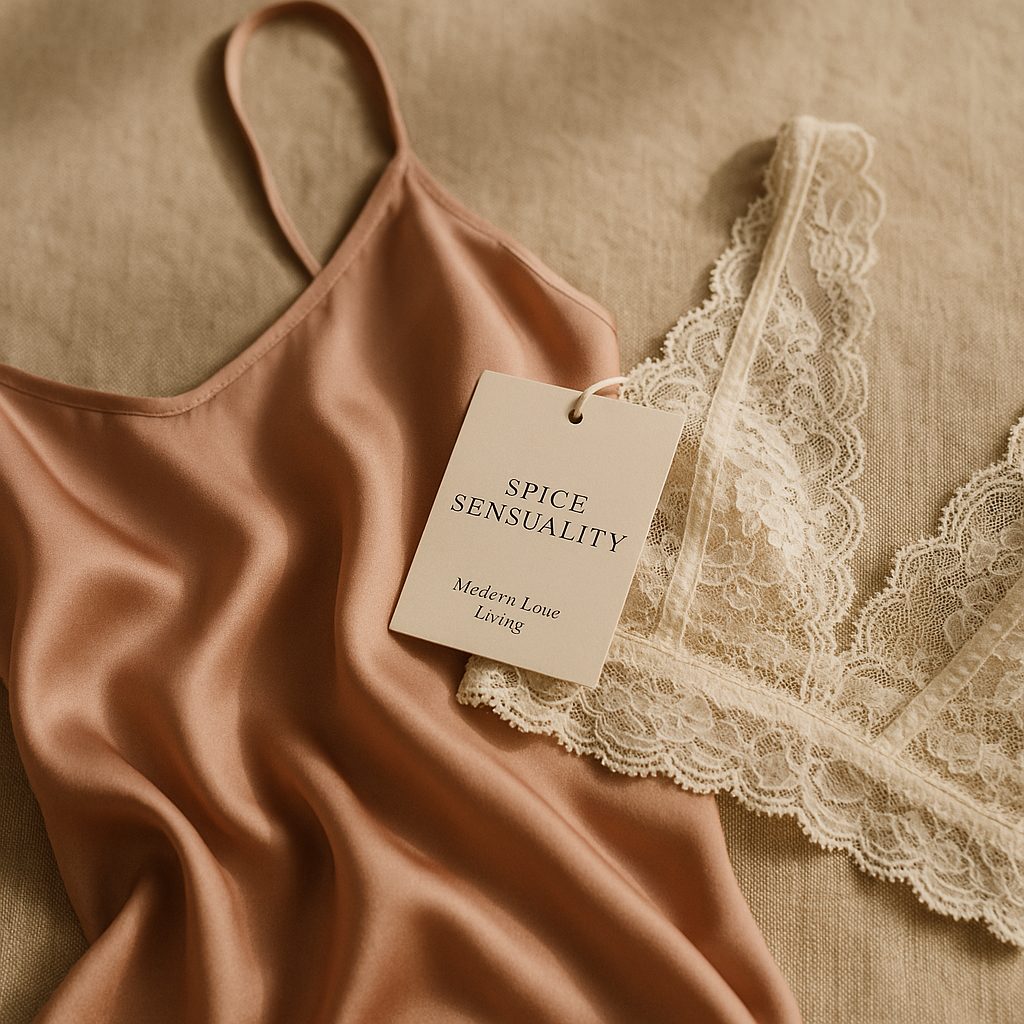
It could be a silk sleep set in a color that does something for your mood. A robe that's heavy enough to feel like an actual garment instead of a suggestion. A soft cotton shorts set that fits properly — bought for yourself, not inherited from an ex's drawer.
The specific thing matters less than the small act of choosing it. Because choosing is the practice.
Why the Body Responds to This
Clothes are sensory input. The weight of fabric on your shoulders, the slip of silk at your hip, the warmth of something brushed and soft against your legs in winter — your nervous system registers all of it. Constantly.
You know this already. You know the difference between wearing something that feels good against your skin and wearing something you haven't thought about since you put it on.
What changes when you choose for yourself — deliberately, alone — is that the sensation closes a loop. There's no external recipient. The feeling is entirely yours. It stays with you instead of pointing outward.
That's not a small thing. That's the whole thing.
The Mirror Is Part of It
Most people have a complicated relationship with looking at themselves. They do it quickly, functionally, and mainly to check for problems. Spinach. Asymmetry. Evidence.
The deliberate-dressing practice has a different relationship with the mirror. Not performance, not appraisal. Something closer to acknowledgment.
When you put something on that you actually chose for tonight, the mirror becomes a check-in rather than a verdict. You're not looking for flaws. You're noticing what you feel like. There's a real difference.
Body confidence isn't built in the moments you're being seen. It's built in the moments you see yourself without an audience to perform for.
— Modern Love Living
An Ordinary Tuesday, Specifically
It's easier to understand this with a scene. Say it's Tuesday. You've been at a screen since 8 AM. You ate lunch while answering messages. The apartment is fine. You're fine. Nothing is wrong.
You've got two or three hours before sleep. No plans. No one arriving.
Option A: the shorts and the old shirt. You've worn them a hundred times. They exist in the background of your evening the same way furniture does.
Option B: you spend about forty-five seconds more. You pull out the slip set you bought three months ago and haven't really worn. You light something. Maybe you pour a glass of something cold. The weight of the fabric is different. You feel it.
That Tuesday changes texture. Not dramatically. Just enough.
This Is Not a Self-Care Sales Pitch
We're aware of how this could read. Put on the expensive robe, feel transformed, buy the matching set. That's not the point.
The point is the habit of consideration. Of asking, even briefly: what do I want tonight to feel like in my body? Because most nights nobody asks that. Most nights the body just carries you through until horizontal.
The practice doesn't require new things. It requires a different relationship with whatever you already have. Choosing the softest thing you own instead of the nearest. Wearing the thing you save "for later" on a night that is, by every measure, not special.
What It Does for Desire (Over Time)
Here's the less obvious part. This practice has a longer arc.
Desire — solo or partnered — lives partly in how present you are in your own body. Not performing presence. Actually inhabiting it. And the easiest on-ramp to that is sensory: what you feel, smell, wear, touch, notice.
People who consistently treat their alone-body as worth dressing tend to carry that into other spaces. Into intimacy. Into the way they ask for what they want. Into the mirror, eventually, without flinching.
It's not magic. It's just repeated small choices that add up to a self-relationship that isn't purely functional.
How to Actually Start
Not a routine. Not a system. Just this:
Tonight, when you go to change, pause for ten seconds before reaching for the default. Ask what you want to feel like. Then find the closest thing in your drawer that answers that.
That's it. That's the whole practice.
Some nights the answer is still the shorts with the hole. Fine. That's a choice too, now. It just isn't the only option you can see.
The most intimate version of you isn't the one performing for someone else. It's the one that still bothers to show up on a Tuesday when the apartment is quiet and nobody is watching. That one deserves something deliberate.