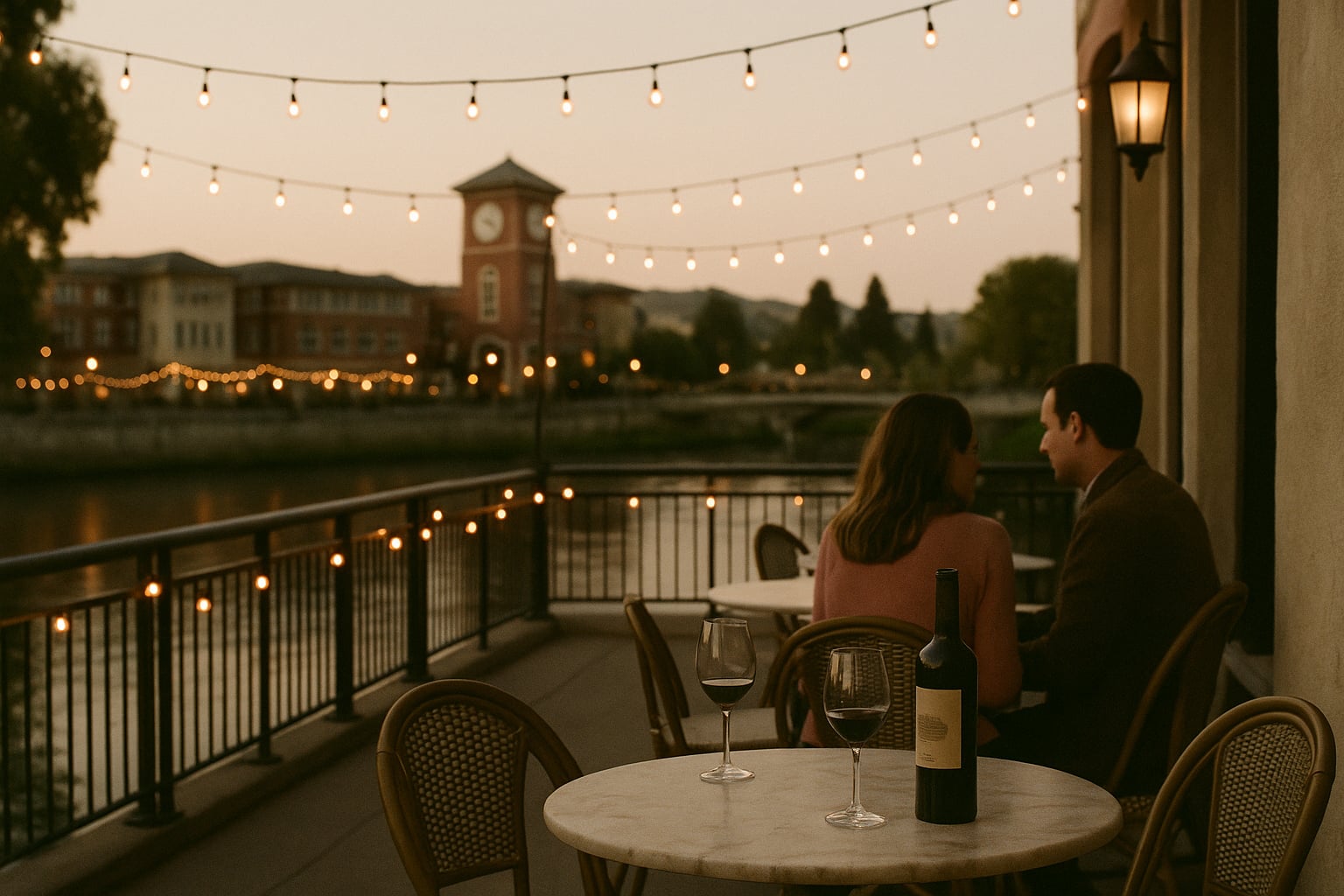
At some point you looked at your partner and thought: when did we get like this? Shorter. Quicker to snap. Less interested. Less interesting. You love them. You're pretty sure they love you. But there's a flatness to things that wasn't there two years ago, and neither of you can name what changed.
Here's a question nobody asks at that moment: when did either of you last sleep eight uninterrupted hours?
Probably not recently. Probably not consistently. And the two things — the flatness and the sleep — are not unrelated.
What Sleep Deprivation Actually Does to You
Sleep isn't recovery. It's maintenance. Your prefrontal cortex — the part that handles impulse control, nuance, and reading another person's face accurately — runs degraded after even one bad night. After a week of six-hour nights, it barely shows up at all.
You're not less patient because you've grown apart. You're less patient because your nervous system is operating on a shortened fuse that biology built in. Chronically under-rested people read neutral facial expressions as hostile. They do. Studies with real people, in real partnerships, confirm this.
Your partner says something mild and you hear an edge that isn't there. You respond to the edge. They respond to your response. Nobody remembers how it started.
The Desire Piece Nobody Talks About Directly
Testosterone drops with poor sleep. In all bodies — not just men's. One week of sleeping under six hours reduces testosterone levels by 10 to 15 percent. That's not a rounding error. That's the difference between reaching for someone at 10pm and scrolling yourself into unconsciousness instead.
Cortisol — the stress hormone that's supposed to spike in the morning and taper by evening — doesn't taper when you're sleep-deprived. It stays elevated. High cortisol and high desire don't coexist well. The body is too busy managing threat to register pleasure.
So the low libido you've been quietly blaming on age, or routine, or the second-year flatline — some of it is exactly that. And some of it is two people who haven't actually rested in months, lying next to each other wondering why nothing's happening.
Desire needs a nervous system that feels safe enough to want things. Exhaustion removes that entirely.
— Modern Love Living
The Compatibility Misread
This is the part that does real damage. When you can't locate the source of a problem, you locate it in the relationship. In them. In yourself. You start having the wrong conversation — are we wrong for each other? — when the actual conversation is are we chronically, structurally exhausted?
The arguments that feel deep often aren't. They're sleep deprivation wearing a philosophical coat. You're not fundamentally misaligned on values. You had a hard week, slept badly, and now the dishes in the sink feel like evidence of something.
Couples who go to therapy on five hours of sleep a night often work hard on the wrong things. They excavate patterns that are real but wouldn't feel nearly as urgent if both people were rested. The patterns deserve attention. But so does the baseline.
How It Shows Up in Small Moments
You stop reaching across the bed in the morning. Not consciously. The instinct just goes quiet.
You stop asking questions you actually want the answers to, because processing the answer feels like work.
You end more sentences before you finish them. You let things go — not gracefully, but out of depletion. And letting things go from depletion looks like peace from the outside and feels like nothing from the inside.
The skin-to-skin contact that used to just happen — a hand on the back, a knee touching under the table at dinner — starts requiring an energy nobody has. You're in the same bed every night and there's a distance in it that confuses both of you.
Sleep as an Intimacy Practice, Not a Logistics Problem
Most couples treat sleep like a scheduling issue. Get more of it when things calm down. Things don't calm down.
Sleep is the precondition for almost everything you want from a relationship: patience, humor, curiosity about the other person, sexual appetite, emotional generosity, the ability to repair after a fight without hardening. You can't shortcut the hours and keep the outcomes.
This isn't about optimizing. It's about recognizing that a rested version of you and a depleted version of you are not the same partner. Your person is not dating the same person on a Tuesday after three bad nights that they were dating on a Sunday morning in Healdsburg when you slept until nine and had nowhere to be.
What to Actually Do With This
Not a routine overhaul. Not a sleep hygiene checklist. Those exist and they're fine. But start here: notice, together, what under-rested looks like on each of you specifically.
One of you gets quiet and sharp. One of you gets overly accommodating and then resentful. One of you stops wanting to be touched. One of you starts catastrophizing small things. These are not character traits. They're signals. And recognizing them as signals — in real time, without accusation — changes the conversation entirely.
Instead of why are you being like this right now, the question becomes: how did we sleep this week? It sounds reductive. It isn't. It's the most grounded question available.
Some couples build a deliberate off-season. Not a vacation, necessarily — though a night at Indian Springs or a slow weekend in Yountville will remind you what your own face feels like when it's not braced. Just a week where sleep is treated as non-negotiable. Where the late-night scroll gets replaced by actual darkness and actual quiet.
The point isn't the sleep itself, exactly. It's what returns when you're both rested: the particular way they laugh at something you say. The weight of a hand. The version of desire that doesn't need to be scheduled or performed — just noticed.
Before you audit the relationship, audit the rest. Not because the relationship doesn't need work. It might. But you deserve to have that conversation when both of you are actually present for it — not half-awake, running on cortisol, misreading each other's faces in the dark.