Most of us have a drawer we never fully explain. Not the going-out drawer. Not the partner-pleasing drawer. The one with the silk slip you put on at noon on a Tuesday when nobody's coming over and nothing is happening.
That drawer is doing something the rest of your wardrobe isn't.
It's not about seduction. It's not about occasion. It's about the specific, almost irrational act of choosing something that makes your body feel worth inhabiting. Choosing it for yourself. Full stop.
Why This Exists as Its Own Category
Clothing mostly functions as performance. You dress for meetings, for dates, for the coffee shop where you might run into someone. Even casual clothes carry an audience: the version of relaxed you want to project.
This is different. This is the category where the only audience is your nervous system.
The weight of a good robe against your shoulders when you've had a genuinely bad week. The way a particular high-waisted brief sits — not because it flatters, but because it makes you feel held together when you feel like you're coming apart. A soft ribbed bralette in a color nobody would call practical.
These aren't luxury. They're closer to ritual.
The Difference Between Feeling Seen and Feeling Real
There's a version of self-dressing that's still outward-facing. The flattering thing you wear when you're working from home on a video call. The cute pajama set you'd be fine with someone seeing. That's still performance — just a smaller stage.
What we're talking about is closer to: what do you put on when you want to feel real?
Real, not put-together. Present in your own skin, not managing it. There's a particular quality to certain fabrics — silk, heavy cotton, worn-in jersey — that actually changes how you move. How you stand at a window. How you pour a glass of wine without rushing it.
The Specific Pieces People Actually Reach For
Not a list of things to buy. An honest accounting of what the drawer actually holds.
The Robe That's Too Good for Guests
Not the thin cotton one you leave in the bathroom. The heavy one. The waffle-knit or velour or Turkish cotton that you don't put out when people visit because it's yours. You put it on after a shower and suddenly the apartment feels like a boutique hotel in Yountville and you feel like you're someone who sleeps well and reads things slowly.
The robe is the anchor piece. It changes the whole morning.
The Slip That's Not Technically Lingerie
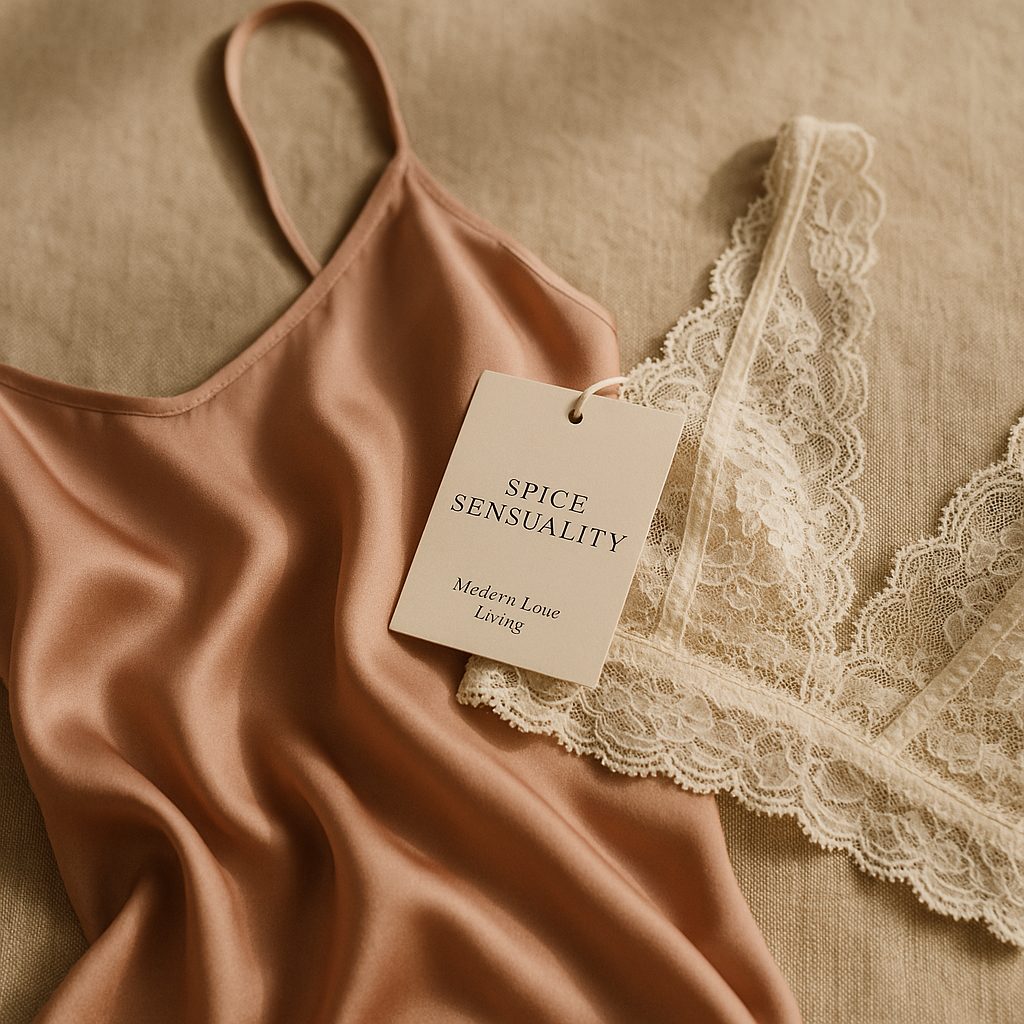
It's too nice to sleep in. It's not really meant for a partner. It sits in a weird category that the fashion industry doesn't quite know how to sell. A satin or silk slip, mid-thigh, worn on a slow afternoon at home with nothing underneath and a candle going.
You feel the hem against your leg when you walk. The fabric moves differently than cotton. That sensation — small, specific, barely worth naming — is the whole point.
The Underwear You Bought for No Reason
You were shopping. Nothing was wrong. You just saw it — a good cut, an unusual color, something lacey but not fussy — and bought it without a plan. And then you wore it on a Wednesday that needed no occasion and it did something small and real to your afternoon.
That's not frivolous. That's you finding out what your body likes to be in.
The T-Shirt You'd Never Wear Out
Old, faded, soft in a way that new clothes can't fake. It fits in that specific way where you stop thinking about your body at all. That's the goal here: not feeling good about your body. Feeling in it.
What This Is Really About
There's a version of intimacy that has nothing to do with another person. It's the intimacy of paying attention to yourself without an agenda. Not to fix something. Not to perform wellness. Just to notice that you have a body, and it responds to sensation, and that matters.
Most of us are chronically underpresent in our own skin. Not depressed — just elsewhere. Managing logistics, navigating relationships, half-reading things. The body is just the vehicle.
Putting on the right fabric is a low-stakes, high-return way of coming back. It's not a practice. It's not a protocol. It's just: this thing, on my body, pulls me into the room.
The pieces that make you feel like yourself aren't the ones you'd describe in public. They're the ones you don't have to explain at all.
— MLL Editors
How This Connects to Desire
Dressing for your own attention isn't a substitute for desire — it's often where desire starts.
If you've ever felt like your libido went somewhere and didn't leave a note, part of the answer is in how disconnected you've become from your own physical experience. Not in a clinical way. In an everyday way: you haven't noticed your own body in weeks. You've been inside your head.
The silk slip at noon isn't seduction prep. But it's not nothing, either. You remember that you have a body. That it has preferences. That it can feel good without needing a reason.
That awareness doesn't disappear when a partner walks in.
The Practical Version of This
You don't need to build a whole wardrobe around this. You need one or two pieces that are exclusively yours, exclusively for the days with no audience.
The test: would you put it on if you had the house to yourself for six hours and no plans? If yes, that's the category. Protect it. Don't let it get absorbed into the functional wardrobe. Don't wear it to run errands. Let it stay strange and private and yours.
The Small Proof That This Works
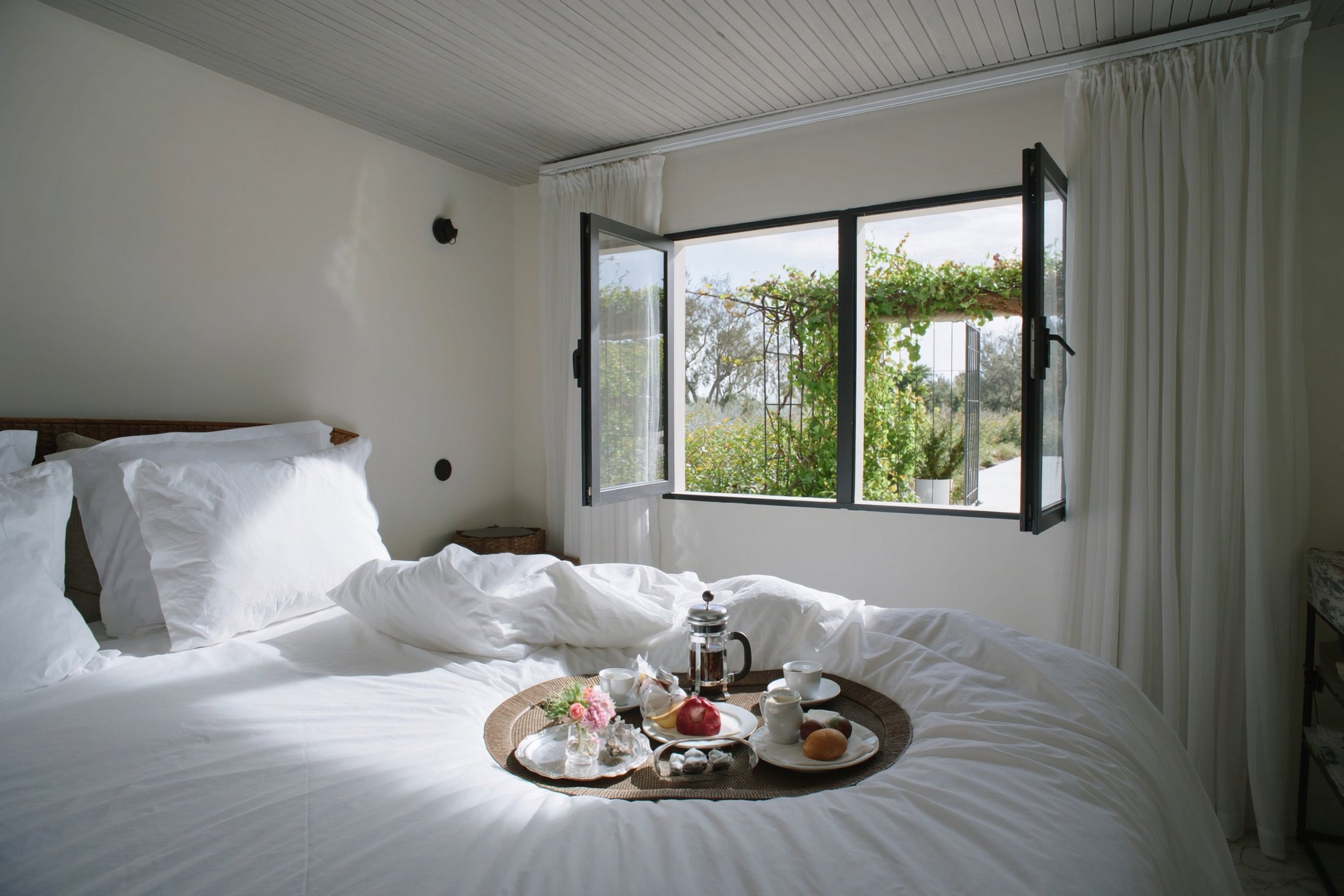
Picture a Sunday in late October. You've had a long week. You take a shower that runs slightly too hot and you put on the heavy robe — not the guest one, the real one. You make coffee and stand at the window for a minute without checking your phone.
You're not doing anything. Nothing is happening. But you feel, briefly, like yourself.
That's the whole argument.