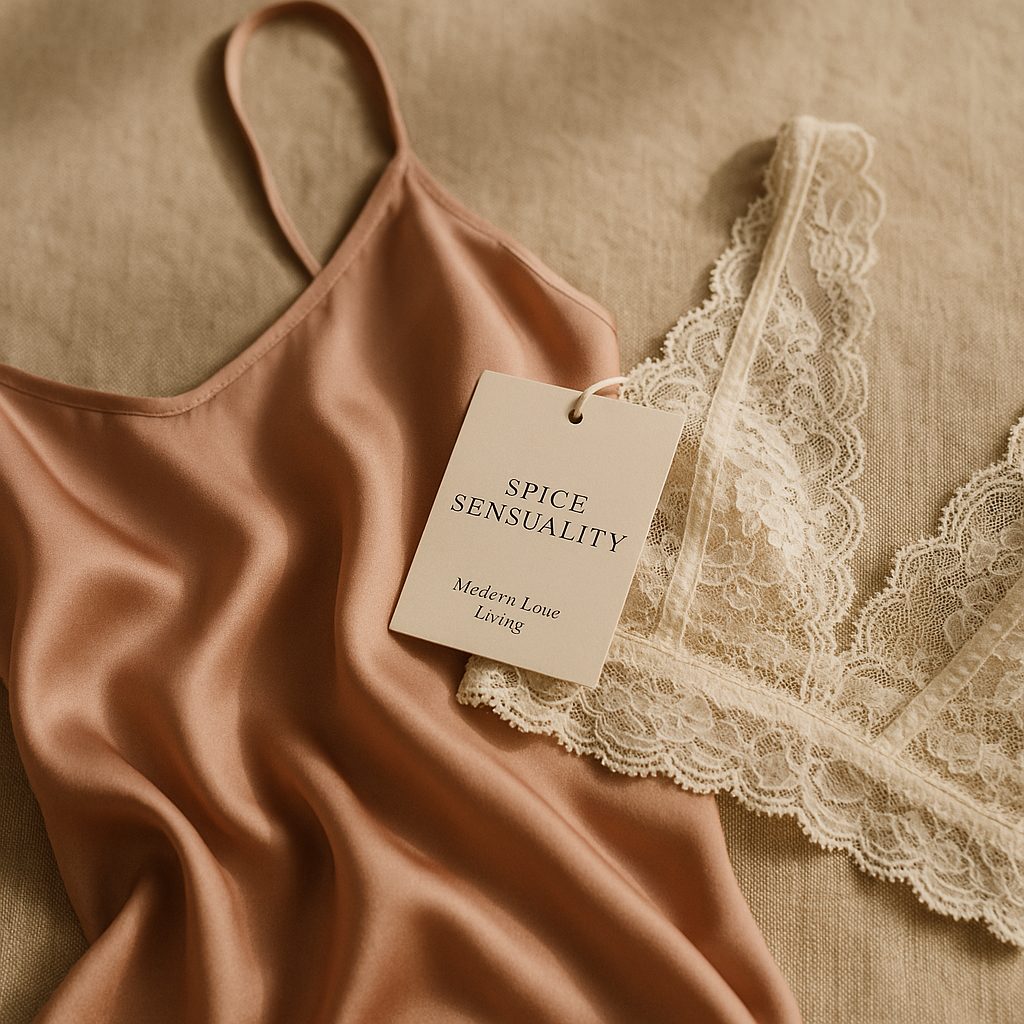
You ordered it for a specific occasion. A trip, maybe. A night you'd been half-planning in your head for weeks. The silk was the right color. The fit looked right on the model. You clicked buy and imagined their face.
Then it arrived. You tried it on — just to check — and stood there for a minute longer than necessary.
And something shifted.
Not because it looked perfect. Because it felt like yours. Not the version of you that's performing. The version that moves through the world privately, with an interior life that doesn't always need an audience.
You hung it in your own closet. You told yourself you'd still wear it for them eventually. You probably haven't.
What You Were Actually Doing When You Bought It
Most of us have been trained to route desire through someone else's gaze. You want to feel sexy, so you think: what would they want to see? You want to feel desirable, so you shop for reaction rather than sensation.
It's not cynical. It's just the habit. Desire and audience have been bundled together for so long they feel like one thing.
But when you stood in front of that mirror, something got unbundled. You liked how you looked — not in an aspirational, working-on-it way. In a right now, exactly this way. The audience dropped out of the equation and the equation still worked.
The Difference Between Wearing It for Them and Wearing It for You
When you dress for someone else's desire, you're managing an outcome. You want a particular response: attention, want, validation. You wear the thing that you think will produce that result.
When you dress for your own desire, you're not managing anything. You're just in it. The weight of the fabric. The way the strap sits. The temperature of the room and how the silk feels cool for the first thirty seconds and then warm.
One is about the moment someone else walks in. The other is about the moment before they do — when it's just you and the mirror and there's no performance required.
The most erotic thing you can own is something you bought entirely for how it makes you feel in an empty room.
— MLL
This isn't about withholding. It's not a statement about your relationship. It's just: some things belong to your private self first. The fact that someone else might eventually see it doesn't change who it was made for.
Why It Feels Slightly Illicit
There's a reason this particular act — keeping the piece, claiming it — feels a little transgressive. Not because it's wrong. Because it breaks a social contract most of us didn't consciously sign.
Lingerie, in particular, carries the cultural assumption of recipient. You don't buy it the way you buy a great coat or good boots — as a thing that belongs to your wardrobe, your daily self. You buy it as a prop in someone else's story.
Keeping it — deciding the story is yours — quietly refuses that frame.
And there's real pleasure in that refusal. Not defiance for its own sake. Just the quiet satisfaction of knowing something belongs to you completely.
The Mirror as the Actual Audience
There's a version of this that's already been written — the idea of lingerie for the mirror, dressing for your own reflection as a form of self-possession. And that's part of it.
But this is something slightly different. Because you didn't set out to do something radical. You just tried on something you'd bought for an occasion and realized the occasion didn't need another person in it.
That's the real version of dressing for yourself. Not a ritual. Not a practice. Just: a Tuesday evening, a package that arrived, and you realizing the mirror was enough.
The silk robe. The bodysuit with the ridiculous detail you couldn't justify. The slip that cost more than you told anyone. These things accumulate a meaning when they live in your drawer without ever being performed.
What This Tells You About Your Desire
Pay attention to what you kept. Specifically, why you kept it. The answer is probably more accurate than any conversation you've had about what you want.
Was it the color? The weight of the fabric? The way it suggested something about who you are without requiring you to explain it? Most people can't tell you what they actually desire in clear language. But the kept piece is evidence.
It's worth asking: what does it say about the version of yourself you find most compelling? Not the most palatable, not the most partner-friendly. The most alive.
On Sharing It Later — or Not
None of this means it has to stay private forever. You might wear it eventually. You might not.
But there's a difference between wearing it because you wanted to share something that's yours, and wearing it because you finally got around to the occasion you originally bought it for. The first is generous. The second is just logistics.
And if your partner has good taste — in you, in what they're drawn to — they'll probably feel the difference. Something worn with that kind of ownership reads differently. Less like a gift, more like an invitation into something that already existed without them.
Which, for the record, is significantly more interesting.
The next time you're shopping — whether it's the Healdsburg boutique you wandered into after a tasting, the late-night tab you opened because you couldn't sleep, whatever the context — notice when something pulls at you for reasons you can't immediately explain.
Notice when your brain immediately reaches for a justification: they'd like this, this would be good for a trip, this is practical for that weekend.
And notice when, underneath that instinct, there's a quieter thought that doesn't need a reason.
That one's yours. Buy it for yourself. Keep it. Or don't. But at least know who it belongs to.