Somewhere around late November, the group chat starts. What are we doing for NYE? And something small in you deflates. Not because you don't love these people. Because you already know how it ends: too loud, too crowded, a countdown you half-watch from across a sticky bar, a kiss that feels more like a checkbox than a choice.
You come home at 1:30 a.m. slightly too full and slightly too sober and slightly further from each other than when you left.
There is another option. It's not anti-social. It's not lazy. It's a decision — a real one — to give the night to yourselves instead of to the calendar.
The Party Isn't the Problem. The Obligation Is.
Nobody's saying New Year's parties are bad. Some of them are genuinely great. But most couples end up at one not because they wanted to — because they felt like they were supposed to.
That's different. Performing a holiday is exhausting in a way that's hard to name until you stop doing it.
The private New Year's Eve isn't a consolation prize for people who couldn't get invited anywhere. It's a specific, intentional choice to make the night mean something. To each other. Without an audience.
What It Actually Looks Like
It's not a Pinterest board. It doesn't require a charcuterie tower or a champagne tower or anything involving the word tower.
It looks like this: you start getting ready later than you normally would for going out. Unhurried. A long shower. Something that feels good against your skin — silk, cashmere, the robe you only wear when there's nowhere else to be. Music that you both actually like, not background-party music.
You cook something that takes effort, or you order something extraordinary. You open a bottle you've been saving. Not because it's a special occasion — but because this is the occasion.
There's no schedule. No one to find at midnight. You're already there.
The Micro-Behaviors That Make It
The private night lives or dies on a few small things.
Phones down earlier than feels natural. Not as a rule — as an agreement. There's a difference. The phone-free dinner that becomes a phone-free evening is a different animal entirely. The conversation that happens when there's no escape hatch tends to go somewhere real.
Dress for each other. This one matters more than people admit. Getting dressed with nowhere to go but the living room — for an audience of one — carries a specific kind of charge. It's not performance. It's acknowledgment.
Say the things you've been half-thinking. Not a formal review of the year. Just the small accumulated truths that don't usually get airtime. The moment on a random Tuesday that stuck with you. The thing you noticed about them that you never said out loud.
Stay awake until midnight on purpose. Not to watch a ball drop on TV. To be conscious of the threshold. To choose it together.
What the Night Is Actually Protecting
The end of a year is a hinge. You don't have to be precious about it — but it's worth noticing.
The private New Year's Eve protects something specific: the version of your relationship that doesn't exist in public. The one with inside references and comfortable silences and the particular way you two are when nobody's watching and there's nothing to prove.
The most intimate moments in a long relationship rarely happen in front of other people. They happen in the margins. New Year's Eve is a margin you get to choose.
— Modern Love Living
Most couples spend December performing togetherness for everyone around them. This is the night you stop performing it and just have it.
A Few Ways to Actually Do It
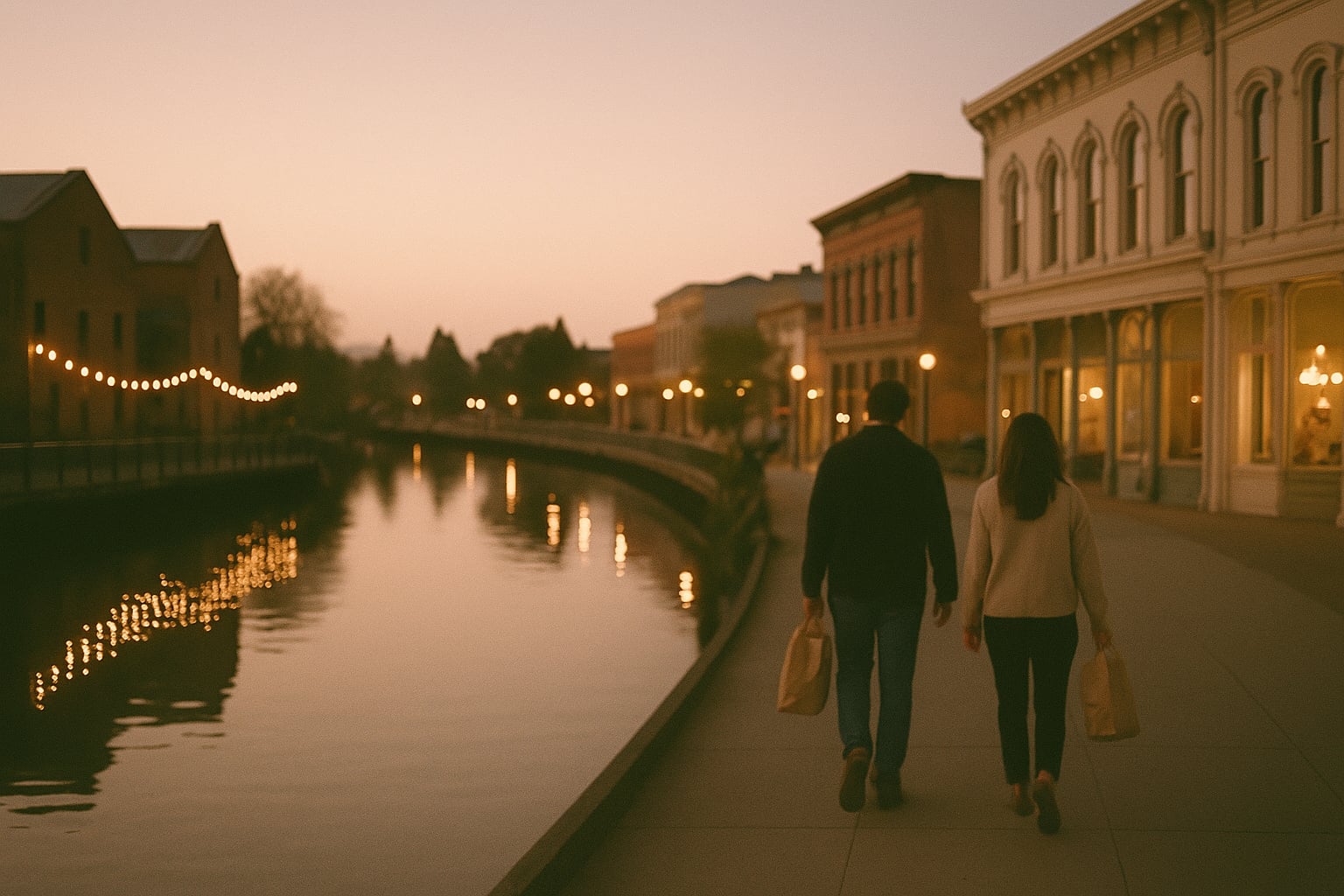
Book somewhere small. Not the New Year's Eve package at the big resort, with the prix fixe and the DJ and the ballroom full of strangers. Something quieter. A small inn in Healdsburg where the plaza is lit up but you can see it from the window. A rental in the Sonoma hills where midnight is just the two of you and a valley full of dark.
Stay home and mean it. Home done right is not settling. Home with good lighting, a real meal, a bottle you've been holding onto, and clothes that feel like a choice — that's a complete evening.
Make one ritual. Just one. Write something down, read something aloud, open a letter you wrote to each other last January. Ritual doesn't have to be elaborate. It just has to be intentional.
Plan nothing after midnight. That's the whole point. Midnight is not the ending. It's where the evening opens up.
The Conversation You Might Actually Have
Here's what tends to happen when couples do this: they talk. Not about logistics, not about other people, not about anything that requires a follow-up email. They talk about the year in the way you can only talk about it when it's actually over.
What surprised you. What was harder than you expected. What you want more of. What you want to stop carrying.
These are not heavy conversations when they happen organically, over good wine, in a room where there's nowhere else to be. They're just honest ones.
The Reason the Party Wins By Default
The party is easier to say yes to. It has social gravity. Saying no requires a reason, or at least a story.
But the private night requires something the party doesn't: a decision. You have to actually choose it. And choosing it means admitting that you'd rather be alone together than anywhere else — which is a vulnerable thing to say out loud, even to each other.
That's probably why it's more romantic.
Midnight is just a number. But the hour before it, unhurried, with a person you actually chose — that's something you get to build. This year, consider not giving it away.