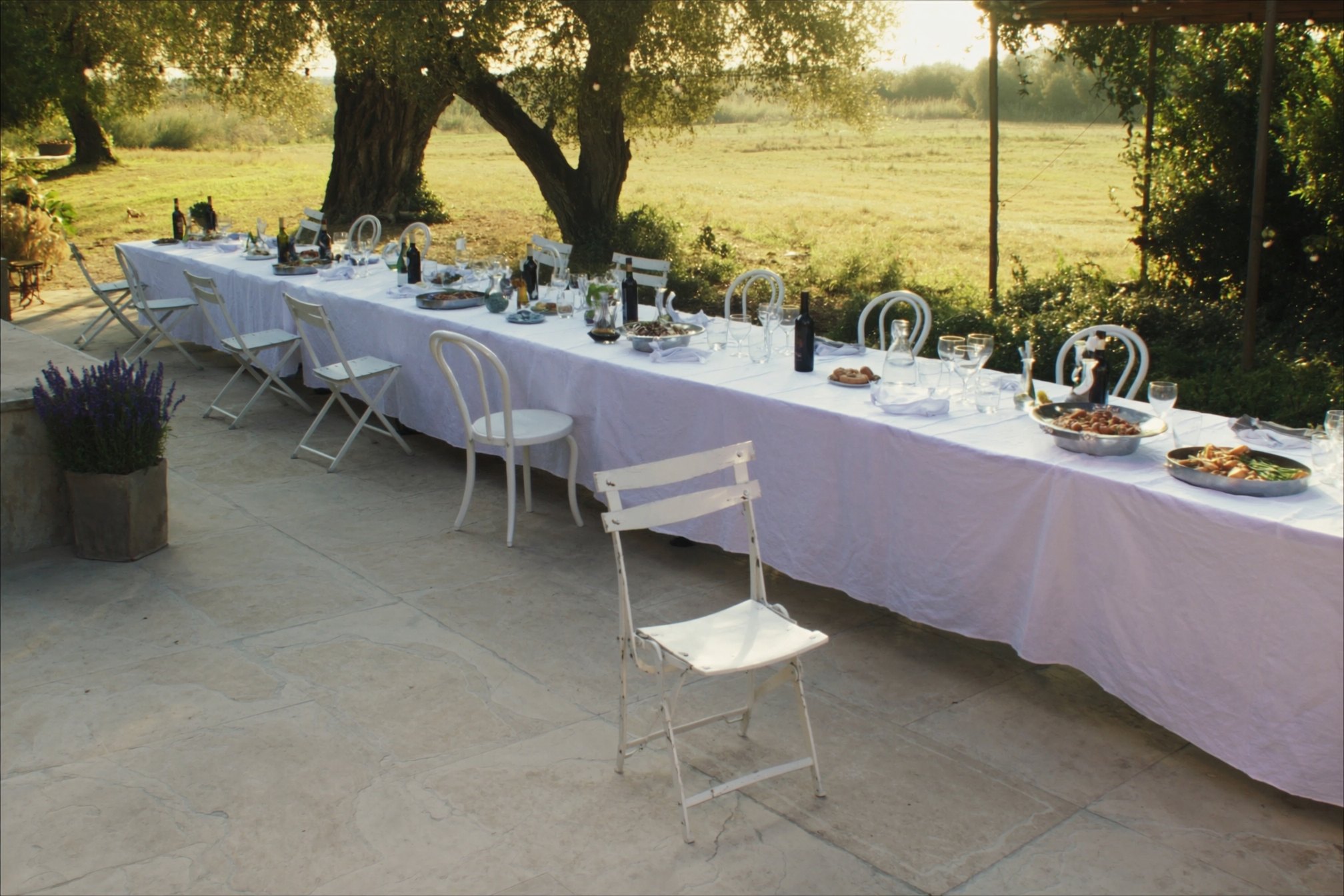
You made the reservation on a Sunday, full of good intentions and mild guilt about the last three weekends you let slide. You picked the restaurant. You found parking. You told yourself: this one is going to be good.
Now it's the night of, and you're tired in a specific way. Not sleepy. Tired of the idea of it. You're already doing the math: parking, appetizers, the moment when one of you checks your phone and the other notices.
The reservation didn't fail you. You didn't fail it either. This is just what happens when anticipation has too long a runway.
Three Weeks Is Too Long to Hold a Feeling
Anticipation is real. It's also fragile. It has a shelf life roughly equivalent to cut flowers: beautiful the first few days, then quietly dying on the counter while you pretend not to notice.
When you book something three weeks out, you're not preserving excitement. You're asking it to survive two full weeks of commutes, a work thing that went sideways, a minor argument about dishes that neither of you fully resolved, and at least one night where you both fell asleep before ten.
By the time Saturday arrives, the dinner has accumulated all of that. It's carrying weight it was never designed to carry.
What Over-Planning Actually Does to a Night
There's a version of date night planning that's generous. You're thinking ahead. You're making an effort. That matters.
But over-planning has a shadow side. It turns the evening into a production. You've mentally rehearsed it enough times that the real version can only disappoint. The restaurant you imagined was quieter. The conversation you pictured was more like the early days. The you in your head was less tired, less wired, less whatever-this-week-made-you.
The other thing it does: it hands the evening a job. Date nights that are supposed to fix something almost always make the thing worse. The pressure lands on the table like a third person. You both feel it. Nobody names it.
The fancier the reservation, the more the night has to justify itself. Sometimes a Tuesday night with good takeout beats a Saturday in Yountville because nobody expected anything from the Tuesday.
— MLL
The One Shift That Actually Works
You don't need to cancel it. You don't need to lower your standards or stop booking nice things.
You need to drop the agenda about what the night is supposed to do.
Not the plan. The agenda. Those are different. The plan is: dinner at seven, that place on the Healdsburg plaza you've been meaning to try. The agenda is: we need to reconnect, this should feel like it used to, I want to remember why we work.
The agenda is the weight. Put it down before you get in the car.
Practically: sometime in the hour before you leave, say something true and low-stakes out loud. Not a check-in. Not a feelings inventory. Just: I'm kind of tired but I'm glad we're going. Or: I've been weird this week. Don't take it personally tonight.
It breaks the performance seal. Once someone admits a real thing, the night stops being a production and starts being actual time together.
What the Evening Looks Like When You Let It Be Small
You're at the table. The bread came. You're not making eye contact in a meaningful way yet, you're both just looking at the menu like it's a document that needs reviewing.
This is normal. This is the first fifteen minutes of most dinners. The mistake is trying to skip it.
Order something you didn't plan on ordering. Comment on the table next to you. Make a stupid joke. Let the evening find its own temperature instead of trying to set it manually from the parking lot.
The couples who look like they're having the best time at a restaurant are almost never the ones who planned the most. They're the ones who stopped trying somewhere between the cocktails and the entrée.
On the Nights That Feel Like Homework
Sometimes the resentment isn't about the reservation at all. Sometimes it's older than that.
If you notice the same heaviness before every planned evening regardless of where you're going, that's worth sitting with separately. Not tonight. Tonight, just go to dinner.
But at some point: the feeling that time together has become an obligation is information. It usually means one or both of you is running on empty in a way that no restaurant can fix. The slow dinners, the long drives on Sonoma backroads, the hotel weekends: they're good. They work. They work after you've dealt with the underlying thing, not instead of it.
A reservation is logistics. It's a nice container. What goes inside it is still up to you.
The Real Version of a Good Night Out
You go. You're tired. The restaurant is louder than expected. You share something from both plates without making it a ritual. At some point one of you says something that makes the other actually laugh, not politely laugh.
You walk out into the night air. Someone's hand finds the other's. Not because the night demanded it. Just because it was there.
That's it. That's the whole thing. That's what you were trying to book three weeks ago and couldn't, because it's not on the menu.
Related reading: If the weight before date nights has started feeling like a pattern, The Resentment You're Calling Boredom is worth a look. And if the phone is still doing what the phone does at dinner, the Phone-Free Dinner: A 90-Minute Experiment is a low-stakes place to start.