There's a restaurant you've been to twice. Once for an anniversary, once for a birthday. You wore something you'd been saving. You made the reservation three weeks out. You didn't check your phone.
You keep meaning to go back. The occasion just hasn't come up.
That's the problem. You've made it hostage to occasion. And in doing so, you've quietly told yourself — and whoever you're with — that the good stuff has to be earned.
What Occasion-Dependency Actually Looks Like
It's not dramatic. It's just a slow drift toward the predictable. Friday takeout. The same Thai place. Someone says "we should try that new spot" and neither of you follows up. Weeks pass. The new spot opens, gets popular, requires a wait, and suddenly it's another place you'll get to eventually.
The restaurant isn't really the issue. The pattern is. And the pattern says: we're saving the good version for later.
Later is doing a lot of heavy lifting in a lot of relationships.
The Thursday Signal
Booking the slightly-too-nice restaurant on a Thursday — no birthday, no milestone, no apology to make — sends a signal. Not a grand romantic one. A quiet one.
It says: this week, right now, us — that's enough reason.
That's not nothing. After a few years together, when routine has a way of making everything feel slightly overdue, that kind of unprompted intention lands differently than any anniversary dinner ever will.
Getting Dressed for It
This is where it gets interesting. You're going out on a Thursday. You could wear what you wore to work. You don't.
You change. Not because the restaurant requires it. Because you've decided this night deserves it. There's a difference between obligation and intention, and your body knows which one it is.
The silk. The slightly better shoes. The jacket you save. You're not dressing for the room — you're dressing for the version of the night you've already decided to have. And when your partner sees that, something shifts. A small recalibration. Like: oh, we're doing this.
There's a whole other article about what happens when you start dressing for yourself again — not for occasion, not for anyone else's eye. But tonight, you're dressing for the two of you. That's its own kind of thing.
What the Table Actually Gives You
It's not the food. Or not only the food.
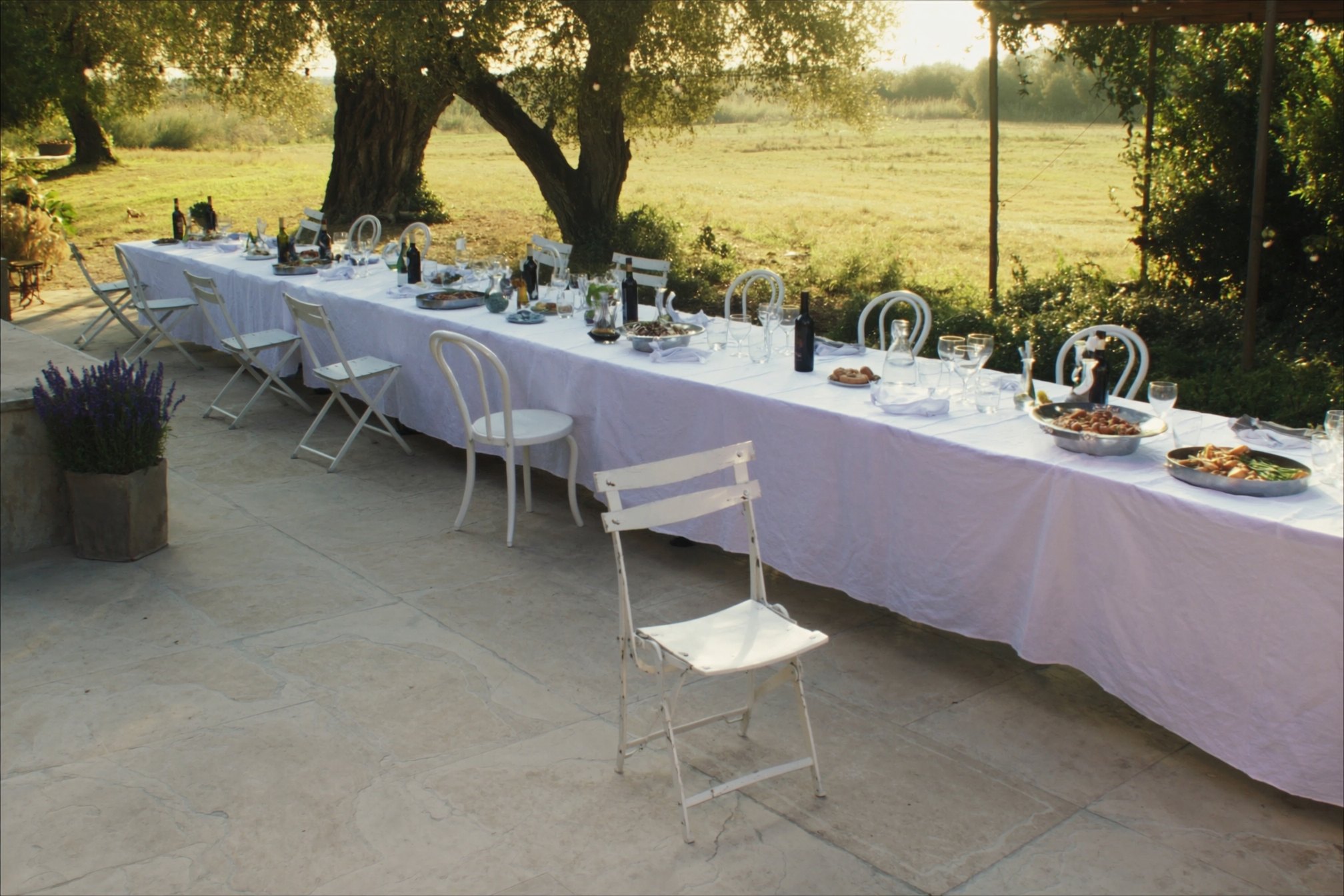
It's the structure. A good restaurant creates a container: no couch, no remote, no dishes piling up behind you. You're sitting across from each other with nothing to do but eat slowly and talk. The ambient noise is just loud enough to make the conversation feel private.
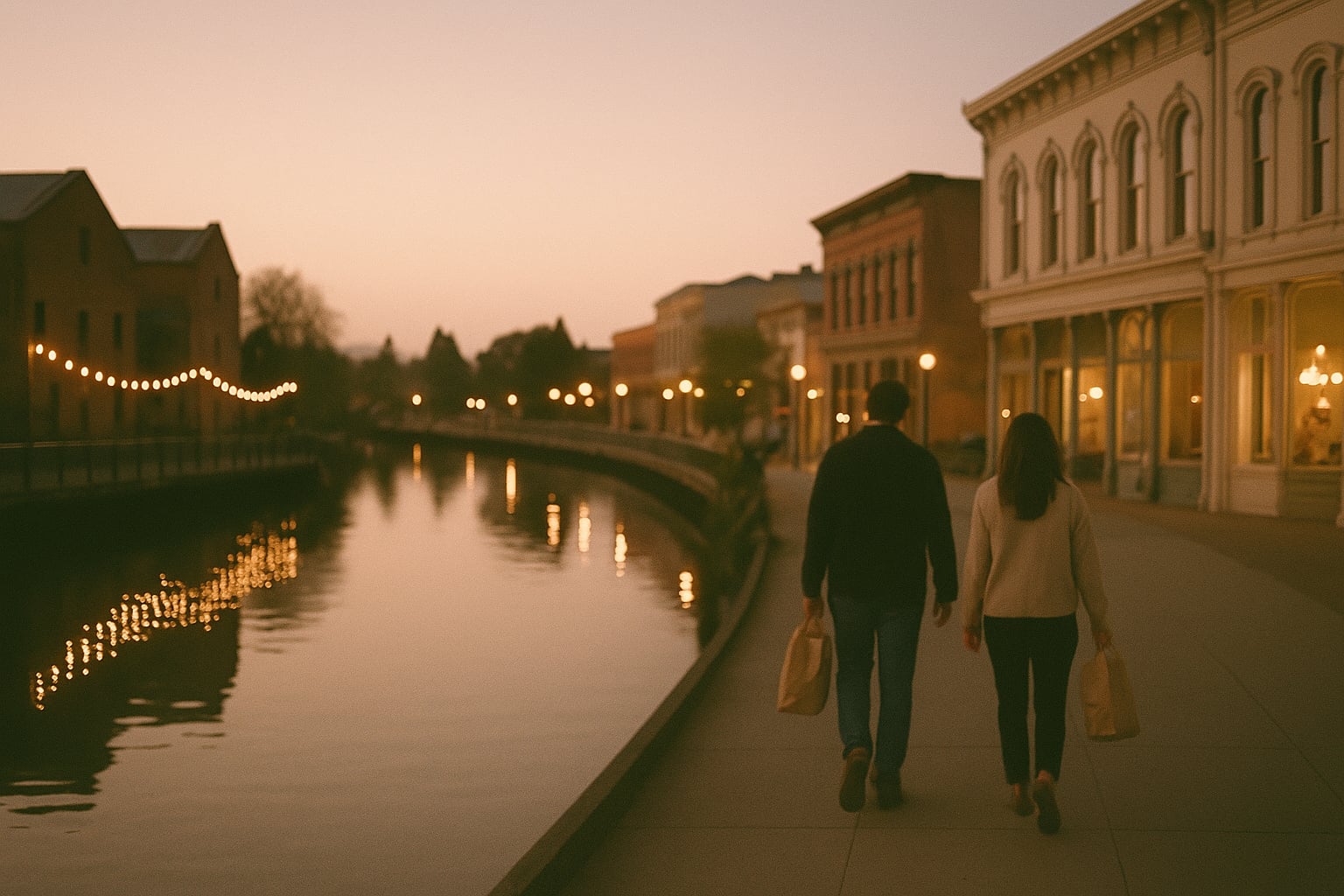
If you've eaten somewhere around the Healdsburg plaza — at a table near the window, with good wine arriving without being rushed — you know what this feels like. The evening has weight. Not pressure. Weight. It wants to be taken seriously.
You order more than you planned to. You share. You argue very gently about the better dish. Someone makes the other laugh with their mouth slightly full.
The best relationship conversations don't happen when you schedule them. They happen when you've created the right conditions and then left room.
— MLL
The Phone Thing
At the slightly-too-nice restaurant on a Thursday, the phones stay in pockets. Not because of a rule. Because taking yours out would feel wrong.
The environment enforces what you've been meaning to do anyway. That's the trick. You're not white-knuckling your way through a phone-free dinner. The room just doesn't invite it.
Compare this to eating on the couch, where the remote is already in someone's hand before the food is plated. Same people. Different container. Completely different result.
It's Not About Money
Slightly-too-nice is relative. It means one step past comfortable. For some people that's a tasting menu in Yountville. For others it's the Italian place with cloth napkins and a wine list that requires a minute.
The price point is not the point. The deliberateness is. You looked it up. You made a reservation. You showed up for it on a night when nothing required you to.
That's the move. It's low-stakes and high-signal at the same time.
What It Signals Long-Term
In long relationships, the absence of small gestures rarely feels like neglect in real time. It accumulates slowly, then announces itself all at once. You look back and realize you haven't done anything on purpose in months.
This is different from a grand gesture. Grand gestures are, by nature, rare. They carry expectation and performance. A Thursday dinner at a restaurant you dress for carries neither. It's just you, deciding that right now is worth it.
Do it four times a year and it's a thing you do. A part of who you are together. That compounds.
How to Actually Do This
Pick a restaurant you've been once and liked but haven't returned to. Not a new one — too much pressure to discover something. One you already know is good.
Make the reservation on a weekday. Not Friday — Friday already feels like occasion. Tuesday or Thursday. Something that has to earn its status.
Don't announce it as a big thing. Tell your partner where you're going, what time, to wear something they feel good in. Leave it there. No preamble.
Order the thing that costs more than you'd usually spend. Don't explain it. Share something. Take the long way home after.
The Version of You at That Table
Here's what actually happens when you do this: you remember who you are when you're not managing logistics.
The version of you at that table — dressed intentionally, slightly too late on a Thursday, no agenda past dessert — is a version your relationship needs to see sometimes. Not to perform. Just to remember.
The occasion wasn't waiting. You made it.