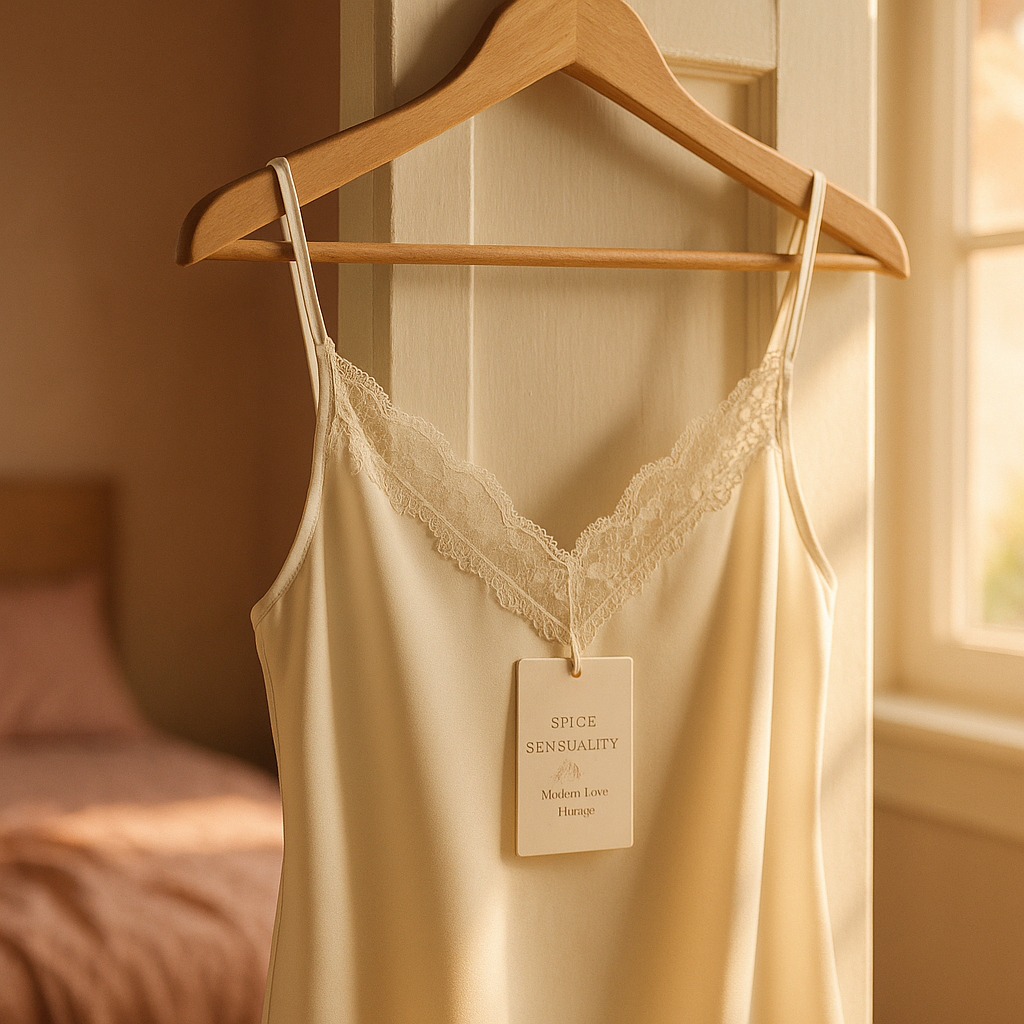
Most people have thought about what they wear to attract someone. Fewer have thought about what they wear when they've already decided.
There's a difference. Seduction outward is performance. Seduction inward is permission. One is about being seen. The other is about arriving — in your own body, on your own terms, before anyone else is even in the room.
This is about that second thing.
The Ritual Nobody Names
You already know the feeling. A shower that runs a little longer. You reach for the good lotion — not the drugstore one you use on a Tuesday — the one that smells like something. You take a beat before pulling clothes out of the drawer.
That pause. That's the thing.
It's not about the other person. It's a private signal to yourself: tonight is different. I'm choosing to be present for this. My body is part of the plan.
We have language for almost everything else in intimacy. We talk about mood, about desire going quiet, about initiation. But we don't really talk about the getting-ready ritual as its own act. As something that belongs to you.
What 'Absolutely Yes' Dressing Actually Looks Like
It's rarely the obvious thing. It's usually not the full set purchased for a specific occasion and worn three times in a relationship. It's more specific than that. More personal.
For some people it's a particular fabric against skin. Silk that slides instead of grips. Cotton that's been washed soft. The weight of a robe you only untie when you mean it.
For others it's a scent layered deliberately — oil on the inside of an elbow, the base of a throat. Not for the other person to notice first. For you to carry into the room already.
Sometimes it's a single piece. Not a set, not a coordinated anything. Just one thing that makes you feel like the version of yourself who has decided.
Why This Is Different From Dressing to Be Desired
Dressing to be desired is external. You're curating an image for a receiver. You're thinking about what lands.
Dressing to confirm your own readiness is internal. You're not curating for reception. You're building a state. There's no audience for this part. Just you and a mirror, or not even that.
The distinction matters because one of the quietest things that erodes desire in long relationships is the collapse of the private ritual. The getting-ready stops being for yourself. It becomes functional, or it disappears entirely. You're already in bed, already in whatever you fell asleep in last night.
Nothing wrong with that on a Wednesday. But when it becomes the only mode, something small gets lost. The signal to your own nervous system that says: I'm here. I want this. I'm already moving toward it.
Desire is partly a decision. The body follows what the ritual makes space for.
— Modern Love Living
The Specific Textures That Do the Work
This is worth getting concrete about. Because it's not abstract. It's sensory.
Silk is the obvious answer and still the right one — not because it's glamorous, but because it reminds skin it exists. You feel it moving. It registers.
Lace does something different. It's friction-adjacent. It catches. It asks you to be slightly aware of where it sits.
A quality robe — heavy enough to feel like something, soft enough to want to stay in — functions almost like a threshold. You put it on and you're still in the in-between. You take it off and you've crossed something.
Body oil changes how skin feels to yourself, before anyone else touches it. That warm slip of jojoba or argan on a shoulder is its own event. Not prep. Not grooming. Noticing.
When One Partner Does This and the Other Doesn't
Worth naming: this isn't a gendered behavior, but it often falls asymmetrically in couples. One person has a ritual. The other rolls over from the couch.
That asymmetry isn't necessarily a problem. But it can become one quietly. The person with the ritual starts to feel like they're the only one who prepared. Like they arrived and the other person just happened to be there.
The ritual doesn't have to match. It doesn't have to take the same form. But when both people do some version of it — even briefly, even simply — it changes the temperature of what follows. You both showed up on purpose.
What This Looks Like Specifically (A Scenario)
Friday night, no plans that involve leaving the house. The kids are at someone's parents. Or it's just a night you've both acknowledged, without saying it directly, has potential.
You shower. You use the good soap. You take your time with the towel.
You open the drawer — not the top one with the practical underwear, the other one — and you make a choice. Not because your partner will see it in thirty seconds. Because you want to be wearing it in thirty seconds.
You put on a little oil. You don't rush the part where you're alone in the bathroom. You look at yourself without judgment, which is its own small act.
By the time you walk out, you've already said yes. The rest of the night is just following through.
Solo Version: The Ritual Belongs to You Regardless
Everything above applies when you're alone.
The private ritual isn't relationship infrastructure. It's personal infrastructure. Getting dressed intentionally for solo intimacy — whatever that looks like for you — is the same principle. You are the audience. You are also the point.
There's something worth practicing about treating your own readiness like it deserves preparation. Not because it makes the experience better, though it usually does. Because it trains you to take your own desire seriously.
That's not a small thing.
Frequently Asked Questions
What does it mean to dress for your own readiness vs. dressing to seduce a partner?
Dressing to seduce someone else is about creating an image for them to receive. Dressing for your own readiness is a private signal to yourself — a ritual that moves your body and attention into a state of presence and intention before any interaction begins. The audience is you.
Does the specific clothing matter, or is it more about the ritual?
Both. The ritual of deliberate choosing matters — but specific textures and fabrics do real sensory work. Silk, quality lace, a heavy robe, body oil: these aren't decorative. They change how you inhabit your skin before anything else happens.
Can this ritual help with low desire or feeling disconnected from intimacy?
Often, yes. Desire doesn't always arrive before the body moves toward it. A deliberate getting-ready ritual — even a small one — can function as a physical on-ramp. It signals your nervous system that something intentional is happening. The body tends to follow.
What if my partner doesn't have any kind of ritual and I feel like I'm always the one who prepared?
That gap is worth noticing. The rituals don't need to match in form, but when only one partner seems to arrive with intention, it can start to feel uneven. You don't need to script matching routines — but naming it as something you both do, in your own way, can shift the dynamic.