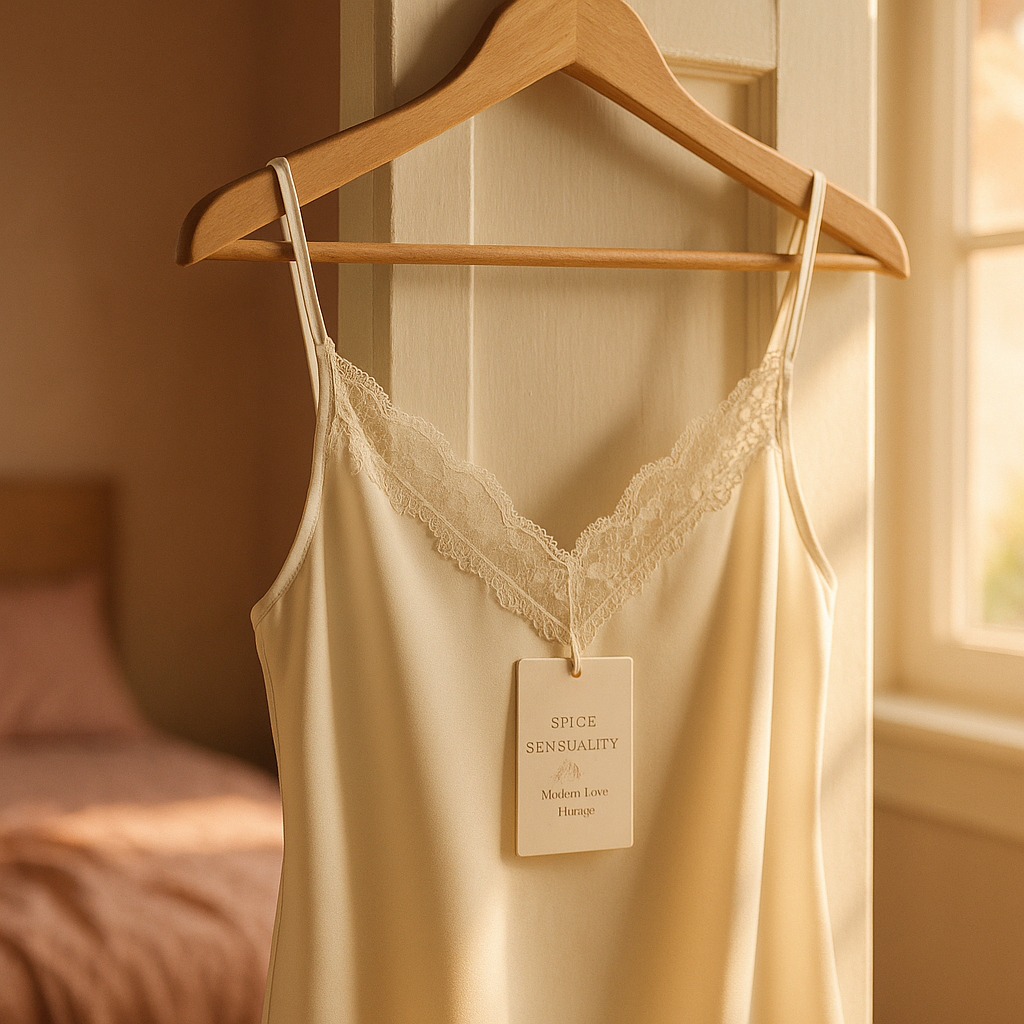
There's a version of getting dressed that has nothing to do with anyone else. No one's coming over. No one asked. You open the drawer anyway.
Maybe it's the black silk set you bought six months ago that still has the tags on. Maybe it's the one piece that fits in a way that makes you stand differently in front of the mirror. You put it on. You look. Something shifts.
That moment — private, unwitnessed, a little charged — is one of the more underrated things a person can do for themselves.
The Audience Problem
Most of us learned to think about lingerie — or anything overtly sensual we put on our bodies — as a performance. Something staged for someone else. The visual for the reveal. The surprise at the door.
Which means most of us have spent years not wearing things we actually like, because there was no occasion. No witness. No reason.
That's the audience problem. It outsources your own desire to someone else's presence. It makes your pleasure conditional.
If you only feel sexy when someone else confirms it, you don't actually feel sexy. You feel approved of. Those aren't the same thing.
— MLL
What the Private Ritual Actually Does
When you put something on just for yourself — something that makes you aware of your own skin, the weight of fabric, the way it sits — you're not being indulgent. You're practicing something.
You're practicing noticing your own body as something worth noticing. Without the pressure of being watched. Without performance anxiety running alongside it.
Desire needs somewhere to live between the big occasions. The private ritual keeps it warm.
What You Choose When No One's Watching
Here's what's interesting: what you reach for when there's no audience is often different from what you'd reach for if someone were watching.
The performance version is usually about effect. What reads well. What photographs. What you imagine landing correctly in someone else's brain.
The private version is about sensation. Texture. Fit. The specific thing that makes your shoulders drop slightly and your posture do something involuntary.
Those two choices reveal different things about what you actually want — and how well you know yourself.
The Micro-Behavior That Signals Everything
Notice what you do immediately after putting something on alone. Do you look? Do you avoid the mirror? Do you keep it on for ten minutes and then change back into something forgettable?
The avoidance is the data. If you can't hold your own gaze in something that's supposed to make you feel good, that's not a clothing problem.
It's worth sitting with. Not in a heavy way. Just: what is this? Is it self-consciousness? Old noise? Something a person said once that lodged itself somewhere it shouldn't have?
The private ritual, done regularly, starts to quiet that. Slowly. It doesn't announce itself as healing. It just works on you.
How It Changes What Happens Later
Here's the part that matters for couples, for long-term relationships, for anyone navigating desire that's gone a little quiet: when you stop outsourcing your arousal entirely to someone else's attention, you bring something different to the shared space.
You arrive already in your body. Not waiting to be activated. Not performing availability. Actually there.
That's a different energy. It's noticeable. And it's not something you manufacture for someone else's benefit — it's just what happens when you've been paying attention to yourself.
The Specifics Matter
Not all private dressing is the same. There's a difference between putting on something silk because it feels good against your skin in August heat and putting on something specifically because it makes you feel like a version of yourself you like.
The first is comfort. The second is intention. Both are valid. But only one is practicing desire.
The intention version requires a small, deliberate choice: I am doing this for me. Not for later. Not because someone's coming. Not as a warm-up act. Now.
You could be making dinner. Reading. Walking around your apartment in Healdsburg on a slow Sunday while the plaza fills up outside and you have nowhere to be. The ritual doesn't require occasion. That's the point.
What the Reveal Looks Like After This
When someone does eventually see it, something is different. Not dramatically. Not in a way that requires explanation.
But the ease is different. The way you hold yourself is different. You're not waiting for a verdict. You already gave yourself one.
That changes the temperature of the room before anything else does.
Confidence in intimacy isn't built in the moment of being seen. It's built in all the moments you saw yourself first.
— MLL
A Practical Note
If you've never done this deliberately, it feels slightly ridiculous the first time. That's normal. You're doing something private and intentional that nobody taught you to do, and the performative wiring in your brain keeps looking for an audience to justify it.
Give it ten minutes. Keep it on longer than feels necessary. Notice what changes in your body. Not your opinion of your body — your relationship to being inside it.
That's the whole practice. Everything else follows from there.
The drawer you never open for yourself is a small piece of data about how you've been treating your own desire. It doesn't require a grand reckoning. Just open the drawer.