You didn't buy it because someone would see it. That's what you told yourself standing at the checkout, or hovering over the confirmation button at midnight while your partner slept eight feet away. You bought it because you wanted it. Because it was the exact shade of something you'd been circling for years without ever just getting.
And then you put it on, alone, probably in the bathroom with the door mostly closed. And something happened.
Not a transformation. Not a movie moment. Just a small, quiet shift — the kind where you stand a little differently and your face does something you didn't ask it to do.
What Dressing for Yourself Actually Feels Like
It's different from dressing to be seen. The mechanics look the same — fabric, fit, a mirror — but the direction of the gaze is inverted. You're not auditioning. You're not answering a question someone else is asking. You're just... deciding what's true about you tonight.
That's a deceptively small thing that turns out to be enormous.
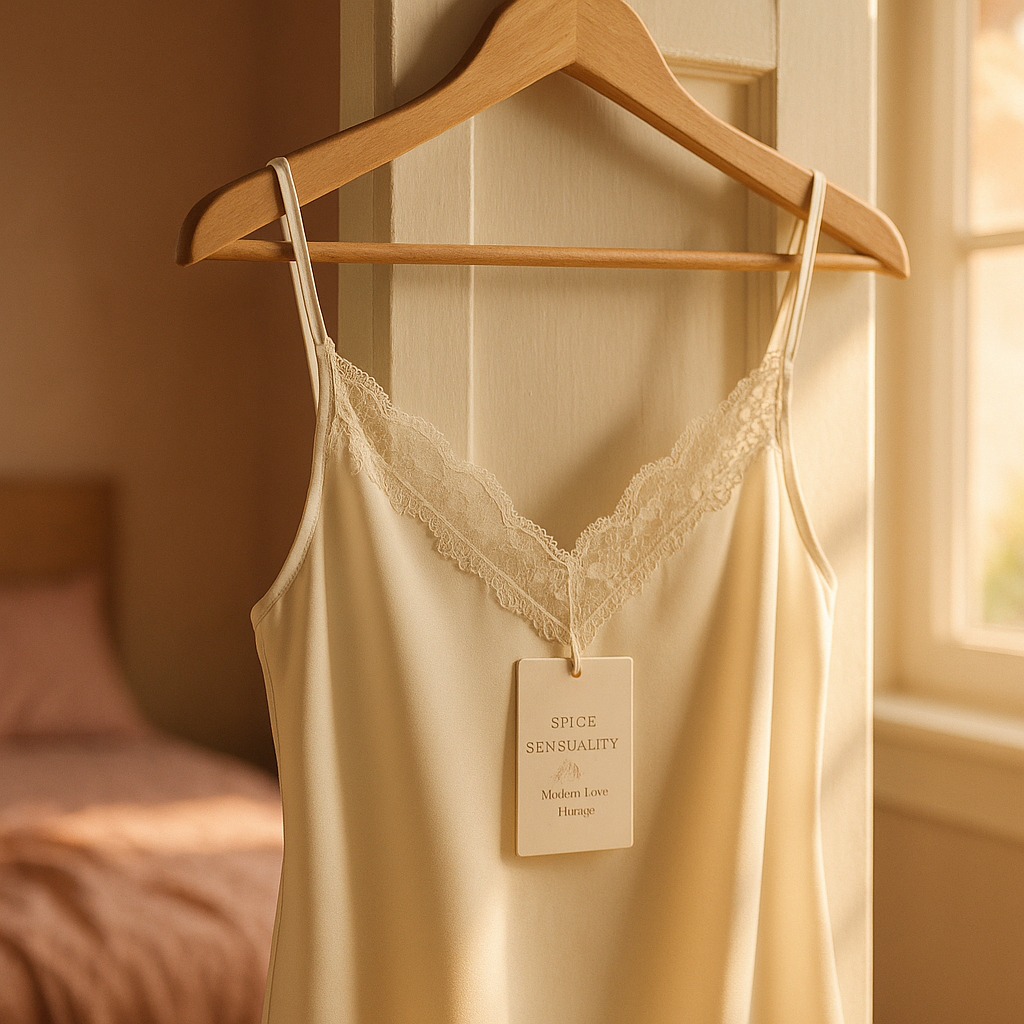
The satin slip that cost more than it should. The bodysuit with the straps that take a minute to figure out. The silk robe that's too nice for Tuesday but you wore it on a Tuesday anyway, with nothing underneath, to make coffee. These aren't performance pieces. They're permission slips.
The Mirror Moment Nobody Talks About
There's a specific kind of moment that happens when a piece of lingerie fits the way you imagined it would. Not perfectly — bodies aren't symmetrical and light doesn't always cooperate — but right, in the way that matters. You see something in yourself you'd been taking on faith.
It's not about the lingerie. It's about what the lingerie found that was already there.
This is what articles about body confidence miss when they stay too abstract. It's not a mindset shift. It's weight of fabric, a specific cut against a specific curve, the heat of your own skin through something thin and deliberate. Sensory and present and yours.
I bought the bra in three colors because I finally found the one that fit. And then I kept wearing it even on days nobody would see it. Especially on those days.
— MLL reader, submitted anonymously
And Then Someone Else Walked In
Here's where it gets interesting. You weren't performing. You weren't waiting. You were just in the middle of being someone who buys beautiful things for herself and wears them without apology.
And your partner walked in, or called from across the room, or noticed something different they couldn't name.
What they were picking up on wasn't the lace. It was the posture beneath it. The specific kind of ease that happens when you're not outsourcing your own desirability to someone else's reaction. That's a different energy than even the most intentional seduction. It doesn't ask for anything. Which somehow makes it more.
This isn't a trick. You can't manufacture it by pretending you bought something for yourself when you actually bought it for them. The body knows. The energy is different when there's a performance running underneath.
Why This Is Genuinely Different From Dressing to Attract
Dressing to attract someone is a fundamentally reactive act. You're calibrating to an external signal: what do they like, what reads as desirable in this context, what version of me will land.
That's not bad. It's actually part of intimacy — mirroring, wanting to be wanted, the charged awareness of another person's attention on your body.
But dressing for your own desire first does something else. It means you showed up already full. Already in contact with your own want. That's a different person to be in a room with.
The Long Relationship Version of This
If you've been with someone for years — seven, eleven, longer — there's a specific drift that happens around desire. You stop buying things for yourself. You stop dressing for your own pleasure. Not because you stopped caring, but because the mirror stops feeling like it's for you. It starts feeling like a prop in a story about the two of you.
That's the slow leak nobody puts a name on.
Buying something beautiful for yourself — and wearing it in the ordinary moments, not saved for a special occasion that may never arrive — is a way of reclaiming that private sense of self that keeps a long relationship alive from the inside out. It's not about your partner. But they feel it. They always do.
What to Actually Buy (And Why That's the Wrong Question)
The specific piece matters less than the specific reason. Not: will this read well. Not: is this what they'd want to see. The question is: does this feel like me, or like me trying to be something.
Sometimes that's something barely-there in a color that has no practical business existing. Sometimes it's a beautifully heavy robe you close around yourself on a cold morning in a Healdsburg inn when your partner is still asleep and the light is doing something to the floorboards and you pour coffee and feel privately, completely like yourself.
Both of those are right. The thread between them is that you chose based on your own pleasure first.
The Part That Spills Into Sex
When you dress from desire rather than toward it, the way you move through intimacy changes. You're less waiting to be lit up by someone else's response. You're already running.
That changes initiation. It changes how quickly you get out of your own head. It changes what you ask for, because you've already been in conversation with your own want long enough to know what it sounds like.
None of this is a guarantee. But it stacks the conditions in a particular direction.
The nights that actually go somewhere usually start earlier than I thought — not with anything we did together, but with something I did alone.
— MLL reader, submitted anonymously
A Note on Solo Pleasure and This Exact Same Logic
Everything above applies whether there's a partner involved or not. The specific pleasure of dressing for yourself — the satin, the weight, the ritual of choosing and putting on — is its own complete experience. Not a warm-up. Not a consolation prize.
The bedroom drawer, the mirror, the particular silk that slides a specific way: all of it belongs to you first. That's not a lesser version of desire. It might be the cleaner one.
You bought it for yourself. That was always the most interesting part. What happened next was just evidence.