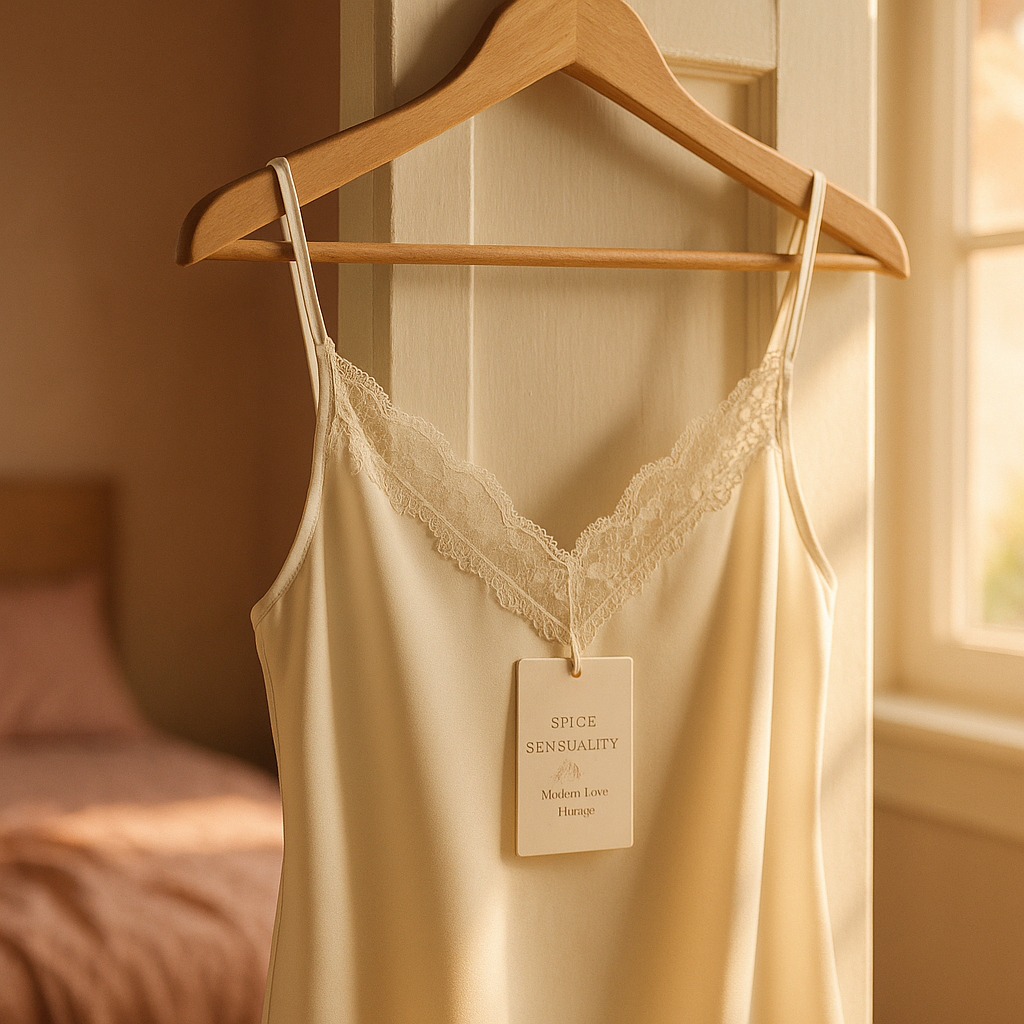
There's a specific silk slip that lives in the back of your drawer. You bought it for a trip. Or a night. Or someone who made you feel like the kind of woman who buys silk slips. And then the trip ended. The night ended. The someone ended. But you kept it.
Not as a relic. Not out of laziness. You kept it because, at some point between the purchase and right now, it stopped belonging to them and started belonging to you.
That quiet handoff is what nobody talks about. Not the breakup, not the drawer audit, not the rebrand. Just the morning you reached past the old T-shirts and put it on for absolutely no one.
Sensuality Was Never Supposed to Be a Performance
Most of us learned to connect what we wear to bed with who's watching. It starts early — the idea that a pretty bra is aspirational, that lace is an invitation, that looking good in the dark requires a recipient. So we shop with an audience in mind. We buy for effect.
That's not wrong. Wanting to be wanted is human and real and worth dressing for. But somewhere in the constant performance of desirability, the actual experience of being in your own body gets outsourced.
You stop asking: does this feel good on my skin? You only ask: does this read well from across the room?
The moment you put it on for yourself — no event, no one coming over, no agenda — that's the moment it becomes yours.
— MLL
What the Reclamation Actually Looks Like
It doesn't arrive dramatically. Nobody wakes up and decides to reclaim their sensuality. It's smaller than that.
It's a Tuesday. You've just showered. You reach for the slip — the one with the thin straps and the hem that hits mid-thigh — and you put it on because it's there and it's soft and you want to feel something smooth against your skin while you drink your coffee and stare out the window for eight minutes before the day starts.
That's it. That's the whole event.
But then you do it again Thursday. And then you notice you moved it from the back of the drawer to the front. And then it occurs to you — maybe weeks later — that you feel a certain way when you wear it. Not sexy for someone. Just present in your body in a way the cotton pajama set doesn't quite do.
The Weight a Garment Used to Carry
Here's the uncomfortable part. When you bought it originally, it carried weight. The weight of wanting approval. Of being enough. Of staging yourself for someone else's pleasure before your own.
That's not a character flaw. It's just what desire can look like before you've separated your own pleasure from someone else's gaze.
Some people try on lingerie and immediately think about being seen in it. Others try it on and first notice how it sits on their ribs, how the fabric moves when they shift weight, whether the band is doing something strange at the back. The second group has usually lived inside their body a little longer — or been through something that brought them back there.
The slip in the back of the drawer carries both histories. And when you move it to the front, you're not erasing the first one. You're just adding a second one that belongs only to you.
What Changes When It's Just for You
You start making different choices. The scratchy lace that looked incredible but felt like wearing a verdict: gone. The chemise you avoided because it showed your stomach from the wrong angle, but which happens to be the softest thing you own: you wear it more.
Sensation starts to win over optics. Weight, drape, temperature. The way a robe in a heavy waffle knit makes you feel anchored at 7 a.m. The way silk at night changes the quality of sleep — not dramatically, but enough.
You stop performing comfort and start having it.
This Doesn't Mean You Stop Wanting to Be Desired
Let's be clear. This isn't about swearing off the gaze or announcing that you dress for yourself now as if it's a moral position. Nobody needs that version.
Wanting to be desired is a legitimate and ongoing part of being alive. The goal isn't to eliminate the audience — it's to stop requiring one.
There's a real difference between putting on something beautiful because a partner is coming over and you want them to feel the full effect — and feeling like you need that occasion to justify it. One is pleasure. The other is permission-seeking.
Self-possessed people wear things for both reasons, on different days, without needing a hierarchy.
When You're Still in the Relationship
This isn't only a post-breakup story. Plenty of people in long relationships have quietly stopped wearing the things they love because those things feel like overture. And they're not always in the mood to start something.
So they reach for the worn cotton. They save the silk for occasions. They dress, unconsciously, to signal availability or unavailability, and they lose the third option: dressing for their own skin, on a night when it's genuinely not about anyone.
Wearing what you want to wear — even when it's the kind of thing that used to be a signal — without it meaning anything except I wanted to: that's its own kind of intimacy. With yourself. It doesn't subtract from the relationship. It usually adds to it.
Being at home in your own body makes you more present everywhere else. Including, eventually, with them.
— MLL
The Actual Moment of Reclamation
Here's what it looks like when it lands.
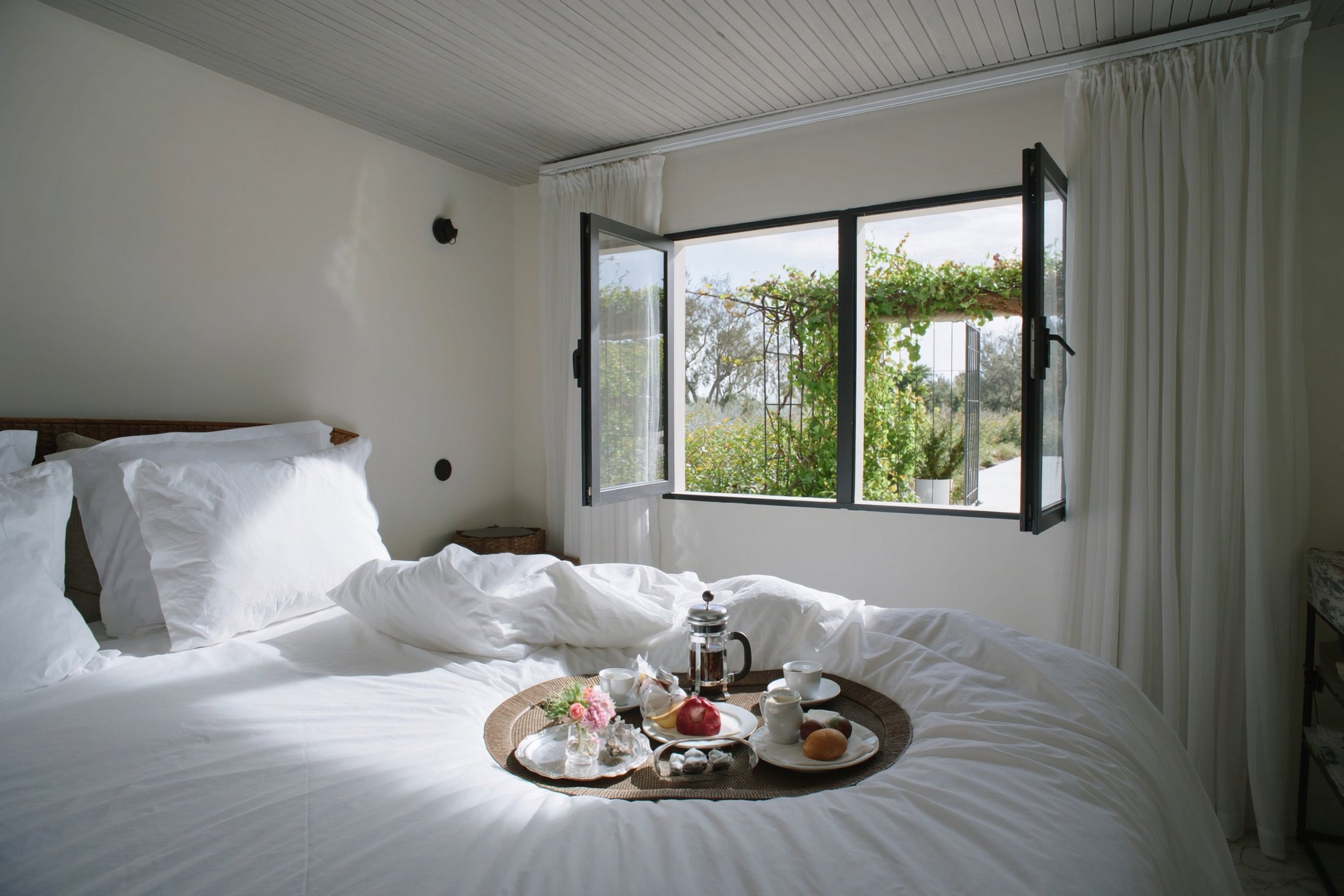
You're alone. Early evening, maybe. You've just come in from work or a drive or nowhere in particular. The light is that low amber it gets in October, soft through the windows, no agenda for the rest of the night. You take a shower, wrap a towel, and stand in front of the drawer.
And you choose the slip — not the cotton, not the old oversized shirt — because you want to feel it on your skin. Not for a photo. Not because anyone's coming over. Not to practice or rehearse or prepare. Just because it's yours.
You wear it all evening. You make food, you read, you do nothing. The fabric moves with you. At some point you catch a glimpse of yourself in a dark window and you look fine — not in the performed way, in the actual way. The way you look when you're not watching yourself be looked at.
That's the reclamation. It's not a revelation. It's just a Tuesday.
Questions People Actually Ask About This
Is it weird to wear lingerie just for yourself?
No. It only seems weird because most lingerie is marketed toward a recipient. Wearing it solo is just removing the intermediary and going straight to the part that matters — how it makes you feel.
What if a piece has too much history — can you actually reclaim it?
Sometimes yes, sometimes it's just a reminder you don't need. The test: does wearing it feel like carrying something, or does it feel neutral enough to make new associations? If it still feels like a costume from someone else's story, donate it and buy something new. One that's yours from the first try-on.
My partner gets confused when I wear nice things to bed and don't want sex. How do I handle that?
Say it plainly: I just wanted to wear this tonight. You don't owe anyone a full explanation for your choice of fabric. If the confusion keeps happening, that's a longer conversation about desire, signaling, and the space between the two — but that conversation starts with the same honest sentence.
What should I actually look for if I'm buying something for the first time that's genuinely just for me?
Start with texture, not silhouette. Pick it up in the store and hold it against your inner wrist — that's where you'll know. Drape, weight, temperature. Then fit: does it stay where it should without effort? Anything that requires management is going to pull you out of your body, not into it. Color is last. Get what you actually like, not what reads best on camera.