You've been waiting for the mood to arrive. Like weather. Like it'll just show up one Tuesday when the dishes are done and your inbox is quiet and nothing aches. You've been waiting a long time.
Here's the thing nobody says clearly enough: for most people, most of the time, that mood doesn't come first. It comes during. Sometimes after. The spontaneous-desire model — horny now, act on it, done — is real for some people some of the time. It's also the only version we've been shown. Movies, memories, early-relationship adrenaline. All of it trains you to expect desire as an arrival rather than a choice.
The choice part sounds less sexy. It isn't. It's actually the whole thing.
Why 'Spontaneous' Is Usually Just 'Early'
When relationships are new, everything is context. Novelty, anxiety, the slight electricity of not-yet-knowing-someone's-smell — that all triggers desire before you've done anything to earn it. It feels like spontaneity. It's really just chemistry running hot on unfamiliarity.
That fades. Not because something broke, but because your nervous system stopped treating your person as a variable. They're safe now. Familiar. That's the whole point of intimacy, and it's also why waiting for the early-relationship mood in a long-term relationship is like waiting for the first-date butterflies at your own kitchen table.
Desire in long-term relationships is less like a wave you catch and more like a fire you build. You need kindling first.
— MLL
This isn't a failure. It's a different terrain. One that requires a different entry point.
What 'Deliberate Entry' Actually Looks Like
Not a checklist. Not a mood board. Not a self-help exercise you read about once and felt exhausted by immediately.
It looks like closing the laptop thirty minutes before you'd planned to. It looks like a shower that's slightly too hot and a robe you actually like the weight of. It's changing the light in the room before you're in the mood, because you've learned that the right light is part of what gets you there. It's putting on the playlist that doesn't announce itself as sexy but always, reliably, works.
It's telling your body: we're going toward this now. Permission granted.
Responsive desire — the kind that wakes up once something is already in motion — is more common than spontaneous desire, especially for women and for people in longer relationships. Knowing which type you are isn't a diagnosis. It's a map.
The Guilt in the Gap
There's a specific kind of shame that lives in the space between 'not feeling it' and 'wishing you were.' You love your partner. You find them attractive. And still — Tuesday night, everyone fed, house quiet — nothing stirs.
That gap breeds a story: maybe you're not attracted to them anymore. Maybe something's wrong with you. Maybe this is just what happens and you should accept it.
None of those are necessarily true. More often, what's true is simpler: your nervous system is still in task mode. You haven't transitioned. You've been waiting for the mood to flip like a light switch when you actually need a dimmer, set to low, given time.
The gap isn't evidence of a problem. It's evidence that you haven't started yet.
How to Actually Start
Give yourself a transition, not a decision
The move from grocery-list brain to present-in-your-body doesn't happen by deciding. It happens through sensation. A glass of something cold. Skin under warm water. Changing out of the clothes you worked in. The transition is physical, and it needs space — even fifteen minutes of deliberate unwinding counts.
Lower the stakes on the first move
You don't need to want sex to want contact. Starting with something smaller — back of your hand on someone's arm, forehead to forehead, lying down without an agenda — often does more than a direct advance at the wrong moment. Let the body catch up to the intention.
Use memory on purpose
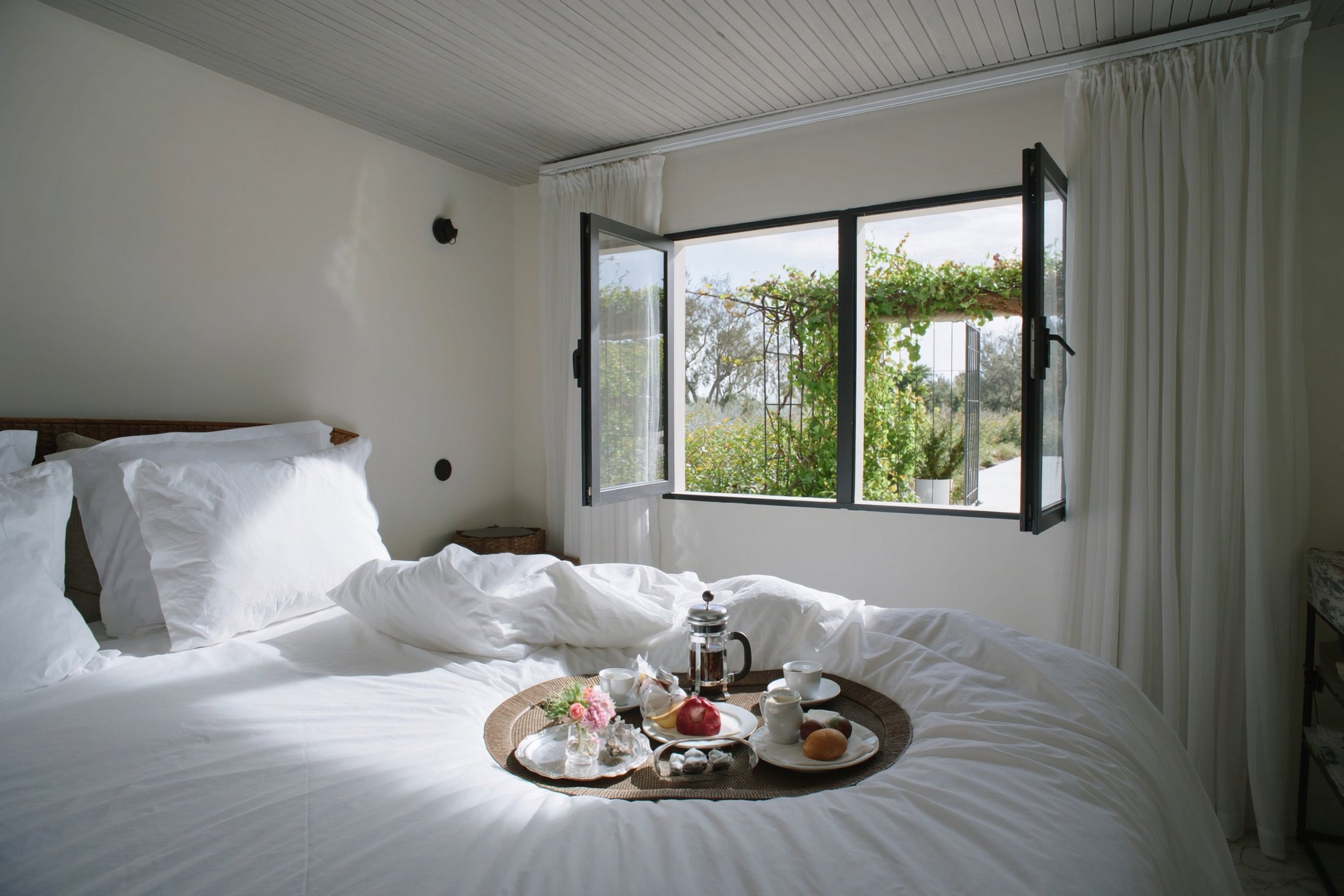
Your brain doesn't distinguish cleanly between remembering and experiencing. A specific memory, recalled deliberately, can shift your physical state. Not the vague concept of 'a good time you had' — the actual one. The hotel in Healdsburg where the sheets were cold when you got in and warm six minutes later. That specific thing. Go there.
Let the room do some of the work
Environment is not romantic decoration. It's a signal to your nervous system about what's allowed here. Dim the light, actually. Put your phone face-down, actually. Light something. These aren't ambiance tricks — they're permission slips you're writing to yourself in the language your body understands.
Solo, This Matters Too
Everything above applies to your relationship with your own desire, not just a partner's. Waiting to feel aroused before giving yourself attention to your body is the same trap, set solo.
The drawer with things in it doesn't have to wait for a perfect evening. The oil that's been sitting on the nightstand doesn't require a mood. It can help make one. You already know this. The permission to act on it first — that's what most people are actually missing.
What This Looks Like for Two People
One of you is more spontaneous. One of you is more responsive. This is almost always the case. The spontaneous-desire partner interprets the responsive partner's need for runway as rejection or disinterest. The responsive partner interprets their own need for runway as brokenness. Both are wrong, and both are quietly hurting about it.
The fix isn't a conversation about 'desire styles' over dinner, delivered like a thesis. It's smaller. It's the spontaneous partner building a context instead of making a move. It's the responsive partner saying not yet, but let's go toward it instead of just no.
That one shift — from 'I don't feel it' to 'I'm not there yet but I'm willing to move toward it' — changes everything.
The Permission You've Been Waiting For
You don't have to wait to feel it. You're allowed to build toward it. You're allowed to choose it before it chooses you.
That's not settling. That's not mechanical. It's actually more intimate than waiting for chemistry to do the work — because it requires you to show up on purpose, in your body, for yourself or for someone else, before the mood confirms it was a good idea.
Sometimes you start, and nothing ignites, and that's information. But more often than not: you start, you transition, something shifts. The warmth arrives. The wanting follows.
You just had to stop waiting for the permission that was yours to give all along.