You've said it. You've heard it. You may have texted it to someone at 11 PM after a third date that went longer than expected and involved a second bottle of wine and one of those conversations that felt like falling down a staircase in the best way.
We're taking it slow.
It sounds mature. Intentional. Like something a person says when they've done the work and know themselves. It sounds like the opposite of impulsive.
It is often none of those things.
What It Used to Mean
There was a version of this phrase that earned its reputation. Taking it slow, in its original usage, implied a kind of reverence. It meant: this matters, so I'm not going to sprint through it. Let's not sleep together before we know each other's middle names. Let's not meet each other's families until we've had a real fight and recovered from it.
It was about building something that could hold weight. It was a pace choice, not a verdict suspension.
That version still exists. But it's gotten crowded out by a newer use — one that sounds the same but means something entirely different.
What It Actually Means Now
In contemporary dating, taking it slow is most commonly deployed as a non-answer that buys time without requiring honesty. It is, functionally, a way to keep someone in rotation without making a promise. It is ambiguity dressed up as wisdom.
Here's the tell: ask someone who says they're taking it slow what they're actually moving toward. Watch what happens. Most people can't answer. Not because the future is uncertain — that's always true — but because they haven't decided whether they want one with this person at all.
This is where it gets uncomfortable. Because the people saying it usually aren't lying. They're genuinely uncertain. They like the person. They don't want to end it. They also don't want to commit to it. And taking it slow is the only phrase that lets all three of those things coexist without anyone having to name what's happening.
The Person on the Other End of It
Picture this: it's a Sunday morning. Someone you've been seeing for two months is asleep on the other side of your bed. The light is good. They look like a person you could love. You get up, make coffee, stand at the kitchen window. You don't know what to call this. They don't know what to call this. Neither of you has brought it up because taking it slow already answered the question before it was asked.
Except it didn't answer anything. It postponed the asking.
The person who agreed to take it slow now has to decide, every week, whether the slow pace means they're almost somewhere or whether they've been circling the same block for months. They can't ask without seeming impatient. They can't stop caring without seeming cold. They're in a bind created entirely by one phrase.
The cruelest part of intentional ambiguity is that it feels considerate while it's happening.
— Modern Love Living
Why the Phrase Feels So Safe to Say
We are, as a dating culture, terrified of two things: being too eager and being too closed off. Taking it slow threads that needle. It signals that you're emotionally available without requiring you to actually be available. It says: I'm interested, but I'm also discerning. I'm warm, but I have boundaries.
It has also become a socially acceptable response to commitment anxiety that doesn't require you to call it that. Nobody has to say I'm afraid or I've been burned or I don't know if I'm capable of this right now. They just say the slow thing, and everyone nods.
The phrase absorbs the anxiety. It just doesn't resolve it.
How to Tell the Difference
Genuine slow-building looks like this: the pace is measured, but the direction is clear. Both people know, at some rough level, that they are moving toward something. There's a shared acknowledgment — even unspoken — that this is a relationship becoming itself. The slowness is protective, not evasive.
The defensive version looks like this: time passes, and nothing gets more defined. You still don't know where you stand on a Saturday night. You still narrate the situation differently to different friends depending on what they want to hear. You're exclusive maybe. You're serious perhaps. You've met one person from their life, in a context that could easily be explained as friendly.
The difference between the two isn't speed. It's whether anyone can see the destination from where they're standing.
What You're Protecting Yourself From
Here's the part nobody wants to say: when the phrase becomes a shield, what you're usually protecting yourself from isn't getting hurt too fast. You're protecting yourself from finding out whether this is real.
Because if you keep the temperature low, you never have to test it. You never have to discover that they're not as good as the version you've been building in your head during those long drives back from dinner. You never have to find out whether you are, yourself, capable of what a real relationship requires.
Ambiguity is risk management. It's also its own kind of loss.
The Conversation That Actually Helps
This isn't a pitch for rushing. Timing matters. People heal on different schedules. Some situations genuinely require patience.
But there's a conversation available that most people avoid — not the big formal DTR, not the anxiety-soaked so what are we, but something smaller and more honest. Something like: I'm enjoying this. I'm not trying to pressure anything. I just want to make sure we're both going somewhere and not just standing still together.
That's it. That's the whole conversation. It doesn't require a label. It requires one honest sentence about whether there's a forward.
Most people never say it because they're afraid the answer will be no. But the answer is already no if neither person is willing to ask.
A Scene Worth Sitting With
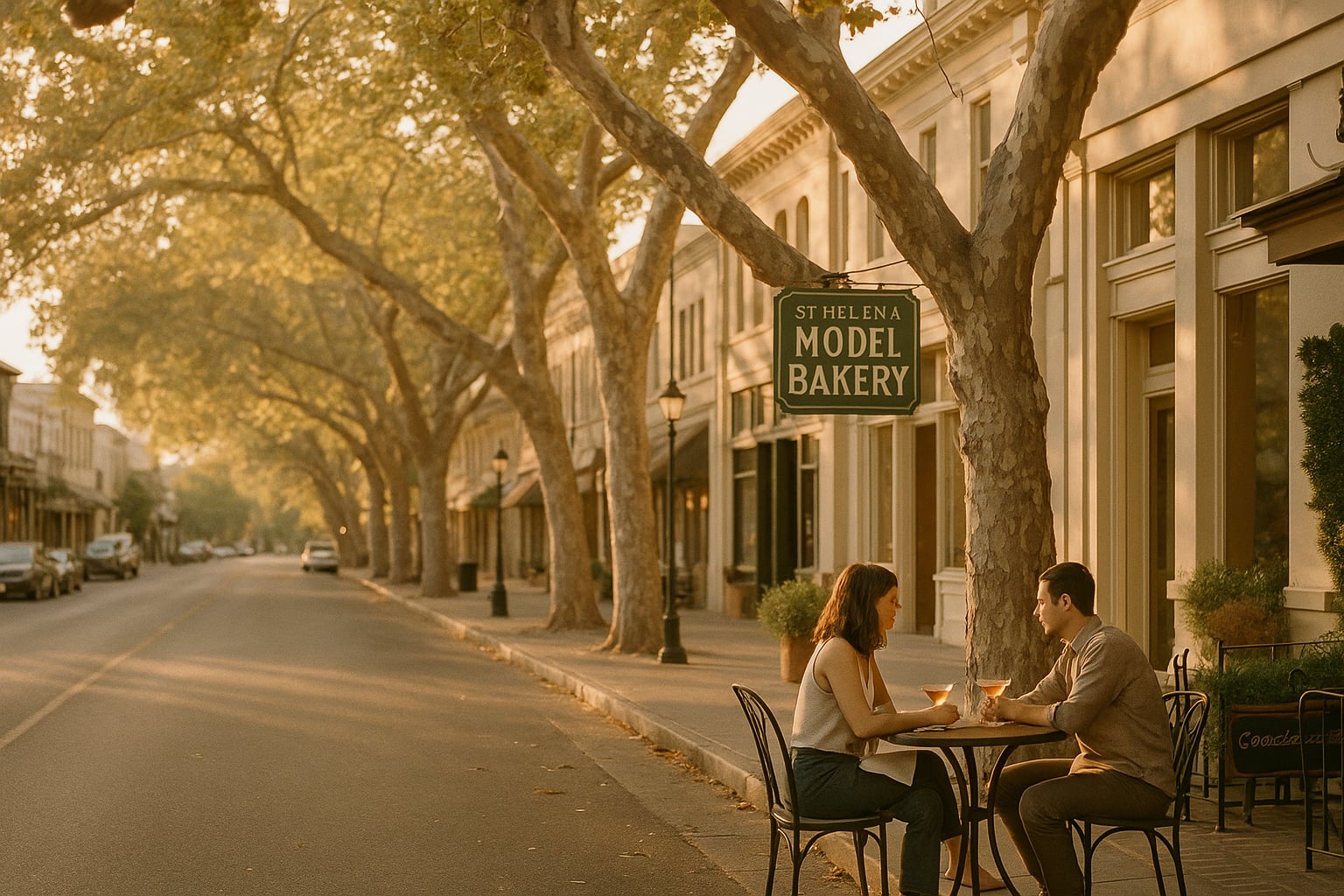
Imagine two people at a small table outside somewhere warm — maybe a courtyard off the Healdsburg plaza, late afternoon, the kind of golden hour that makes everything feel more important than it probably is. They've been seeing each other for three months. It's been easy. It's been good. Neither of them has said anything.
One of them looks at the other and says, quietly: I think I want to know where this is going.
Not demanding. Not dramatic. Just honest.
The other one exhales. Not in the bad way. In the way people exhale when something they've been holding has finally been named out loud.
Taking it slow had been keeping them from that moment. A pace with no destination, dressing itself up as care.
The exhale was the beginning of something. It just needed someone to stop managing the silence long enough to let it arrive.