There's a version of the hard conversation that never happens at the kitchen table. You sit down, you face each other, and something closes. Not dramatically. Just: a tightening. A readiness to defend instead of say.
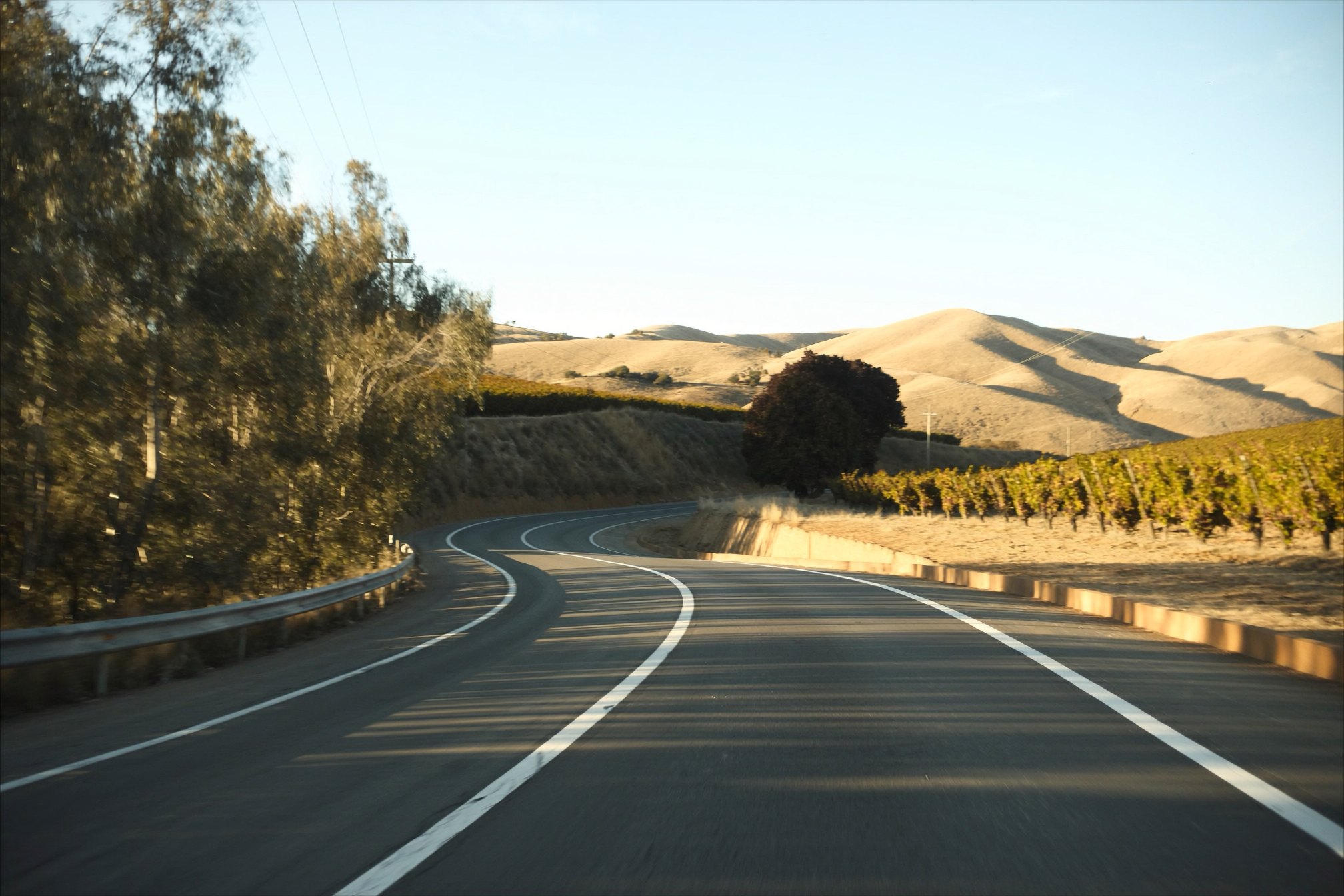
But then you get in the car. You're going nowhere important — maybe wine country, maybe just errands, maybe the long way because someone suggested it without explaining why. And twenty minutes in, the thing you couldn't say across the dinner table just comes out. Quietly. Almost sideways.
That's not an accident. That's architecture.
Why Eye Contact Is Sometimes the Enemy
Direct eye contact is loaded. We're taught it signals honesty, presence, care. And it does. It also signals: I am watching how you react to this. Which means the person speaking is editing in real time — softening, hedging, watching your face for permission to continue.
That's not vulnerability. That's performance under mild surveillance.
Side-by-side removes the feedback loop. When you're both looking at the road, or the trail, or the ceiling in a dark room, the speaker doesn't have to manage your expression. They can finish the sentence. Sometimes they surprise themselves with what comes out.
The most honest thing I ever said to my partner, I said to the windshield on 128 heading toward Boonville. I don't think I could have said it to her face. Not yet.
— MLL reader, Healdsburg
What's Actually Happening in the Body
Movement regulates the nervous system. A slow drive, a walk through a vineyard, even lying in bed both staring at the same dark ceiling — these lower physiological arousal just enough to make the conversation survivable.
Conflict and hard disclosure spike cortisol. The body reads the intensity of face-to-face confrontation the same way it reads threat. Motion bleeds that off. Not entirely. Enough.
The rhythm matters too. Walking sets a pace. A car has momentum. Neither of you can storm off. Neither of you can go rigid and cross your arms and go silent in a way that reads as final. You're just. Moving. Together.
The Scenarios Where This Actually Works
The Car Conversation
The classic for a reason. No phones (or fewer). A fixed duration. The exit is 45 minutes away so you can't retreat into your separate rooms after two sentences. If you've been circling something for weeks, a longer drive on a route that doesn't demand navigation — the Sonoma backroads, the Silverado Trail in off-season — gives you time without agenda.
Don't frame it as a talk. Just drive.
The Walk That Isn't Exercise
There's a specific kind of evening walk that isn't about steps or fresh air. It's two people moving through low light, shoulders occasionally touching, saying things they couldn't say inside. The darkness helps. The forward motion helps. The fact that you're not at a table with food going cold helps.
Couples who do this regularly — not as a ritual, just as a thing that happens — tend to have fewer things that calcify into actual problems. The small releases keep the pressure manageable.
The Dark Room Ceiling Conversation
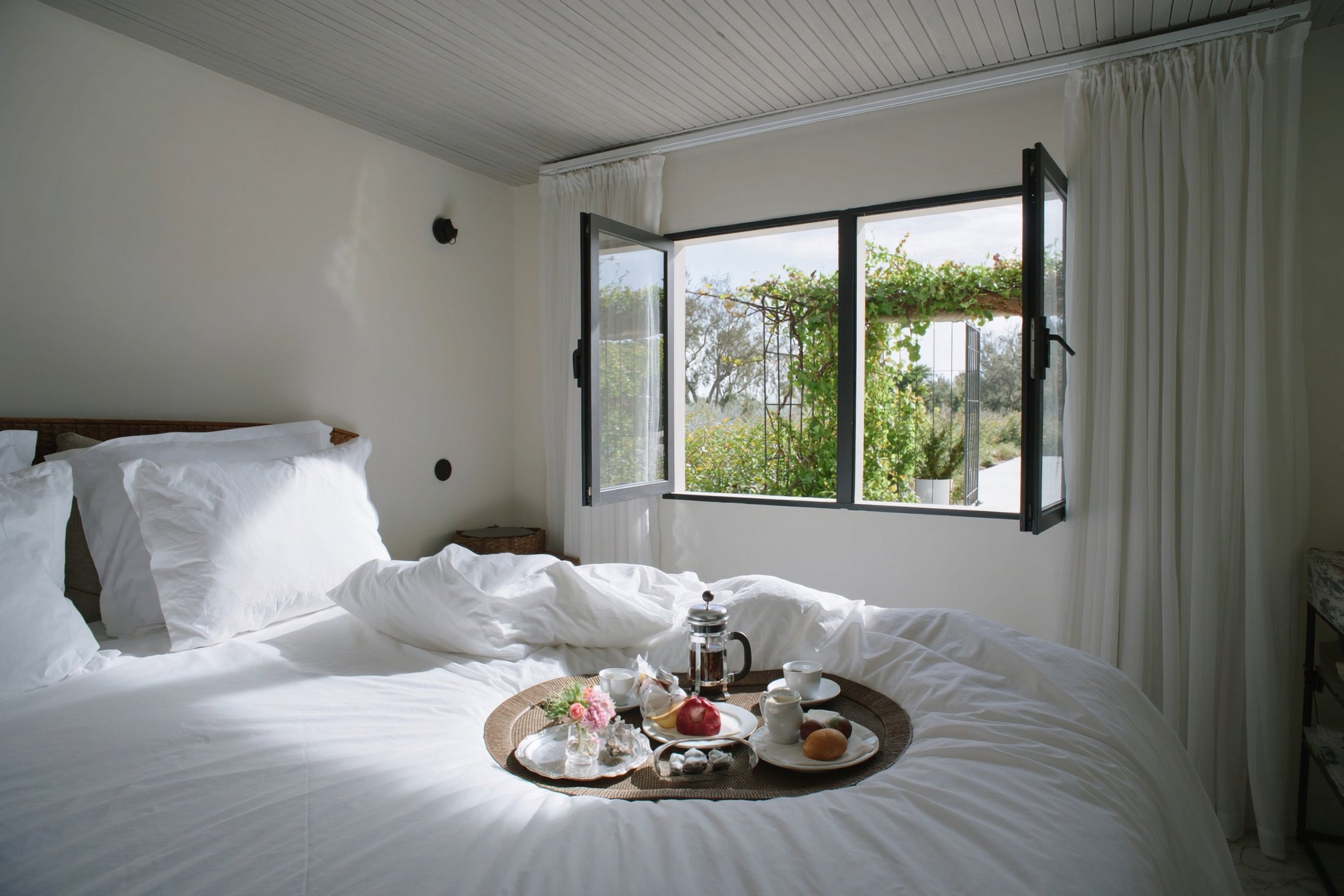
This one is underrated. Lights off. Both looking up. Not a screen, not each other. The intimacy of shared dark is its own thing — the weight of a body next to you, the warmth that's become familiar, the looseness that comes after 11 pm when the day's version of yourself finally clocks out.
Some of the truest things couples say to each other, they say to the ceiling. There's research on why people disclose more at night. But honestly: you already know. You've done it.
What You're Really Doing When You Suggest the Drive
You're creating the conditions for something that couldn't happen in the conditions you were in. That's not manipulation. That's care.
The person who says "Hey, want to get in the car and just drive for a bit?" when the kitchen has gone tense — that person is doing something. They're reading the room and choosing a different room. One where both of you have a better chance.
It's worth naming what it is, eventually. Not in the car, not during. Later. "I've noticed we talk better when we're moving." That observation alone, said once, is more useful than most conversations about communication.
The Limit of the Method
This isn't avoidance rebranded. There's a version of the car conversation that goes: drive, get close, pull into the driveway, go inside, and never finish the sentence because the house swallowed it.
If you use movement to approach the thing but then never land anywhere, the drive becomes a pressure valve instead of a passage. Relief without resolution. That's its own pattern: comfortable enough to talk, never quite enough to arrive.
Side-by-side creates the opening. You still have to walk through it.
A Small Thing to Try This Week
There's something you've been not-quite-saying. You know what it is. It's been circling for days, maybe longer — one of those things that feels too fragile for a direct conversation but too heavy to keep carrying.
Don't schedule a talk. Suggest the drive. Or the walk after dinner. Or just turn the lights off early and lie there, both of you looking at the same ceiling.
See what comes out when there's nothing to face and nowhere to be. You might surprise yourself. You might find you already knew how to say it. You just needed to stop looking at each other long enough to start.