There's a thing that happens on the way home from somewhere. Maybe it's a wedding you're leaving, or a dinner that ran long, or a Sunday drive that went nowhere in particular. The car is dark, the road is familiar, and suddenly one of you says the thing. The real thing. The one that's been sitting in the back of a drawer for three months.
Nobody planned it. Nobody made a cup of tea and said we need to talk. It just happened — because you were moving, and you weren't looking at each other.
That's not an accident. That's architecture.
Face-to-Face Is a Performance Setting
When you sit across from someone — at a table, on a couch, in a therapist's office — you're both performing. Not dishonestly, just humanly. Faces are loud. Eye contact is pressure. Every micro-expression is information your nervous system has to process and respond to in real time.
So you edit. You soften. You watch their face start to shift and you course-correct mid-sentence, walking back the thing you were about to actually say.
Face-to-face conversation is good for a lot of things. Raw, unfiltered honesty is not always one of them.
The most intimate conversations I've had with my partner in four years happened in the car. Never once at the kitchen table.
— MLL reader
What Movement Actually Does
Side-by-side positioning removes the social surveillance loop. You're not reading each other; you're both reading the road, the window, the middle distance. That small shift in attention is enough to lower the stakes.
Movement helps too. There's a reason walking conversations feel different from sitting ones. The body is occupied. Something rhythmic is happening. The nervous system has a place to put the low-grade hum of anxiety that makes hard things hard to say.
Add the sensory cocoon of a car — the hum of the engine, the temperature slightly off, the shared smallness of the space — and you have something that functions almost like a confessional. Enclosed. Private. A place that isn't quite real life.
The Backroad Principle
Some couples stumble into this by luck. Others build it deliberately. Either way, it's worth naming.
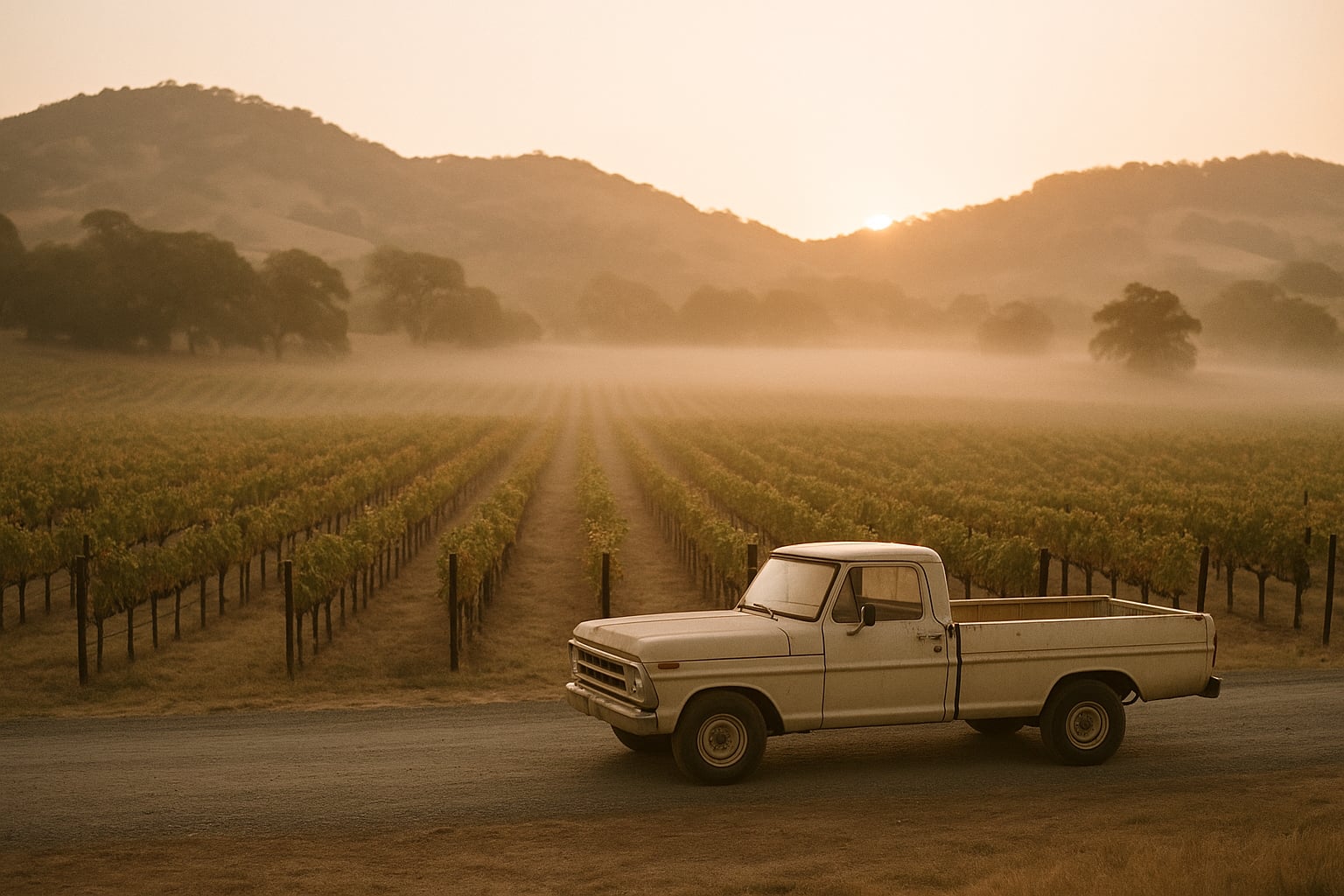
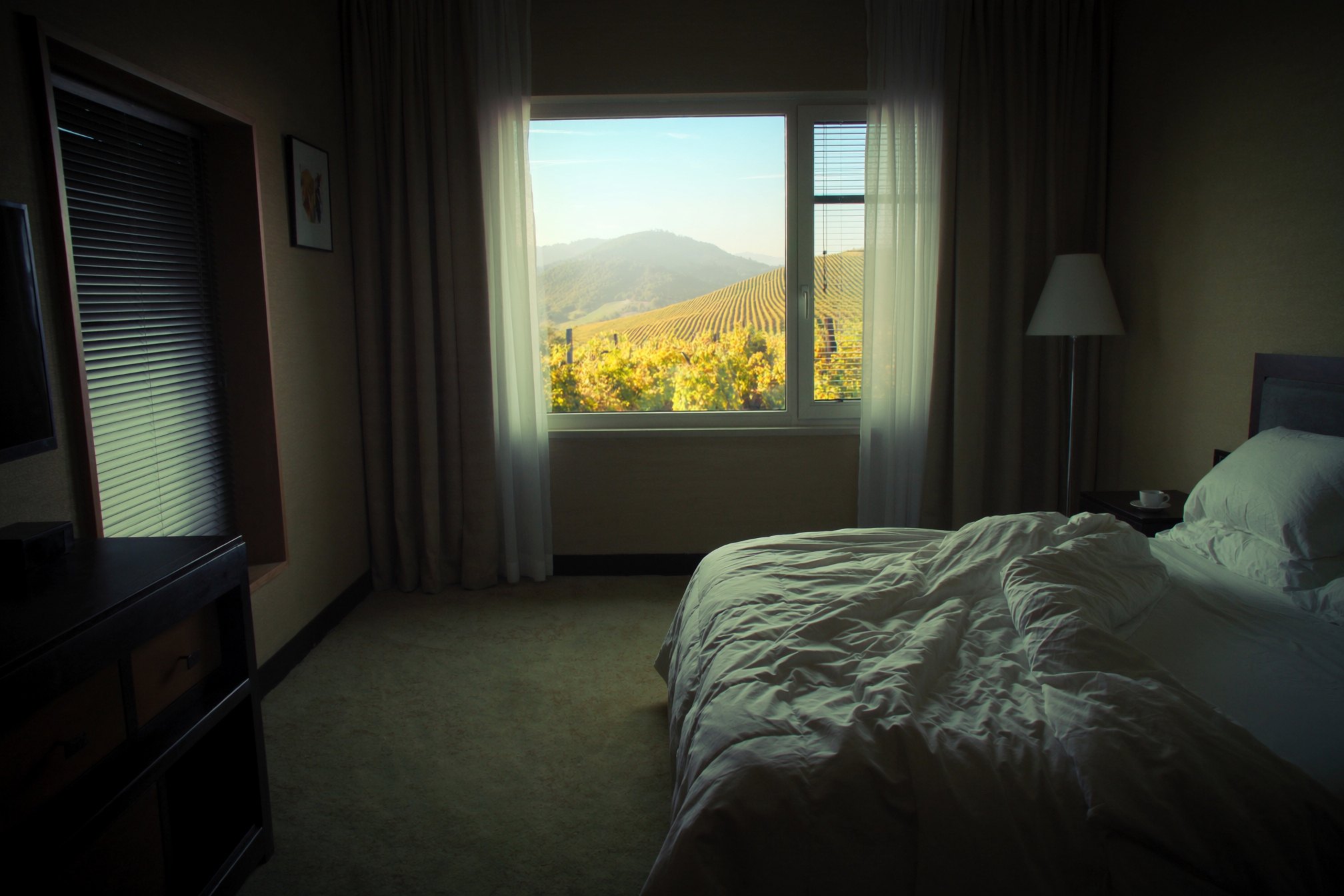
If you've ever taken one of those Sunday afternoon drives up through the Sonoma backroads — windows down, grapevines blurring, radio on low — you know what happens by mile thirty. The conversation softens. Something comes up. You weren't planning to talk about that, but you are now.
The drive isn't incidental. The drive is the point. Movement and landscape do something that a facing conversation can't. We have a whole article on exactly this: the Sonoma backroad drive with no destination. But the principle scales down to your Tuesday-night grocery run.
What People Actually Confess in Cars
Not dramatic things, mostly. It's rarely the cinematic revelation. It's more like: I've been feeling really far from you lately and I don't know why. Or: I think I've been angry for a long time and I've been pretending it's stress. Or the one that no one wants to say face-to-face: I'm not sure I'm happy.
Sometimes it's desire. Something they want but haven't asked for. Something they've rehearsed alone a hundred times and finally just — say. Because no one's looking. Because the car will keep moving regardless.
The physical containment and the lack of eye contact create a kind of permission. The silence isn't uncomfortable silence in a car. Silence in a moving car is just the road.
How to Use This on Purpose
You don't have to wait for the right road trip. You can engineer this.
Drive somewhere unnecessary
Pick up dinner that's twenty minutes away instead of ten. Take the longer route back from wherever you are. The specific destination matters less than the time in motion. The point is to be in the car together, going somewhere, for long enough that real conversation can surface.
Don't start with the topic
The worst thing you can do is get into the car and say I want to talk about something. That re-installs the performance pressure immediately. Let small talk happen. Let ten minutes pass. Let the silence sit. The thing will come if you give it room.
Put the phones away
This one's obvious and still worth saying. A phone in the lap is an escape hatch for both of you. The car only works as a container if you're both actually in it.
Drive at night when possible
Night driving adds another layer of permission. The darkness is its own version of privacy. Headlights forward, faces unlit, voices lower. Everything that comes out feels less exposed — which means more comes out.
The Walk Works Too. So Does the Shower.
The car is the canonical version of this, but the underlying principle is just: side by side, in motion, sensory buffer. A long walk hits the same notes. So does standing together in the kitchen while one of you cooks. So does lying in the dark after the light goes off.
These aren't accidental moments. They're the moments where actual intimacy gets made. Not at the table. Not in the structured check-in. Not in the big sit-down conversation.
In the small, moving, parallel spaces. Where no one's performing because there's no audience.
When the Thing Gets Said — What Then
This matters. Because sometimes the car confession lands and both of you go quiet and then someone says something deflecting and the moment closes before it should.
When something real comes out, the best response is often the simplest one. Tell me more about that. Or just: yeah. Not rushing to fix, not reframing it immediately, not countering with your own version. Just: let it exist in the car for a minute.
The confession itself is the intimacy. The resolution, if there is one, can come later. At a table, even. When you're ready to look at each other.
Somewhere between the on-ramp and wherever you're going, the thing you haven't said is waiting. The car already knows how to hold it. You just have to get in.