You go in thinking you're there for the wine. And you are, technically. But somewhere between the first pour and the third — knees angled toward each other on a wooden stool, no agenda, no phone worth checking — something else starts happening. You're not performing a good time anymore. You're just talking.
That's the thing about a tasting room done right. It's not a restaurant, where the meal has a shape and the check is always coming. It's not a hike, where you're both facing forward and the landscape fills the silence. It's a room. Two glasses. Nowhere to be. The conversation has to go somewhere, and eventually it goes somewhere real.
Why This Format Works When Others Don't
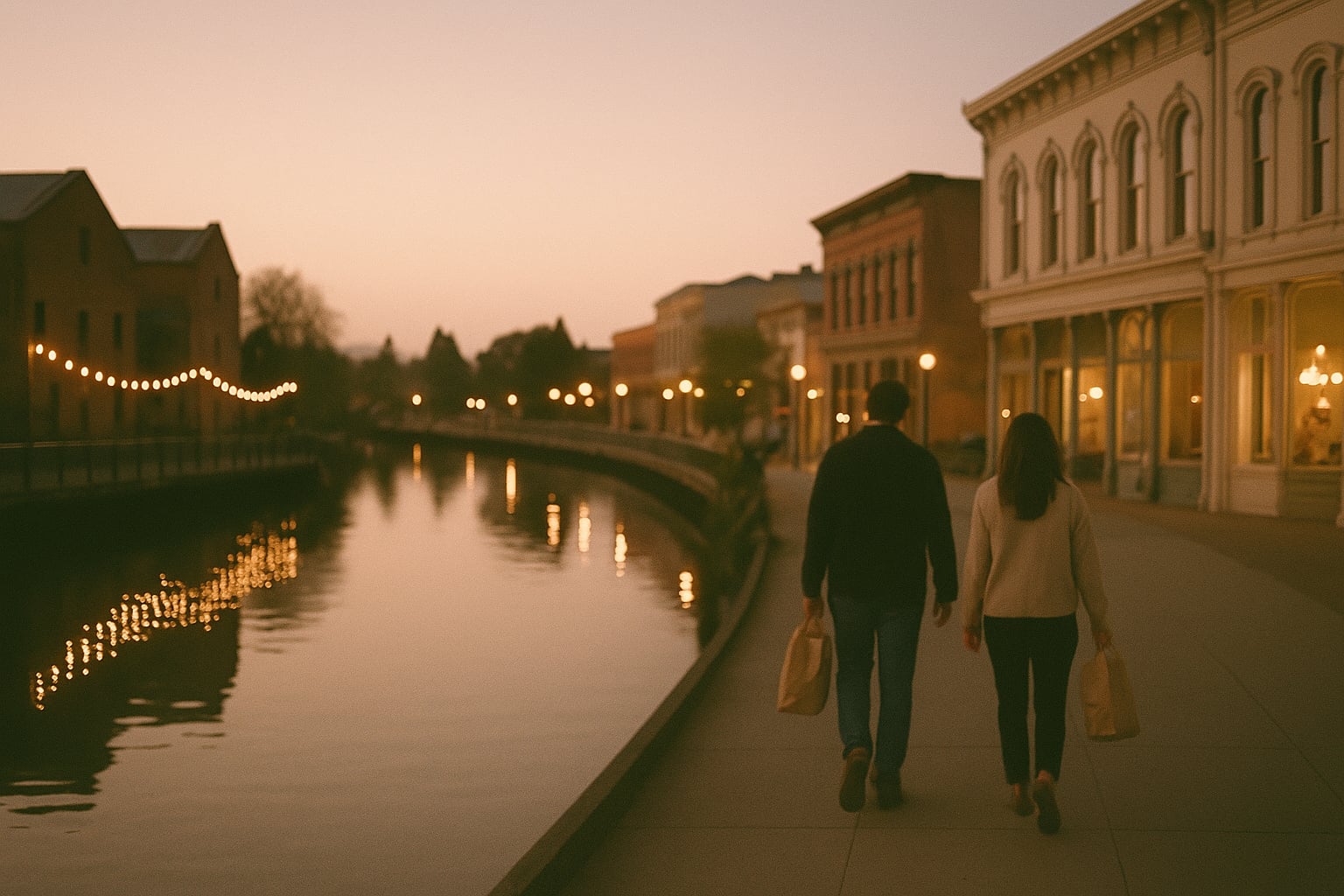
Most date formats are actually avoidance systems with good lighting. Dinner gives you menus to study and waitstaff to perform for. A movie is 90 minutes of not talking at all. Even a walk in Healdsburg's plaza, beautiful as it is, keeps you moving — and movement is an easy out when a conversation gets too close to something.
A tasting room removes most of that. You sit. You stay. The pacing is controlled by someone else — a pour every 10 or 15 minutes, just enough time to finish a thought without filling every second with noise. The wine gives your hands something to do and your mouth something to return to. It's sensory cover for emotional exposure.
The Room You're Looking For
Not every tasting room creates this. Some are loud, tour-busied, aggressively upselling. Those are fine for a big group weekend. They're not what we're talking about.
What you want is small. Seated. Unhurried. A place where the person pouring actually knows the wine and isn't watching the clock. Sonoma County has a handful. The ones tucked off Westside Road. A small-production room near the Dry Creek benchlands where the tasting is by appointment and there are maybe eight people in the building. A barn in the Russian River Valley where the fog is still sitting on the vineyard at 11 a.m. and they hand you a blanket.
The physical specifics matter more than people admit. Low light. Wood surfaces that absorb sound rather than bounce it. Glasses that feel like they cost something. These aren't luxury performance markers — they're the conditions under which people slow down. The body needs to feel like it's not rushing before the mind will follow.
What Actually Happens in Hour Two
Hour one is surface. The wine. The vineyard view. How work has been, loosely. It's warm-up and there's nothing wrong with it.
Hour two is where it shifts. The second or third pour has done something to the shoulders. The pourer has moved on to another table. Nobody is watching you. And then one of you says something that isn't small talk — maybe without meaning to. A thing you've been carrying. A question you've been avoiding asking. Something you've been almost-saying for weeks.
It comes out easier here than it would at home. Home has the weight of every unfinished conversation you've had in it. The tasting room is neutral ground. It doesn't know your argument from two Tuesdays ago. It just smells like oak and poured Pinot and whatever the morning's fog left behind on the hills.
We talked for three hours about things we hadn't said in months. I don't think the wine caused it. I think it was just the first time neither of us had anywhere to escape to.
— Reader, Healdsburg weekend trip
The Micro-Behaviors Worth Noticing
Watch how your partner tastes. Whether they follow the notes on the card or ignore them and just drink. Whether they ask questions or let the pourer talk. Small, unguarded things.
Watch where they look when they're thinking. Whether they reach for your hand or stay in their own space. Whether they laugh at something the pourer says or check back with you first.
These aren't tests. They're just data. The kind you collect when you're actually looking at someone instead of managing the logistics of a shared life.
How to Not Ruin It
Don't overschedule the day. This is the single most common mistake. You book a tasting at 11, lunch at 12:30, a second winery at 2, dinner at Indian Springs at 7. You've turned Sonoma into an itinerary and the whole thing becomes logistics management in a beautiful setting.
Let the tasting room be the anchor. Get there with nothing urgent after. Leave the afternoon deliberately open. Eat when you're hungry, wherever you land. The unstructured hours after a good tasting are often where the best part of the day happens.
Leave the phones in the car, or at minimum in your pocket with the screen down. You know this. It still takes a deliberate decision to do it.
When It Surfaces Something Harder
Sometimes the honesty that comes up isn't easy. You say something about feeling distant lately. They say something about a thing they've been afraid to bring up. The conversation tips into actual friction.
This is not the tasting room going wrong. This is it working.
A hard conversation in a beautiful, neutral space, with a glass in your hand and nowhere to sprint — that's not the same as the same conversation happening in your kitchen at 9 p.m. after a long week. The container changes what's possible inside it. You're more likely to stay. More likely to stay curious instead of defensive. More likely to actually finish the thought.
If something real surfaces, don't try to resolve it completely before you leave. Just stay with it. You can keep talking in the car — much easier if someone else is driving. Over late lunch in Yountville. That evening back in the hotel room, lying on top of the covers with the window cracked and the Sonoma hills going dark outside.
The Thing You're Actually Choosing
You're not choosing wine. You're choosing the particular discipline of being with someone and not filling the space with distraction, task completion, or performance.
That's harder than it sounds. Most of modern couplehood runs on busyness as intimacy substitute. The tasting room asks you to sit still and look at each other and let whatever's true be true for a few hours.
Some of what's true will be warm. Some will be complicated. All of it is more honest than what you get scrolling side by side on the couch.
You came for the Pinot. You stayed because the second pour arrived and your partner said the thing they'd been almost-saying, and you didn't look away. That's worth booking a Saturday for.