You're not in crisis. Nothing dramatic happened. You're just… less interested. In sex, in being touched, in initiating anything that requires you to feel something on purpose. You tell yourself you're tired. Which is true. But tired has been true for two years now, so at some point tired stops being an explanation and starts being the condition.
This is what a cortisol hangover actually looks like. Not burnout — that's a cliff. This is a long, imperceptible slope. You don't fall off anything. You just gradually stop arriving.
What cortisol is actually doing in there
Cortisol is a survival hormone. It's excellent at its job. When something threatens you — a deadline, a difficult conversation, three hours of broken sleep — cortisol floods your system, sharpens your focus, suppresses whatever the body deems nonessential.
Desire is nonessential. Reproduction is long-term. Survival is right now. So your nervous system does the logical thing: it borrows from want to fund vigilance.
The problem is that most modern stress isn't a predator you outrun in thirty seconds. It's the inbox. The mortgage. The ambient hum of things that never fully resolve. So the cortisol stays. Low, chronic, consistent. And over time, it doesn't just suppress desire — it retrains your baseline. Your body learns to treat low-grade alarm as normal. Calm starts to feel suspicious. Stillness feels like waiting for something to go wrong.
The rerouting nobody talks about
Here's the part that confuses people: cortisol doesn't always kill desire cleanly. Sometimes it reroutes it. You stop wanting sex with your partner but you want to scroll for an hour. You stop wanting touch but you want wine, or sugar, or to binge something that requires nothing from you.
Those aren't the same thing as want. They're want's understudies. Your nervous system is still looking for a dopamine hit — it just no longer trusts the pathways that require vulnerability or presence to get there.
This is why the absence of desire in a stressed body rarely feels like absence. It feels like preference. Like you've simply evolved past needing it. You haven't. You've just been living in a body that's been telling itself not yet, not safe, not now for so long it forgot to stop.
What it looks like in real life
It looks like getting into bed and feeling relief — the day is over — but not reaching for your partner. Not because you don't love them. Because your body has already clocked out.
It looks like a weekend away, a good dinner, a bottle of something cold and expensive, and still feeling like you're two floors above your own body. Present in theory. Elsewhere in practice.
It looks like responding to touch the way you respond to someone calling your name in a loud room: you hear it, you register it, but it doesn't land.
It looks like being on the plaza in Healdsburg on a warm evening, the air still holding the heat from the afternoon, your person next to you, and feeling almost nothing except a vague wish that you felt more.
The hormonal piece is real, not an excuse
Sustained high cortisol suppresses the production of sex hormones — estrogen, testosterone, progesterone. Not dramatically. Just enough. Testosterone in particular is closely linked to desire in all bodies, and cortisol competes for the same precursor hormones. Your body will route resources toward stress management every single time.
For people in perimenopause or with hormonal variability already, the compounding effect is significant. Stress doesn't just blunt desire functionally — it interferes with the hormonal architecture that makes desire feel spontaneous in the first place.
When cortisol stays elevated for weeks, sex hormones don't crash. They just quietly recede. You won't notice the moment it happens. You'll just notice, eventually, that you haven't thought about it in a while.
— Modern Love Living
Why this is different from low libido
Low libido is often treated like a fixed trait — something you either have or you don't. The cortisol version is different. It's situational. It's reversible. It's a nervous system stuck in a gear it was never meant to stay in.
The distinction matters because the fix is different. You can't think your way out of it. You can't schedule sex more aggressively. You can't improve your relationship dynamics if your body is still reading the environment as unsafe. The work isn't in desire itself. It's in the terrain underneath it.
What actually helps (and what doesn't)
Bubble baths don't touch this. Neither does one good night's sleep, though that helps at the margins. What moves the needle is sustained nervous-system signaling that the threat has passed — even when nothing external has changed.
That means: slow meals eaten without a screen. Skin contact that isn't a prelude to anything. Movement that isn't punishing. Sleep treated like the physiological event it is, not a recovery tool you deploy when you're desperate.
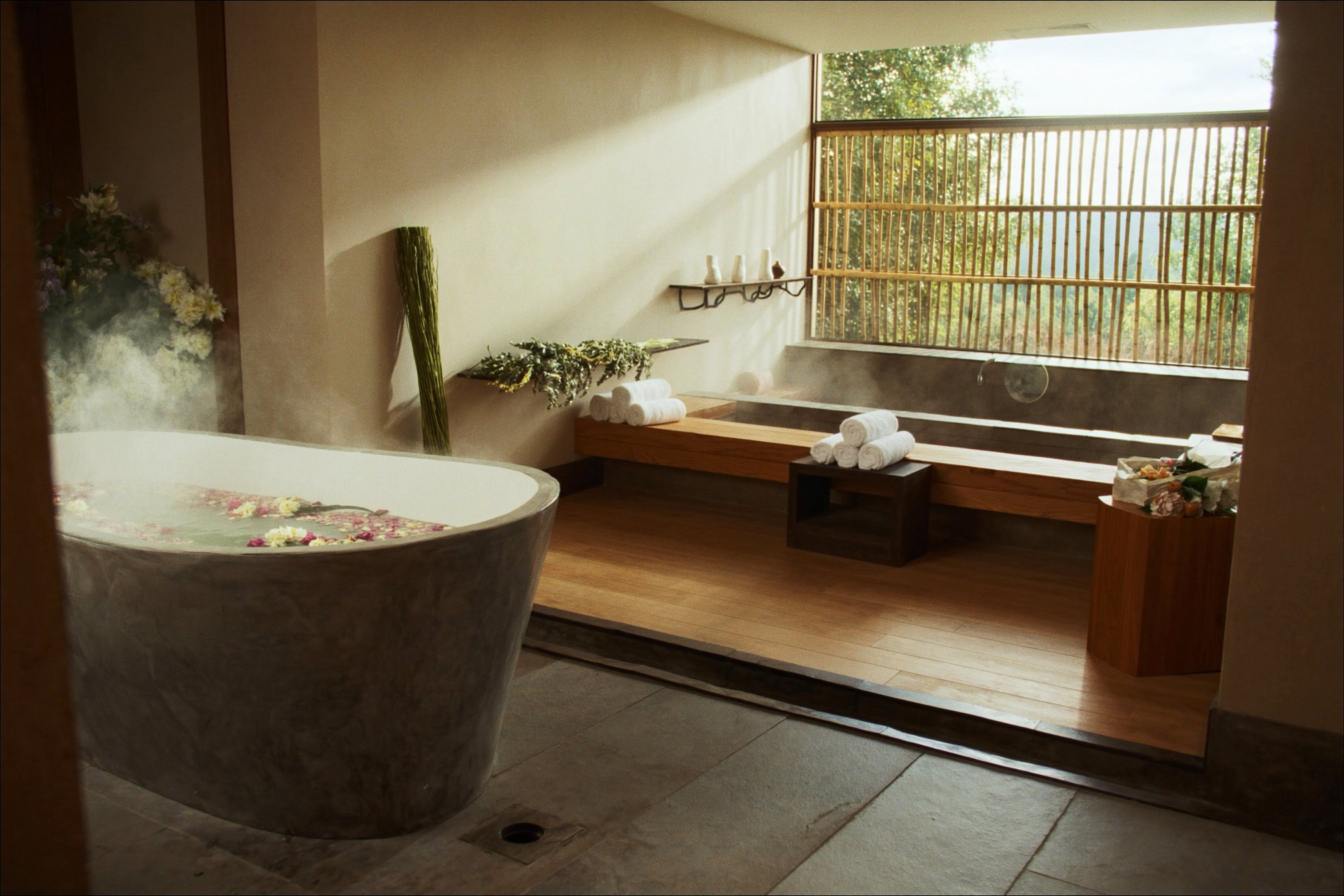
It means letting your body be warm and unobligated for longer than feels productive. The weight of a robe. Steam. Nowhere to be. These aren't luxuries — they're inputs. Your nervous system reads them as data: the emergency is over.
And it means not forcing desire before the ground is ready for it. Initiating sex from a still-activated stress response usually produces disconnected, mechanical encounters that teach your body to associate intimacy with going through the motions. That's worse than waiting.
The thing about recovery
Desire doesn't come back with fanfare. It comes back the way feeling returns to a foot that fell asleep: pins and needles, a little uncomfortable, almost irritating before it's welcome.
You might notice it first as irritation — a low restlessness, an edginess that isn't anxiety. That's close. That's the system warming back up. Pay attention to it instead of suppressing it.
You might notice it as a specific thought that surprises you — a scenario, a memory, a flash of wanting something particular. That's the signal coming back online. Don't overanalyze it. Just don't dismiss it either.
And sometimes it comes back in the most inconvenient moments: a Tuesday morning, no preamble, the sun coming through the curtains at the wrong angle. The body does what it wants when it finally feels safe enough to want again.
The cortisol hangover isn't a relationship problem. It's not a compatibility problem. It's not evidence that you've changed in some permanent way or that desire was always more fragile than you thought. It's a body that's been working very hard to protect you from a threat that never fully arrived. It needs to hear that it worked. That you're okay. That it can stand down.
Tell it, slowly, with evidence it can feel. That's the whole protocol.