You didn't buy it to be seen in it. You bought it because you were standing in the dressing room, or scrolling at midnight, and something in your chest moved. That's the honest version of the story.
The reveal narrative — the anticipation, the reaction, the moment someone else registers what you're wearing — is real. But it's only half the experience. Sometimes it's the smaller half.
There's a version of this that happens entirely alone. The putting-on, the standing still, the adjusting of a strap in low light. The moment before anything. That version doesn't need a witness to count.
Why We Frame It as Being for Someone Else
Lingerie has been sold, forever, as a gift to someone else's eyes. The packaging implies an audience. The language implies a destination. For the night you want to remember. As if the remembering requires company.
So people develop a habit of talking around the real reason they bought a specific silk slip or a specific set. They say it's for a trip, for an occasion, for a partner who'll appreciate it. Sometimes that's true. Often it's a cover story for something more private: they just wanted it.
Wanting a beautiful thing for yourself — specifically for how it makes your body feel to you — still makes people slightly uncomfortable to admit out loud. Which is strange, because it's the most obvious reason in the world.
What the Wearing-Alone Experience Actually Is
It's Tuesday. No plans. You put on the set that's been sitting in the drawer since you bought it three weeks ago because you were saving it. For what, exactly, you couldn't say.
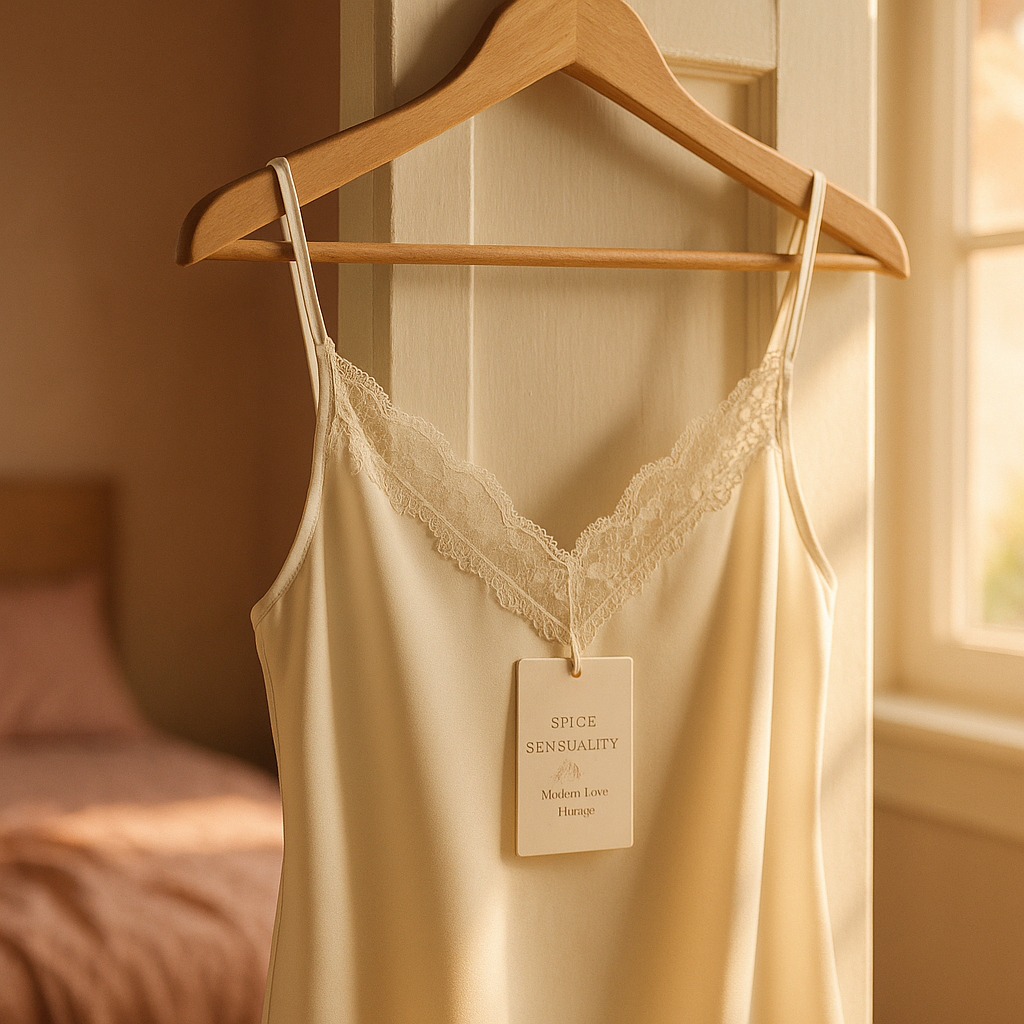
You're not saving it anymore. You put it on, and the lace sits against your ribs differently than cotton does. The satin moves when you move. The weight of a well-made underwire, or the lightness of something barely there — that sensation is immediate and specific and entirely yours.
You make coffee. You sit by a window. You feel like a slightly more interesting version of yourself, and nothing else happens, and that's enough.
The Drawer You're Saving Things In
Most people have one. The piece they're waiting to wear. The set that feels too special for a Wednesday, too considered for a night when nothing is planned.
The logic is strange when you say it plainly: I bought something to make me feel good, and I'm waiting for the correct emotional occasion to feel good in it.
The bedside drawer audit — the one where you actually look at what you own and when you last wore it — almost always surfaces this pattern. Beautiful things kept in tissue paper while you wear the functional ones every day.
There's no correct occasion. There's just tonight, or this morning, or the hour before your partner gets home when the apartment is quiet and the light is good.
Sensory Specifics: What You're Actually Responding To
This is worth being precise about, because the feeling isn't abstract. It's physical and specific.
It's the weight of a robe over almost nothing. It's the slight cool of satin warming against your skin. It's lace that sits at the hip without pinching, mesh that grazes without scratching. The thin elastic of a well-made set that doesn't dig or shift. The particular visibility of your own body when the fabric is right.
These are not small things. The body registers them clearly. Comfort that reads as luxury, coverage that reads as freedom. The sensation of being dressed in something that took care in its making.
Your body keeps a kind of score — not just of relationships, but of how you treat it in ordinary moments. Putting something beautiful on it, on a Tuesday, for no reason, is a form of that.
The Version That Has Nothing to Do With Anyone's Arrival
Here's the scenario nobody photographs: you ordered delivery, you lit a candle, and you're wearing the silk slip you bought in Healdsburg on the kind of weekend you needed more than you knew. No one is coming over. You're reading, or on your phone, or doing nothing in particular.
And you feel — not sexy in the performed sense, but present. Aware of your own body in a way that the oversized t-shirt doesn't produce. There's a low-level pleasure in it that has no name and needs none.
Desire doesn't always point outward. Sometimes it points toward yourself, and the piece that helps you feel it is doing exactly what it was made to do.
— MLL
What This Changes About How You Shop
If you're buying for a reveal, you're optimizing for visual impact. The right silhouette, the right color for the light in your bedroom, the thing that photographs well or lands the moment you walk in.
If you're buying for yourself, you're optimizing for feel. How does the fabric behave against skin? Is this something you'd want to wear for three hours, not three minutes? Does it hold its shape when you're sitting, moving, pouring wine, existing?
Shopping with that intention is different. You slow down. You read the fabric content. You think about your actual body in actual positions. You stop asking will they like this and start asking do I like this, on me, right now.
The pieces you buy that way tend to get worn. They don't wait in the drawer.
The Confidence Isn't Borrowed
There's a version of body confidence that only exists in someone else's gaze. It depends on the look, the reaction, the moment of being seen. That version is real, but it's fragile. It needs the other person to perform their part.
The version you build alone is different. It doesn't require anyone to show up and deliver the right response. You wear something beautiful in an empty room and you feel it anyway. That's yours in a way the other thing isn't.
It compounds, too. The more you wear the good pieces in ordinary moments, the less you need the occasion to justify feeling that way.
A Note on the Piece Itself
It doesn't have to be expensive. It has to be considered. The difference between something you grabbed because it was on sale and something you stood in front of and thought about: that difference is real and your body will know it.
The piece you buy for the feeling before the reveal — or instead of the reveal entirely — is the one that fits how you actually live. Your real morning. Your actual Tuesday night. The hour before anyone arrives, or the quiet ones after they leave.
That's the piece worth looking for.