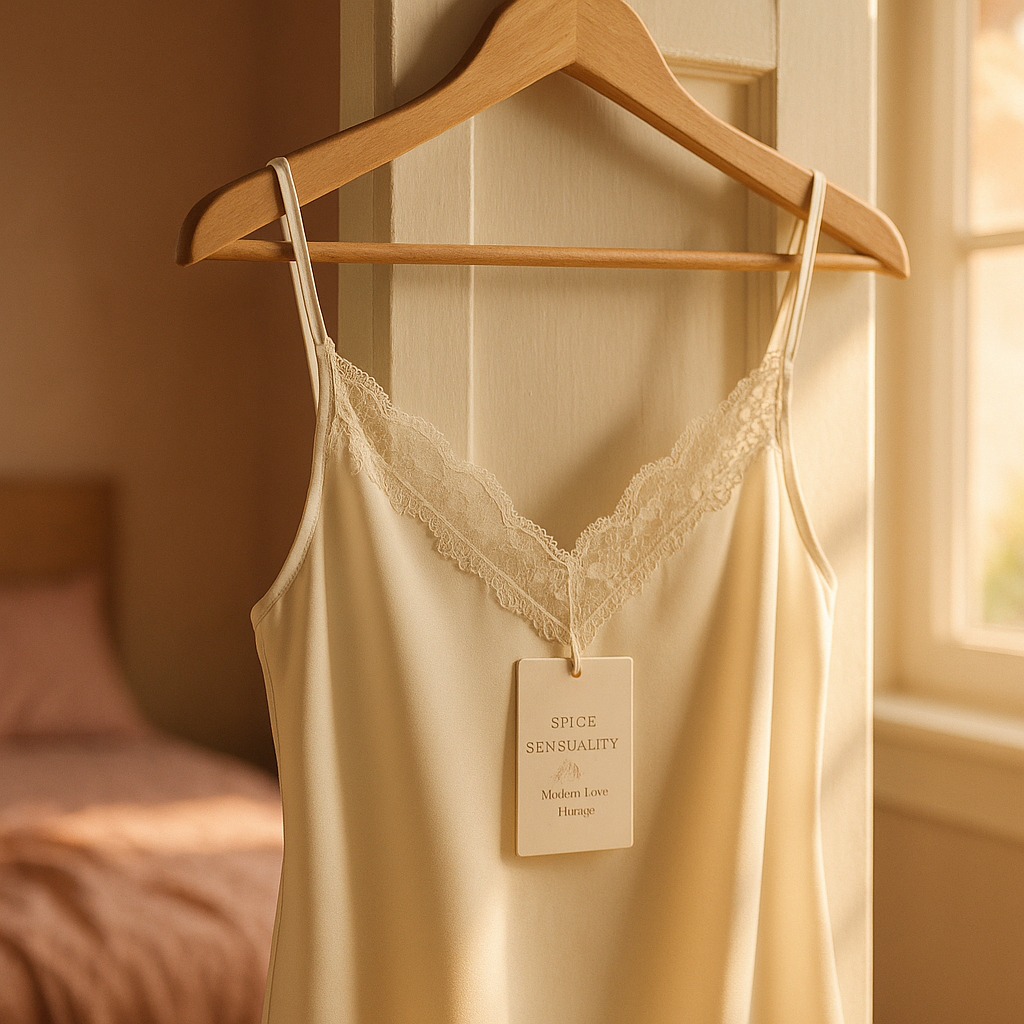
You bought it for someone else. A specific someone. You had their reaction in your head before you even handed over your card — the slow look, the intake of breath, the version of you they'd see when you walked out of the bathroom in it.
Then something changed. The relationship ended, or quietly turned into something else, or just got relentlessly practical in the way long relationships do. And the piece stayed in your drawer.
And then one unremarkable Tuesday, you put it on for no one.
And it fit better than anything you'd ever picked for yourself.
Why You Never Buy This Stuff for Yourself
There's a kind of permission that comes from having an audience. When you're buying something for a moment you've already staged in your imagination, you stop second-guessing. You don't ask whether you can pull it off. You just ask: will they like this.
Which means, accidentally, you pick the thing that actually excites you. Not the thing that seems reasonable for a Tuesday, or age-appropriate, or whatever quiet limit you've been applying to yourself without noticing.
The audience gave you cover. The desire was yours the whole time.
I bought the black silk slip because I thought he'd lose his mind. He did. Then we broke up. Then I wore it at midnight on a Wednesday while I was reading and I thought: oh. This is just who I am.
— submitted reader note
The Specific Weight of a Kept Thing
Most of the stuff in your drawer tells a story you're still editing. There's the practical bra that's comfortable but never exciting. The matching set you wore exactly once. The thing that was supposed to change something and didn't.
But this piece is different. It has a timestamp. A face attached to the memory of buying it. Maybe a hotel room, a specific weekend, a version of your relationship when anticipation still had that particular heat.
And now it's just yours. That shift — from prop to possession — is worth sitting with.
What It Means When You Keep It
Keeping it isn't about the person. It stopped being about them around the third or fourth time you reached past it for something else and then didn't.
Keeping it is about the version of yourself you were willing to be when you thought someone was watching. The cut you'd never have chosen in the practical light of a regular shopping trip. The color that felt too much, until it didn't.
There's a whole conversation in lingerie-for-the-mirror about dressing for your own reflection. This is adjacent to that but slightly stranger: you found your reflection by accident, through someone else's projected gaze, and now you can't unsee it.
The Performance That Turned Into a Preference
Sometimes the piece isn't post-breakup. Sometimes you're still with the person. You bought the thing, they loved it, you wore it, and then — subtly, without announcing itself — it became something you reach for on mornings you want to feel like yourself.
Not for them. Not in anticipation of anything. Just because the weight of it against your skin, the way the strap sits, the particular slide of the fabric: it does something. It's sensory. Quiet. Yours.
That's a performance becoming a preference. It happens with food, with music, with the way you take your coffee. You try something for someone else and it rewires a small circuit.
This one just happens to involve lace, or silk, or whatever it is you keep folded in the second drawer down.
What to Actually Do With This Information
Not therapy. Not a revelation you need to process in a journal. Just a practical reframe.
The next time you're shopping for something intimate — whether that's in a Healdsburg boutique on a slow Saturday afternoon or scrolling at midnight when you can't sleep — notice who you're shopping for in your head. If the answer is always someone else, that's the thing to look at.
Try the thought experiment: if no one ever saw this, if it existed only in the context of how it makes you feel, would you still want it? If yes, that's the piece. The related question is in lingerie-that-youll-actually-wear — what's the difference between bought and worn, and why is that gap so wide for so many people.
The Drawer as Honest Record
Your bedside drawer is an archaeological site. The the-bedside-drawer-audit piece gets into this more practically, but there's an emotional layer worth naming: the stuff you keep longest tends to be the stuff that accidentally turned personal.
Not the gifts you kept because throwing them out felt wrong. Not the things you bought optimistically and wore once. The things that survived a change in circumstance and still felt like you on the other side of it.
That's a short list. It's worth knowing what's on it.
One Actual Moment
She'd bought the robe for a Solage weekend that never happened. Deep green, heavy cotton, the kind of weight that makes you walk slower. She'd imagined him untying it. She'd imagined the morning light in a room she'd seen in photos.
The weekend got cancelled. The relationship ended six weeks later. The robe stayed.
Now she wears it on Sunday mornings. Coffee, back door open, the particular sound of her own neighborhood. She told us it's the most expensive thing she owns that she'd never give up.
She bought it to be a character in someone else's story. It turns out it was always the opening scene of hers.
Questions People Actually Ask About This
Is it weird to keep lingerie from a past relationship?
Only if you're keeping it for the relationship. If you're keeping it because it makes you feel something true about yourself, that's not weird. That's just ownership.
What if the piece still reminds me of the person?
That fades. Or it doesn't, and the association becomes neutral — part of the history of the thing rather than a wound. If it's still actively painful to look at, put it away for six months. Check back. Things change.
How do I start buying things for myself instead of for an audience?
The trick is using the audience as a tool, then removing them. Let yourself imagine someone seeing it — that frees up your real taste. Then ask: would I wear this alone, without the promise of that scene? If the answer is yes, you're buying for yourself. The dressing-for-the-version-of-yourself-youve-been-ignoring piece lives in this territory too.
What if my current partner bought it and it became about me — is that a conversation to have?
It can be. Or it can stay private. Not everything needs to be narrated to the person you're with. Some things are just yours, even inside a relationship. That's not distance. That's selfhood.