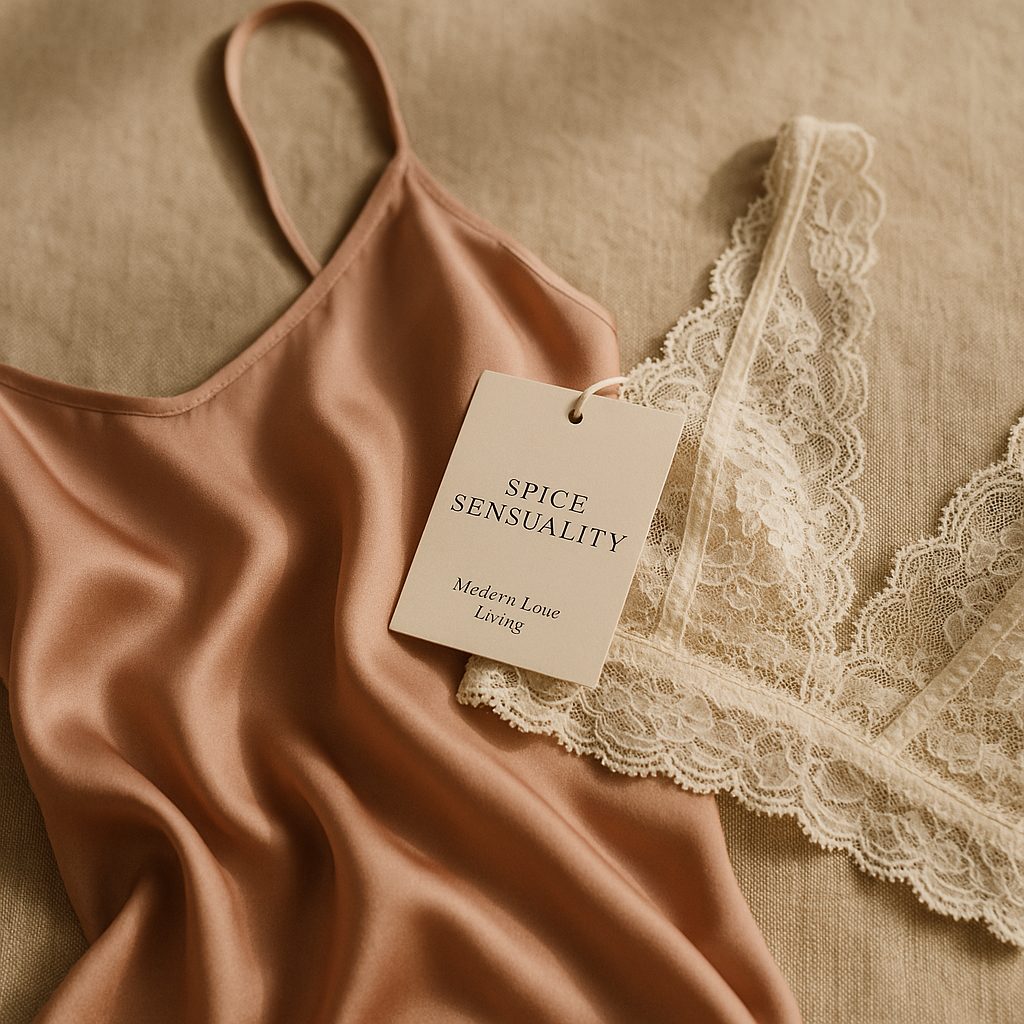
There's a specific moment most people have had. You open the drawer, you move past the set you bought for someone, and you reach for the thing that just feels right. No occasion. No audience. Just a quiet, almost unconscious act of choosing how you want to feel against your own skin.
That moment is worth paying attention to.
The Audience Problem
Lingerie marketing has always smuggled in a third party. There's you, there's the fabric, and then there's the implied someone watching you. The look on their face. The reaction you're building toward. Even when the campaign says this is for you, the lighting and the staging say something different.
Most of us absorbed this without noticing. We learned to evaluate lingerie the way we evaluate a performance outfit: does it work? On whom? For what?
The problem is that framework makes every choice a kind of audition. And auditions are exhausting.
What Sensation Actually Tells You
Silk against the back of your knee. The weight of a satin robe that hits mid-thigh and holds heat the way a bath does. Cotton so worn it barely registers except as warmth. Lace that scratches just enough to keep you aware of your own edges.
These are not neutral choices. The texture you reach for without thinking is usually the one that matches how you want to inhabit your body that day. Not how you want to be perceived. How you want to feel from the inside out.
The garment isn't communicating to anyone else. It's communicating to your nervous system.
— MLL
That distinction sounds simple. It isn't. It requires actually noticing what you feel when you put something on, not what you think you should feel or what the occasion seems to require.
The Self-Signal You're Probably Ignoring
There's a concept worth naming: self-signaling. It's the story you tell yourself about who you are through the micro-choices you make when no one is watching. What you eat alone. How you set up your space before a call. What you wear to bed on a Wednesday.
Reaching for something intentional when there's zero external reason to: that's a self-signal. It says you treat your own physical experience as worth curating. Not for the Instagram. Not for the partner. Just because it matters to you that your skin gets the thing it wants.
What This Actually Looks Like on a Normal Tuesday
It's 7 PM. You've had a medium-bad day. You shower, and instead of reaching for the worn-soft sleep shorts you always grab, you reach for the thin, high-cut slip that's technically lingerie but that you secretly wear alone on nights when you want to feel slightly more like yourself.
Nobody sees it. The decision takes three seconds. But it does something. The silk moves when you move. You pour a glass of wine, you sit differently on your own couch. You feel fractionally more like a person who has a relationship with her own body.
That's not small. That's actually the whole thing.
Why Couples Miss This
In long relationships, lingerie tends to migrate into one of two categories: the stuff for sex, and the stuff for sleeping. The gap between them gets wide. The 'for sex' pile gathers the weight of expectation. The 'for sleeping' pile becomes purely functional.
What disappears is the middle: the thing you wear just to feel something. Not to signal anything to your partner. Not to launch anything. Just because the fabric against your body is its own complete sentence.
Interestingly, when one partner starts doing this: choosing deliberately for sensation, for themselves, without occasion, the other person usually notices. Not because it's a strategy. Because confidence and ease read in a body even when they're entirely private in origin.
The Textures Worth Learning
For days when you want to feel held
Stretch lace with a matte finish. Nothing architectural. The kind of fabric that moves with you rather than shaping you toward something. Soft bands. Full coverage that feels like a choice rather than a compromise.
For days when you want to feel sharp
Satin or silk charmeuse. Something with enough weight to hang cleanly. A slip dress or a set with hard edges: the underwire that actually fits, the strap that doesn't slide. The feeling of being put-together from the inside, regardless of what goes over it.
For days when you want to feel skin
Almost nothing. A body that breathes. Modal or bamboo-silk blend. The kind of thing where you forget you're wearing it except for a warm, smooth reminder every time you move. This is also, quietly, one of the most erotic choices — precisely because it asks for nothing.
The Healdsburg Version of This
There's a version of this that happens on the first morning of a weekend trip. You've checked into something with good light and heavy curtains. The robe is thick and reaches the floor. You put it on before coffee, before conversation, before anything is decided about the day.
Under the robe is whatever you chose to sleep in. Silk. Cotton. Almost nothing. And for a moment, alone or mostly alone in that light, you're just a person who chose something that felt right. No occasion required.
That's the practice. Not a spa day, not a routine, not a system. Just the small, unglamorous act of asking: what does my body want to feel right now? And then doing it.
Frequently Asked
What does it mean to dress for sensation instead of an audience?
It means the only question you're answering is how the fabric feels against your skin. Not whether it photographs well, not whether a partner will respond to it. What texture do you want? What weight? What level of coverage? The aesthetic can follow. Sensation leads.
Can lingerie actually change how you feel about your body?
Not in a transformation narrative way. But the act of choosing something specifically for your own sensory experience: that's a small signal you send yourself about whether your physical comfort matters. Repeated enough, it does accumulate into something that feels like confidence. Not because the lingerie did anything. Because you practiced treating your body as worth tending.
What if I've always bought lingerie for someone else?
Then you have a very accurate picture of what other people like and very little data on what you want. That's fixable. Start small: next time you're buying anything, try it on alone first. Notice the physical response before you think about the visual one. Your body already knows things your shopping habits haven't caught up with yet.
The fabric you reach for when no one is watching is one of the most honest things about you. It's worth learning to read it.