At some point you made a deal with yourself. Rest comes after. After the inbox, after the deadline, after the kids are down and the kitchen is clean and the thing you forgot to do is finally done. Rest is the prize. And prizes have to be won.
Most people don't even notice they're running this contract. It just feels like being responsible. Like having standards. Like not being the kind of person who lies on the couch while there's still something left to handle.
But there's always something left to handle.
What the Productivity Contract Actually Is
The productivity contract is simple: your nervous system only gets to recover when you've produced enough to justify the recovery. It sounds logical. It is, in fact, physiologically backwards.
Your body doesn't rest as a reward. It regulates as a function. Like digestion. Like breathing. You don't earn your next exhale. But somehow rest got reclassified as indulgence, and now you're walking around in a low-grade state of sympathetic arousal — fight-or-flight at a hum — wondering why you feel nothing when you get into bed with someone you love.
You're not burned out in the cinematic sense. You're just slightly unavailable. Slightly impatient. Slightly less curious about what your partner actually meant by that thing they said. Slightly less interested in your own body and what it might want tonight.
What It Does to Desire
Desire requires bandwidth. Not a lot — but some. A nervous system running on earned rest has almost none to spare.
You probably know this already if you've ever had sex that felt technically fine but weirdly absent. The body showed up. The brain was doing inventory. What's interesting is that people often blame the relationship at this point, or their libido, or their age. The thing they rarely blame is the structural exhaustion they've been normalizing for two years.
There's a piece on this site called The Horniness-Stress Inversion that gets into the biology. But the short version: a chronically activated stress response doesn't coexist easily with desire. One system has to quiet for the other to surface. You can't outrun the sequence.
Desire doesn't disappear. It relocates to a room you stopped walking into.
— MLL
What It Does to Patience
Here's a small, recognizable moment. Your partner is telling you something — a story, a grievance, a thing that happened at work — and somewhere in the first ninety seconds you have left the building. Not because you don't care. Because you are so far past your own threshold that there is no room for their story next to yours.
The irritability that comes with sustained depletion is almost always misread. It looks like conflict. It shows up as snapping, withdrawing, going cold after a small thing. But it's not really about the small thing. It's about a nervous system with no reserves, being asked to process one more input.
People lose whole seasons of intimacy to this. Not because of incompatibility. Because of a rest debt nobody named.
What Postponed Rest Looks Like in a Real Week
Monday: you'll rest on the weekend. Wednesday: the weekend is looking complicated. Friday night: you're too tired to rest well, so you drink a glass of wine and stare at your phone until sleep takes you by force. Saturday: errands. Sunday: the anxiety about Monday already.
The rest never came. But you still feel like you should've earned it first.
This is what the contract does. It creates a permanently deferred state. The conditions for rest are never quite met. And your body is keeping score — skin that's reactive, a jaw that aches in the morning, sleep that doesn't fully restore, an interest in sex that shows up mostly in theory.
The Intimacy You're Actually Missing
It's not that exhausted people stop wanting connection. It's that they want a very specific, low-effort version of it. Warmth without engagement. Presence without demand. Which is sometimes beautiful and sometimes just two people coexisting in the same room, not quite reaching each other.
Real intimacy — the kind that involves curiosity, humor, skin, actual attention — needs you to be somewhat available. Not perfectly rested. Not on vacation at Solage with nowhere to be. Just not running on the last 4% of yourself.
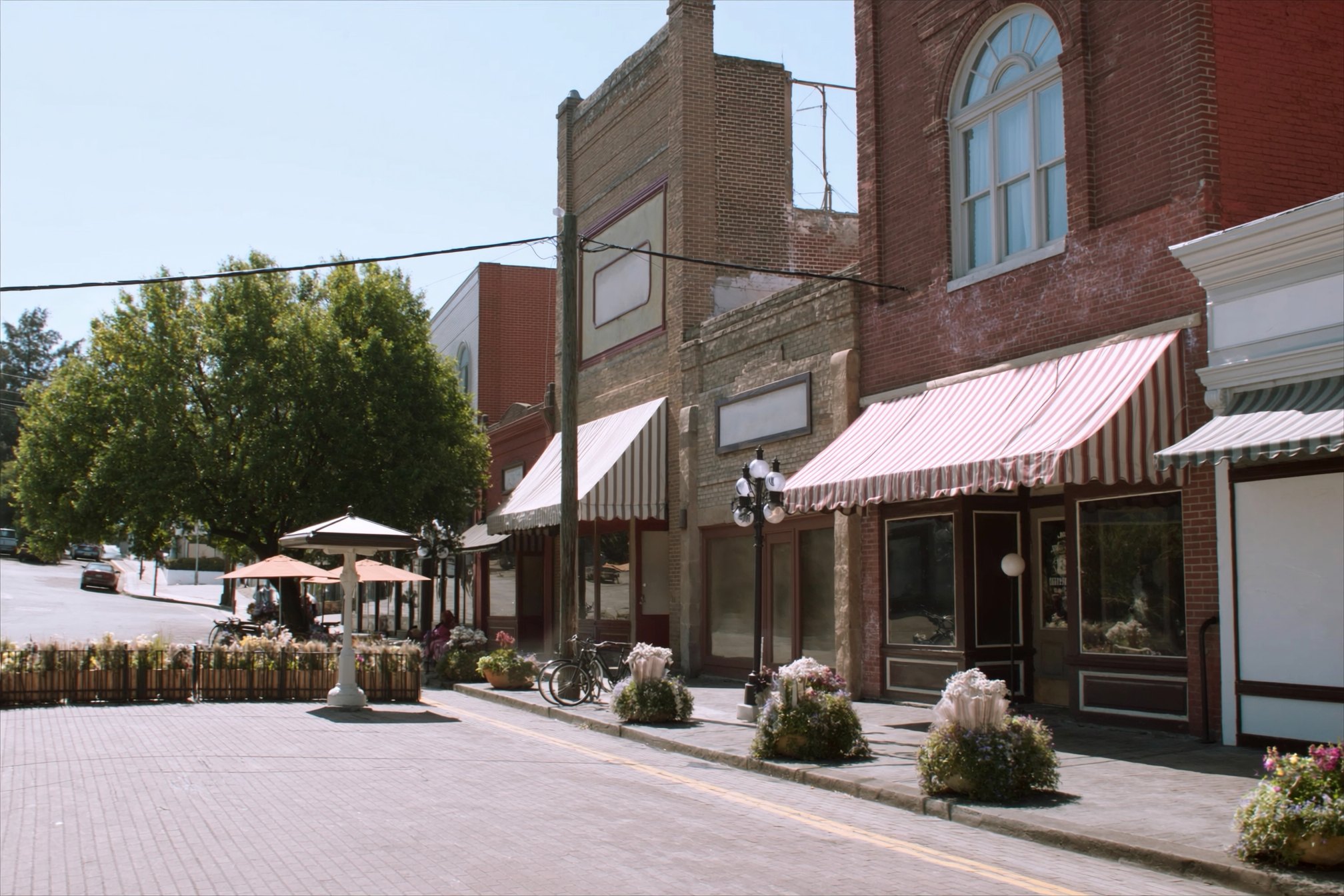
There's a reason that weekends away feel so different. The Healdsburg plaza on a Saturday morning, coffee, no particular plan. Something opens. You notice your partner's face differently. You want things again. People credit the location. The real variable is that for once you weren't running a productivity calculation before permitting yourself to enjoy anything.
Rest Is Not a Personality Flaw
The guilt is the tell. If you lie down in the afternoon and feel fine about it, you're probably okay. If you lie down and immediately start cataloguing what you should be doing instead, you've internalized the contract so deeply it follows you horizontal.
Rest that requires justification is not rest. It's a supervised break. Your nervous system knows the difference.
How to Actually Break It
You don't need a wellness retreat. You need a smaller intervention: stop waiting for the conditions to be right.
The 20-minute window before you'd normally start the next task: take it. Not to scroll. Not to optimize something. To actually be inert. Flat on the bed, the weight of your own body against the mattress, nothing to produce.
It will feel wrong at first. That's the contract resisting renegotiation. Stay anyway.
A body that learns it can recover without having earned recovery starts to regulate differently. The jaw loosens. The impatience has a longer fuse. The skin is more sensitive in the good way: the weight of a hand, warmth, the specific heat of someone you love standing close.
Desire comes back like that. Not with fanfare. Just quietly available again.
One Honest Question
When is the last time you stopped before you finished? Not because something interrupted you — because you decided the remaining tasks could wait and you mattered more than they did, right now, today.
If you can't answer that, the contract is running you. And somewhere downstream — in bed, in conversation, in the small moments that build or quietly erode a relationship — you're paying the tab.
You don't earn rest. You take it. That's actually the whole thing.