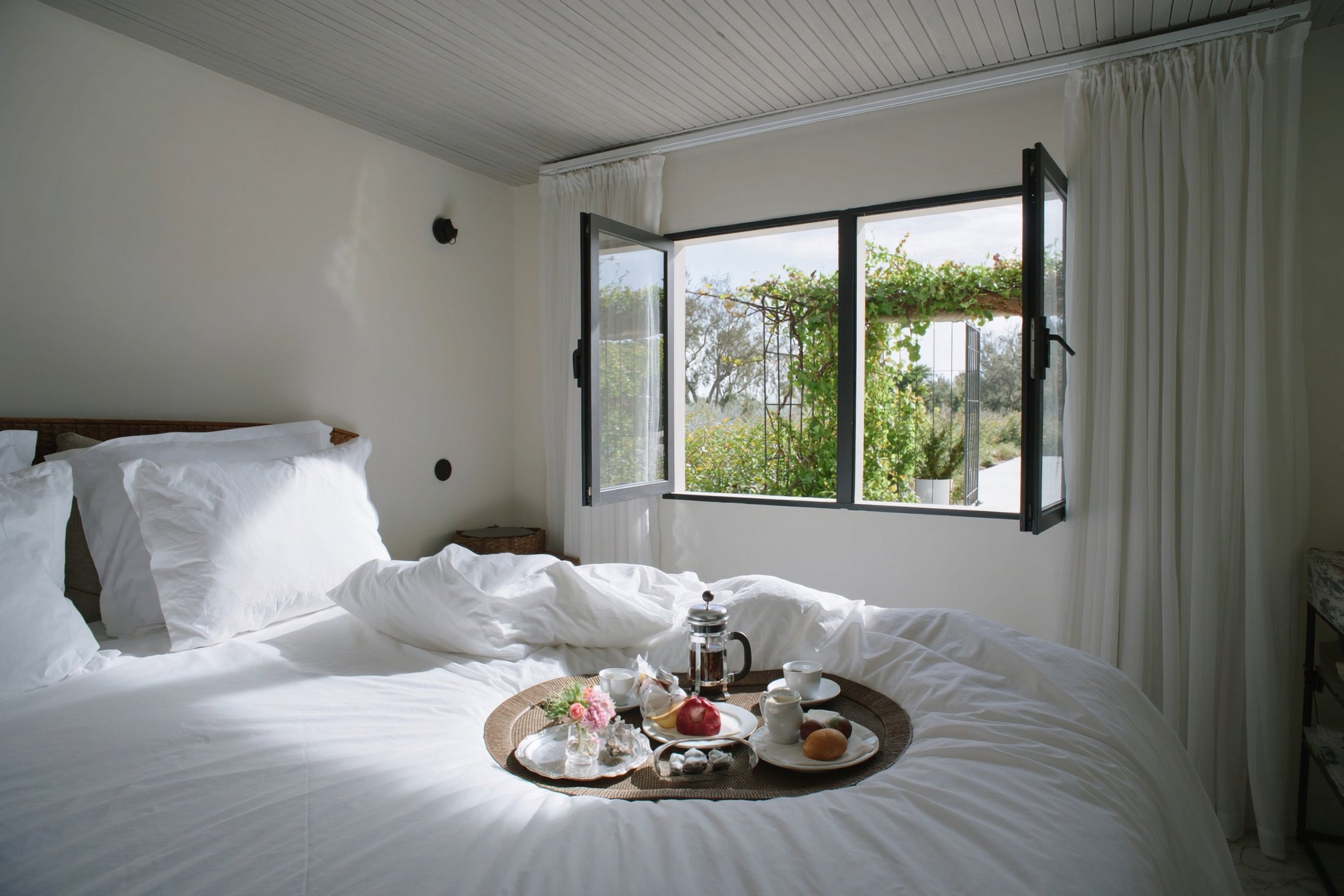
You have a playlist together. It has a name. Something understated, maybe a little literary. Your Instagram grid, if someone squinted, tells a coherent story: the farmers market, the weekend in Healdsburg, the two of you backlit at golden hour outside a tasting room on Dry Creek Road. It looks like a relationship. It is a relationship. And yet, at 11 PM on a Tuesday, you're on opposite sides of the bed not quite knowing what to say.
This is the thing nobody talks about: curation is seductive because it feels like intimacy. It uses the same vocabulary. Shared taste, shared aesthetic, shared references — they create a warm sense of us. But they don't require you to know each other. Not really.
What Aesthetic Couplehood Actually Is
Aesthetic couplehood is when the idea of your relationship becomes its own project. The moodboard comes before the conversation. The vibe gets established before the values do. You find someone whose references match yours — same taste in restaurants, same comfort with silence in a specific kind of way, same general softness about the world — and you start building a shared surface.
And the surface is lovely. That's the problem.
It's genuinely pleasurable to be with someone whose world looks like yours. To have a person who also owns linen napkins and has opinions about natural wine and knows to book the outdoor table at the girl & the fig before noon on a Saturday. It feels like compatibility. Sometimes it is. But compatibility of taste is the easiest kind to manufacture and the least useful when things get hard.
What Curation Quietly Replaces
Here's where it gets uncomfortable. Every hour you spend building the shared aesthetic is an hour you didn't spend on the messier stuff. Not because you chose not to — because curation felt like connection. It hit the same neurological notes. Sending each other Spotify songs, tagging a hotel, planning a Sonoma weekend where the light will be perfect: all of that releases something. It mimics closeness.
What gets replaced, slowly, is the tolerance for friction. Real intimacy requires being boring together. Being annoying. Being in a bad mood that doesn't photograph well. Curated couplehood has a very low ceiling for that — because it was never built to hold it.
You end up with a relationship that looks cohesive from the outside and feels a little hollow from the inside. Not empty. Just — not quite load-bearing.
The Micro-Behaviors That Reveal It
It shows up in small ways before it shows up in big ones. You notice you're performing the relationship slightly even when no one's watching. You re-angle the olive oil bottle before you take a photo of dinner. You mention the weekend trip to friends in a way that makes it sound better than it felt. You suggest the Sonoma drive not because you want the drive but because the drive is the kind of thing you do.
Or this one: a disagreement happens and instead of sitting in it, you both quietly reach for the thing that smooths it. A nice bottle of something. A show you've been saving. A plan that reestablishes the vibe. The repair looks gentle. It might be avoidance.
None of this is evidence of a bad relationship. It's evidence of a relationship that learned to speak in aesthetics because aesthetics were the first language you shared — and nobody made you switch to a harder one.
Why This Generation Does It More
This isn't entirely a Gen Z thing, but Gen Z perfected it. Growing up with the visual grammar of Instagram and Pinterest means growing up with the idea that a relationship has a look — and that the look is part of what makes it real. Soft-launching a partner, building a couple aesthetic, the obsessive curation of a shared vibe: these are just the natural outputs of a generation that learned to process identity visually before they processed it emotionally.
Millennials did it differently but not better. Shared Netflix queues. The apartment that looks like a lifestyle brand. The way you described your relationship to friends in terms of activities rather than feelings. Same instinct, different medium.
We knew each other's taste in everything except each other.
— anonymous, relationship survey
The through-line isn't generational. It's the availability of substitutes. When there are so many ways to perform closeness — playlists, saved locations, shared Amazon wishlists — actual closeness requires more deliberate effort to get to.
The Relationship You Actually Chose
There's a version of this where the aesthetic is real and the intimacy is also real, and they coexist without one eating the other. That version exists. But it requires having chosen the person underneath the vibe. Not just the vibe.
You know when you've done that because the relationship can hold an ugly Tuesday. A week where neither of you is particularly charming. A fight that goes unresolved past midnight and you both just go to sleep because you're too tired, and in the morning it's still there, waiting. The aesthetic version of a couple doesn't survive that without it feeling like a failure. The actual version knows that's just what it is.
The chosen relationship is less photogenic. It has bad lighting and unresolved threads and a running argument about one specific thing that never quite closes. It also has skin. Actual weight in a bed. The kind of conversation that only happens after midnight when the curated version of both of you has gone offline.
A Reframe Worth Sitting With
The goal isn't to abandon the playlist or stop caring about the hotel room or never take a photo at golden hour. Aesthetics aren't the enemy. Mistaking them for the relationship is.
The reframe is this: the shared moodboard is a starting point, not a foundation. Taste got you in the door. Now you have to actually go inside.
One test, if you want it: think about the last time the two of you were boring together and it was fine. Not romantic-boring, like a slow Sunday in linen with coffee. Actually boring. Tired. Slightly irritable. Nothing to show for the day. If you can think of one of those and it felt okay — not curated, just okay — you probably chose each other.
If you can't think of one, that's worth knowing too.