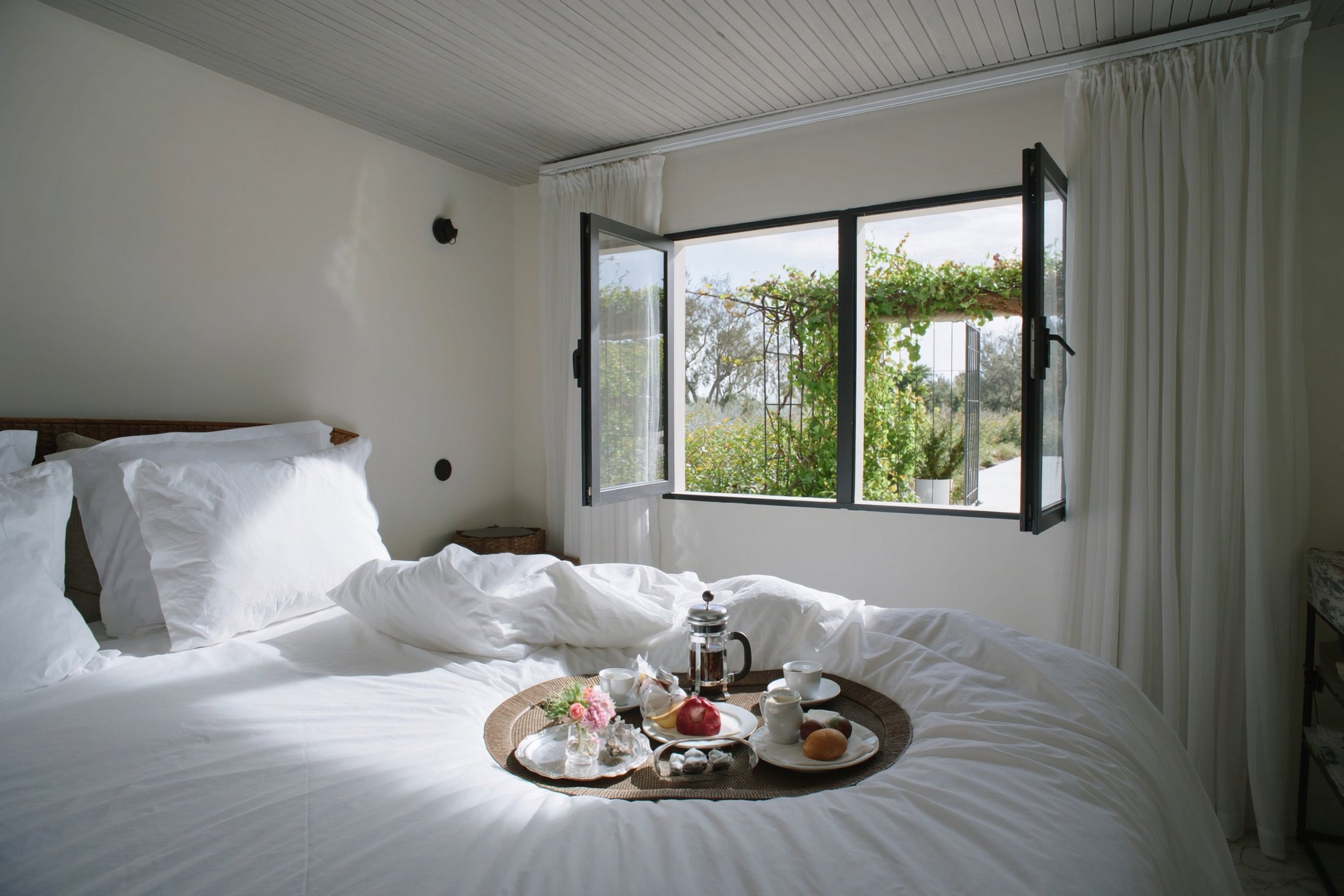
You light the candle before they get home. You check the temperature. You move the pile of mail off the counter because it reads as stress and you don't want the night to start with stress. You've been doing this for so long you don't notice it anymore. It's just what you do.
It's not hosting. It's not even kindness, exactly. It's management. And somewhere in all that management, the night stopped being something that happened between two people and became something you produce.
The Invisible Remote Control
Most relationships have one person holding it. Not always the same person for every situation, but usually a pattern. One of you tracks the emotional temperature of the room. Smooths the rough edges before they become an incident. Finds the right music, chooses the restaurant where the lighting will be forgiving, steers the dinner-table topic away from the thing that derailed the last three dinners.
This is not a flaw. Early on, it probably felt like care. And it was. Wanting the night to go well is not the same as controlling the night. Except that, over time, it kind of is.
The person holding the remote never fully relaxes. They can't. They're working. And the other person — the one whose mood is being quietly managed — never quite gets the chance to show up, because everything has been pre-adjusted for them before they walk through the door.
What You're Actually Preventing
Here's the part nobody says out loud: the mood you're managing isn't always theirs. Sometimes it's yours. The candle, the temperature, the cleared counter — those are as much about controlling your own anxiety as they are about creating a nice evening.
If the table looks right, maybe nothing bad can happen at it. If you've already deflected the topic, maybe you won't have to feel whatever comes up when it doesn't get deflected.
That's a reasonable human instinct. It is also, done every night for years, a form of distance.
You can be in the same room as someone and still be two completely managed performances passing each other in the kitchen.
— MLL
What Happens When You Put It Down
Not everything. You don't blow up the relationship to prove a point. You just don't light the candle tonight. You leave the mail where it is. You let them pick the restaurant and you don't suggest the one with the better lighting.
The first thing that happens is discomfort. Yours. Because you've been running this operation so long that stopping it feels like neglect.
The second thing that happens is that they have to actually arrive. Not into a prepared scene. Into whatever the night is. And sometimes what the night is turns out to be fine. Better than fine. A little unpolished, a little unscripted, and somehow more like actual company than you've felt in a while.
And sometimes what the night is turns out to be a conversation you've both been avoiding. Which is, honestly, also a version of things going right.
The Moment Worth Watching For
There's a specific beat that happens when the mood-manager stands down. The other person walks in, reads the room, and for a moment doesn't know what register to be in. Because usually, you've already set it.
They pause. They actually look at you. Not at the room, not at the ambient cues you've planted — at you. To figure out what tonight is.
That pause is the whole thing. That's two people making contact instead of one person performing care and the other receiving it.
It Shows Up Everywhere
In bed it looks like this: one person always reading the energy, always initiating at the right moment, always finding the angle where the other person will say yes. Never just wanting and saying so without the pre-read.
On a weekend away — say, one of those slow Saturday afternoons in Healdsburg where you've already planned which tasting room and which dinner and which walk — it looks like an itinerary that leaves no room for the afternoon to become something neither of you planned.
In conflict it looks like someone de-escalating before the other person has finished saying what they actually meant.
All of it is the same move. Reaching for the remote before anything unscripted can happen.
This Isn't About Doing Less
The point isn't to stop caring about the evening or each other. The point is that care and curation are not the same thing. One of them makes you a thoughtful partner. The other one makes you a one-person hospitality operation that runs on low-grade exhaustion and vague resentment.
The relationships that breathe — the ones that feel like two people actually living together rather than one person maintaining an environment for the other — have an occasional quality of not knowing exactly how the night is going to go. That uncertainty isn't a failure of effort. It's what contact feels like.
Try It Once and See
Not as an experiment. Not as a test of the relationship. Just as a night off from the job you never agreed to take.
Leave the counter messy. Don't pre-select the wine. Let there be a beat of silence after dinner where neither of you fills it immediately. See what you both reach for.
You might reach for each other. You might reach for your phones. You might end up talking about the thing you've been managing around for three months. Any of those outcomes tells you something true about where you actually are — which is more useful than another well-produced evening that tells you nothing at all.
Real > polished. That's as true at your own kitchen table as it is anywhere else.