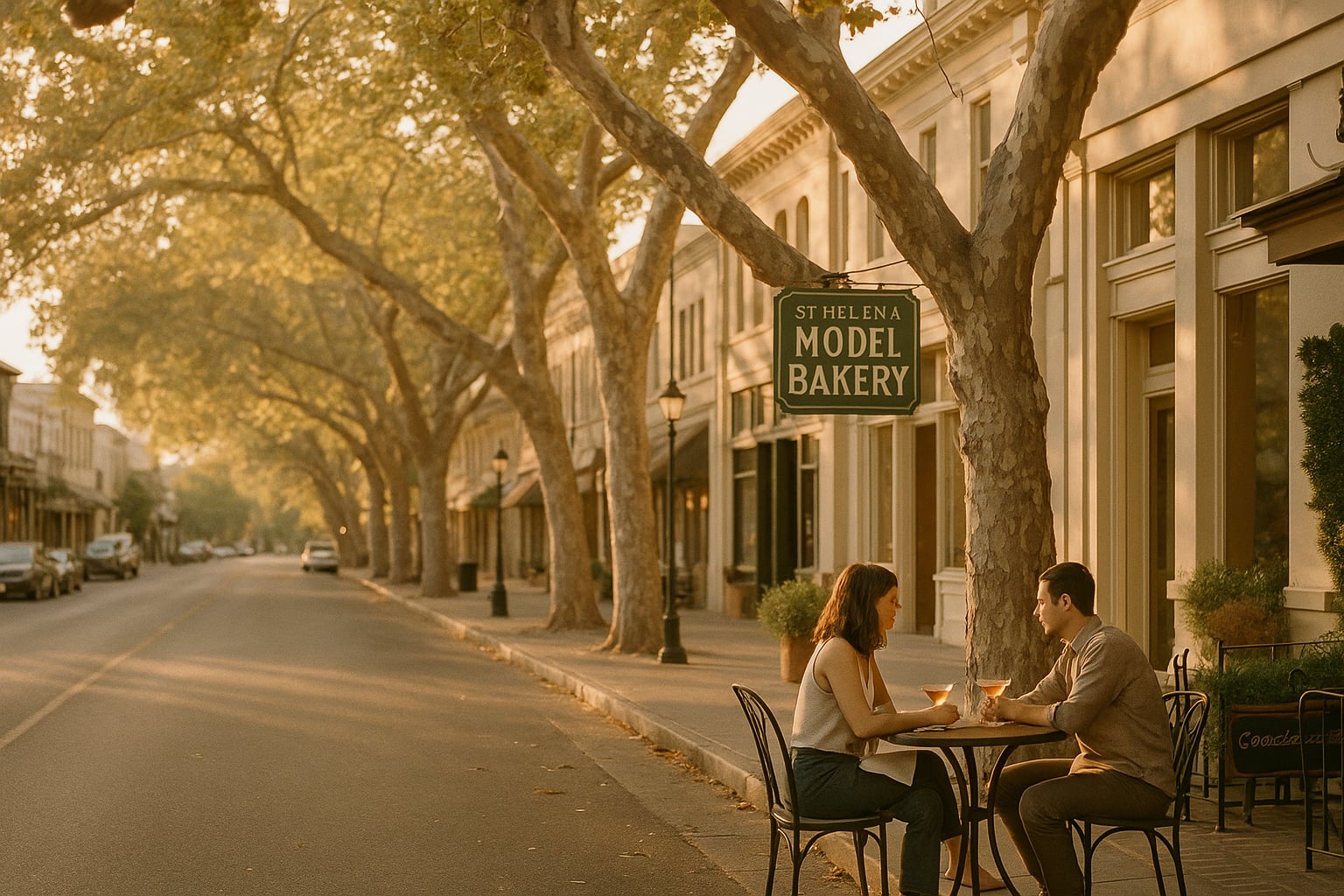
It starts innocuously. One of you films a slow morning — coffee steam, rumpled sheets, a hand reaching across the duvet. It gets 400 likes. Then 4,000. Then you find yourself, six months later, resetting the shot because the light wasn't right. The coffee went cold. Neither of you mentions that the moment you were "capturing" stopped existing the second you decided to capture it.
This is what performing a relationship does. It doesn't destroy it loudly. It hollows it out quietly, from the inside, while everything on the outside looks better than ever.
The Audience Arrives Before You Invite It
You don't have to be couple influencers for this to happen. A few hundred Instagram followers is enough. A group chat where you share photos. A TikTok that hits unexpectedly. Even just knowing your sister is watching your stories.
The moment you feel seen by anyone outside the relationship, a small part of your brain starts optimizing for their gaze. Not maliciously. Just reflexively. The same way you stand slightly straighter when someone's watching.
Except now the "someone watching" is ambient. It's always there. And a relationship that's always being observed is a relationship that's always performing — whether or not either of you agreed to that.
What the Performance Actually Looks Like
It's rarely dramatic. It's micro-behavioral. You start choosing restaurants that photograph well over ones you actually love. You stop going to that divey wine bar in Healdsburg because the lighting is terrible and the tables are sticky, even though that's exactly where you had a three-hour conversation that cracked something open between you.
You edit the fight out of the recap. Then you edit the ambivalence. Then the complexity. Then anything that complicates the narrative your followers have come to expect.
What's left is technically true but entirely false. A highlight reel that even you start to mistake for the actual relationship.
The relationship you describe and the one you're actually in can drift so far apart that you stop being able to find each other inside the real one.
— MLL editorial
The Audition Nobody Admits They're Doing
Here's the thing about an audition: you're always trying to get the part. When your relationship is public-facing — even mildly — you are perpetually auditioning. For likability. For couple goals. For proof that you made the right choice in each other.
That last one is where it gets complicated. Because sometimes the audience isn't strangers. Sometimes it's your exes, your parents, the friends who thought you two were a weird match. And you are very quietly, very consistently, proving them wrong.
Which means the relationship is now partly in service of a narrative that has nothing to do with the two of you in a room together at 10 PM on a Wednesday, tired and a little irritable and figuring out who's going to unload the dishwasher.
The Specific Damage It Does to Desire
Desire requires privacy. Not secrecy — privacy. The sense that what happens between two people belongs to them and isn't being curated or reported on or optimized for engagement.
When you post the morning-after glow, the weekend at Solage, the anniversary dinner with the wine you can't really afford, you're making the intimate legible to strangers. And something in that translation flattens it.
Sex, specifically, does not survive an audience. Not because it's shameful. Because it's radically private in a way that performance — by definition — cannot be. The moment you start framing your intimacy for outside consumption, even mentally, you've already left the room.
The Version of Your Relationship That Lives Online
There's a version of your relationship that exists entirely for other people. It has a consistent aesthetic. It has a narrative arc. It probably has a location tag and a song.
And then there's the version that happens in the actual hours of your actual day: the negotiated silences, the small irritations, the nights where neither of you wants to initiate anything because you're both just exhausted and a little emotionally behind on each other.
The problem isn't that you share the first version. The problem is when you start living inside it — when the curated relationship becomes the reference point and the real one starts to feel like the rough draft.
What Gets Lost When Everything Gets Posted
The unmemorable things. The ones that don't make content. Driving back from a tasting room in Yountville in total comfortable silence because you don't need to fill it. The inside joke that would require ten minutes of context to explain. The specific weight of someone's arm across your back at 3 AM when neither of you is fully awake.
These are the things that actually build a relationship. Not the sourdough you made together that got 600 saves.
The unposted moments are where the real intimacy lives. And they only stay alive if you protect them from the impulse to make them mean something to someone else.
How to Tell If You've Crossed Over
You plan experiences around their postability rather than whether you actually want to have them. You feel oddly flat after a good weekend that didn't produce anything shareable. You've started explaining your relationship to your partner the way you'd explain it in a caption.
That last one is the clearest signal. When you're narrating your relationship to the person you're in it with, you've replaced the conversation with a performance. You're not talking to each other anymore. You're presenting to each other.
The Reframe: Private Doesn't Mean Hidden
Keeping your relationship private isn't the same as being ashamed of it or hiding it. It's not a step backward. It might be the most intimate thing you can do in 2025.
Choosing not to post the weekend at Indian Springs isn't withholding. It's keeping something for yourself. Deciding that this specific thing — the way they laughed at dinner, the conversation that ran past midnight, the silk weight of the hotel robe and not wanting to take it off — belongs to the two of you and no one else.
That's not scarcity. That's intimacy. And it's the thing the performance has been slowly eating.
One Practical Thing
Pick something you do together and make it permanently off-limits for documentation. Not as a rule. As a choice you both make deliberately.
A Sunday habit. A specific restaurant. The drive home after something good. Somewhere that stays entirely yours — no caption, no story, no evidence. Just the two of you, present, with no one watching.
Notice how different that feels. Notice what comes back.
Related: The Relationship You Describe vs. the One You're In goes deeper on the gap between the story and the reality. And if you're curious why phones have become the third person in most bedrooms, The Phone-Free Dinner: A 90-Minute Experiment is a genuinely low-stakes place to start.