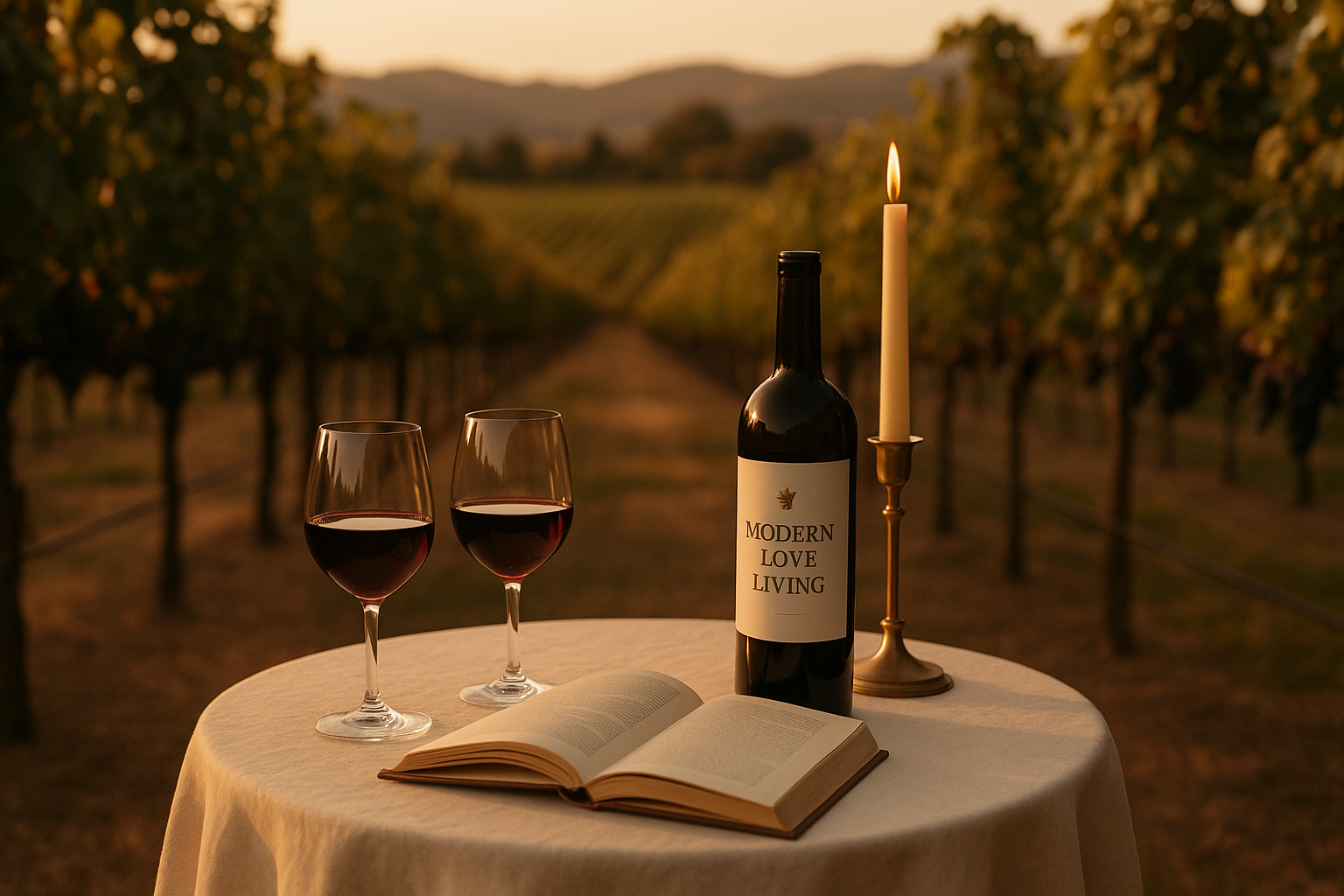
There's a wine bar near you. You walk past it on Thursdays when you pick up dinner. You've noticed the candles through the window. You've thought, we should go sometime. You've said it out loud, even. And then you've gone home and eaten on the couch and watched something you won't remember by Sunday.
That's not laziness. That's a small, accumulated belief that the ordinary night doesn't qualify. That the two of you need a reason — a birthday, an anniversary, a reservation made two weeks out — before the evening is worth dressing slightly better for.
It's worth looking at what that belief is costing you.
The Occasion Trap
Couples who are genuinely good at intimacy don't reserve it for occasions. They're not constantly planning romantic getaways or orchestrating elaborate evenings. They're better at the Tuesday thing. The random Thursday. The night that had no shape until one of them said let's just go.
The problem with overplanning is that it turns a relationship into a series of events you survive between. The vacation earns the intimacy. The dinner reservation unlocks the good conversation. Nothing in between counts as real.
But the between is most of it. The between is the relationship.
What Proximity Does to Desire
Proximity is supposed to be convenient. And it is. It's also quietly lethal to the feeling that someone is worth a little effort.
When you live with someone, see them in bad lighting, know their moods by the sound of how they close the refrigerator — you stop performing any version of yourself. Which is intimacy, yes. But it can also flatten things. You stop being people who might surprise each other. You become functions in each other's routines.
The spontaneous local night is a corrective to that. Not because you're pretending you don't live together. But because you're choosing each other on a night when no one made you.
The most romantic thing you can say to someone you've been with for years is: I wanted to go out with you tonight. No occasion. Just you.
— MLL
What Low-Stakes Actually Looks Like
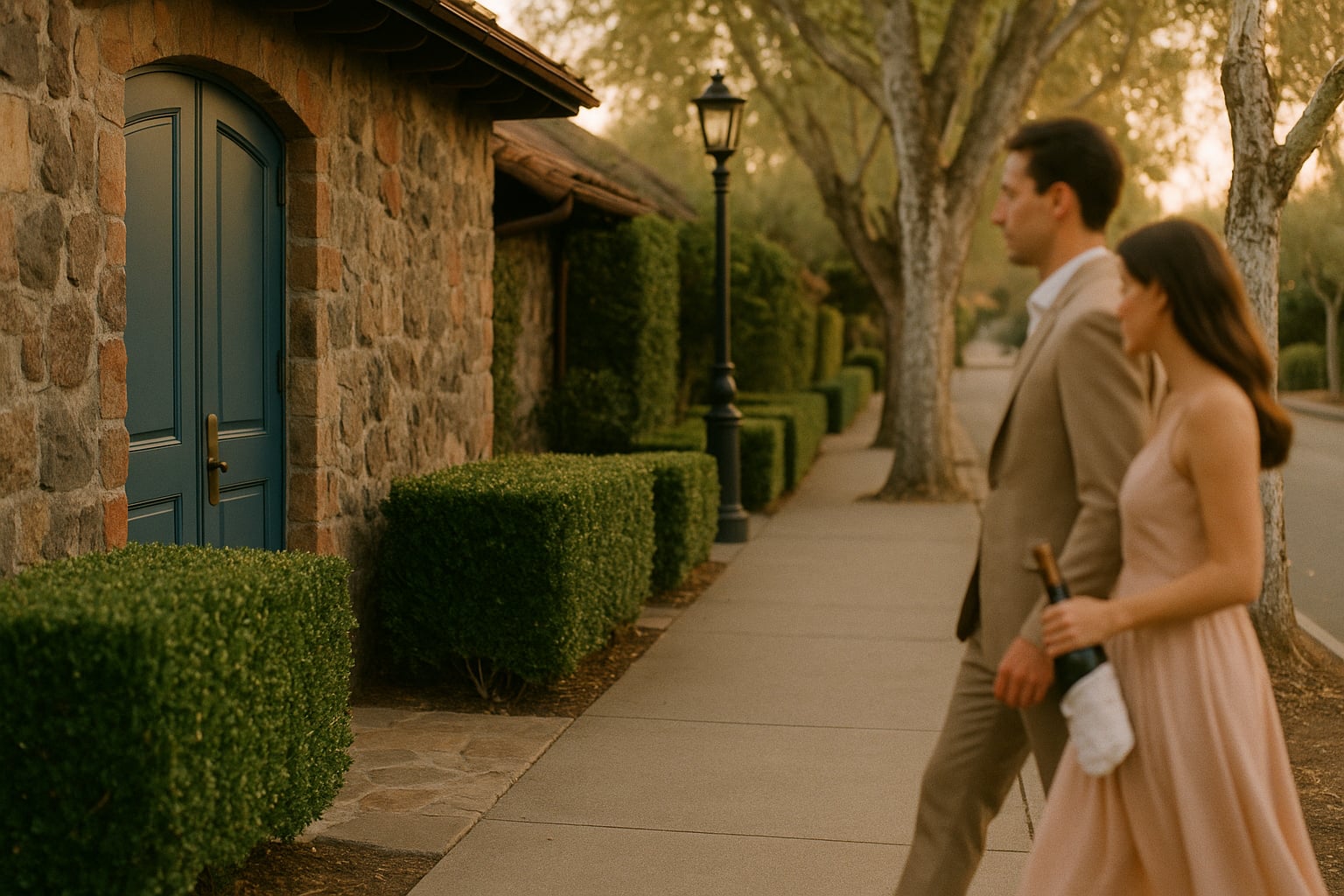
You don't change much. Maybe a different jacket. Lip something. The bar is four blocks away — you're not performing, you're just going.
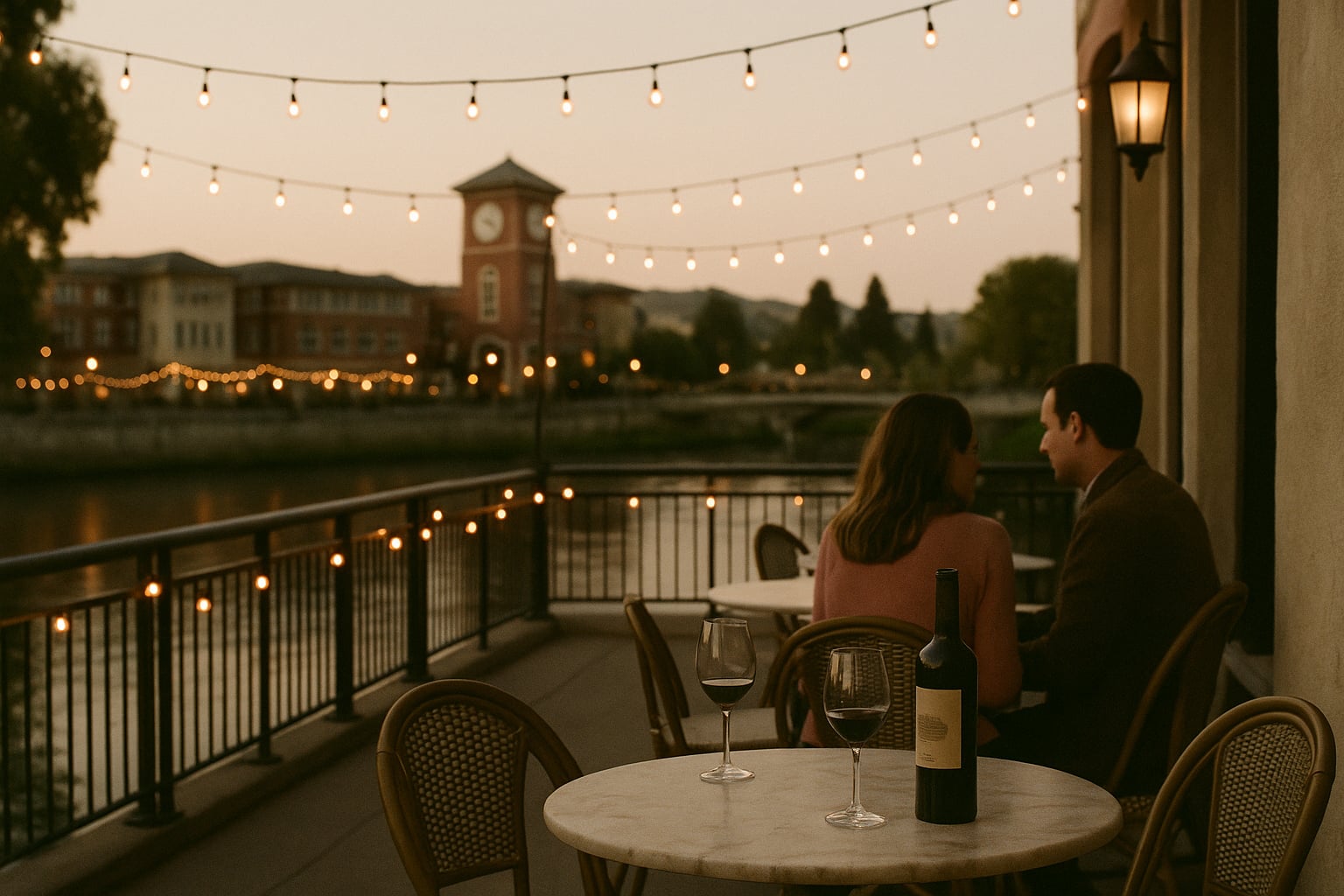
You sit at the bar, not a table, because tables have a formality that makes people behave. Bar seats turn you slightly toward each other. You share a board of something. The wine is by the glass and neither of you researched it in advance.
The conversation is different when there's no agenda for the evening. Nobody's managing expectations. You're not performing Date Night. You're just out. Together. On a Thursday.
That specific looseness — the lack of occasion pressure — is actually where some of the best conversations live. The ones that drift. Where someone says something they weren't planning to say, and the other person actually hears it.
The Healdsburg Version of This
If you're in the North Bay, this plays out at a specific frequency. The Healdsburg plaza has three or four places within a hundred feet of each other that locals walk past constantly and visitors plan months around. Dry Creek Kitchen. Matanzas bar. That newer wine-forward spot on the corner that's been there two years and you've never been inside.
Visitors treat those places like destinations. Locals treat them like background. The locals are wrong.
The same dynamic runs through Yountville, through Sonoma Square, through any small wine town where the whole environment is built for exactly this kind of spontaneous evening — and the people who live closest to it are the least likely to use it.
Familiarity is the thing that makes you invisible to your own surroundings. And sometimes, to each other.
Why You Keep Not Going
Honest version: the couch is easier. You're tired. The bar requires a version of you that's been put away since 7 PM. There's a comfort in the routine that isn't nothing — it's real, it matters.
But part of it is also this: the unplanned night feels less safe than the planned one. If you've made a reservation, dressed up, coordinated a sitter — the evening has momentum. It's supposed to be good. Low-stakes means it might just be fine. And fine can feel like a risk when you're both tired and slightly disconnected.
Except fine is often where the good stuff actually happens. The conversation that starts at the bar because you ran out of safe topics. The second glass that makes one of you say the thing you've been circling for three weeks.
The Part Where You Actually Go
Text them at 5:30. Want to go to that place tonight? No preamble. No logistics spiral. Just the question.
Leave your phones in your pockets after you order. Not because it's a rule — because you're both actually there. The bar has that amber light that makes everyone look warmer. The wine is something you'd never have chosen from a list. You share it anyway.
At some point you'll look at them in that light and think: we should do this more. And you should. But the other thing that's true is that you did it tonight. On a regular night with no occasion attached.
That's the version of your relationship you keep meaning to live in. It was available the whole time. It was four blocks away.
Frequently Asked Questions
Why do couples stop doing spontaneous local dates?
Mostly because proximity breeds the assumption that there's always time later. The wine bar isn't going anywhere. Neither is the relationship. That logic feels reasonable until you realize you've been meaning to go for two years.
Does it actually have to be spontaneous to count?
No. The point isn't the spontaneity, it's the low stakes. No grand expectations, no occasion pressure. A loose text at 5 PM that turns into a real evening is the whole move — planned or not.
What if we go and it's just... fine?
Fine is a successful evening. You went. You chose each other on an ordinary night. That's not a low bar — that's actually the bar most long-term couples have quietly stopped clearing.
How is this different from the weeknight date concept?
The weeknight date still implies a plan. This is specifically about the places you've walked past, the venues that are already part of your geography, the familiarity you've been using as a reason to keep walking instead of going in.