You've been to wine bars where the real activity is the room. The ambient playlist, the chalkboard wall worth photographing, the menu that's basically a novel. You spend forty minutes deciding between a Trousseau and a Grüner and somehow that counts as conversation.
It doesn't. It counts as coordination. There's a difference.
The Menu as Escape Hatch
Here's what a long menu actually does on a date: it gives both of you somewhere to look that isn't each other. Six pages of natural wine organized by region is a mutual permission slip to go quiet without it meaning anything.
A short menu — four whites, four reds, two pours by the glass, done — removes that option. You order in ninety seconds and then there's nothing left to perform interest in. The bar has called your bluff.
The best wine bars in Healdsburg understand this instinctively. The kind of room off the plaza with eight bar seats, a single rotating producer on the list, and a bartender who pours and then disappears. No amplified music. No TVs. No recessed lighting programmed to make everyone look like they're on a date — you either are or you're not.
What Awkward Acoustics Actually Do
Loud bars make you lean in. And yes, leaning in is good. But there's a version of loud that just means you're both performing listening without actually hearing anything — nodding, laughing on cue, catching every third word.
The bars worth noting are the ones with what interior designers diplomatically call "imperfect acoustics." Stone walls. Low ceilings. No acoustic panels softening the room into submission. You have to modulate your voice. You have to actually choose what to say before you say it.
Indian Springs in Calistoga has a bar room that works like this. So does the back patio at certain Yountville spots after 9 PM when the tourist dinner rush clears and it's just a few tables and the sound of someone else's quiet argument you're definitely not listening to.
No Screens Is Not a Gimmick
"No phones at the table" policies get mocked because they sound parental. But the screen problem at most bars isn't even the phone — it's the TV mounted above the bar tuned to something nobody specifically wants to watch but everyone keeps glancing at.
A sports recap. A true crime segment. A weather map for a city neither of you lives in. It doesn't matter what's on. The point is it's moving and human eyes follow movement involuntarily. Your date is not involuntary.
The bars with no screens above the counter are telling you something about what they think this place is for. That's not nothing. Choose rooms that have made a decision about what they are.
The Specific Discomfort That's Worth It
Here's what happens when you take away all the scaffolding — the long menu, the ambient noise, the glowing rectangle above the rail: about fifteen minutes in, one of you says something real.
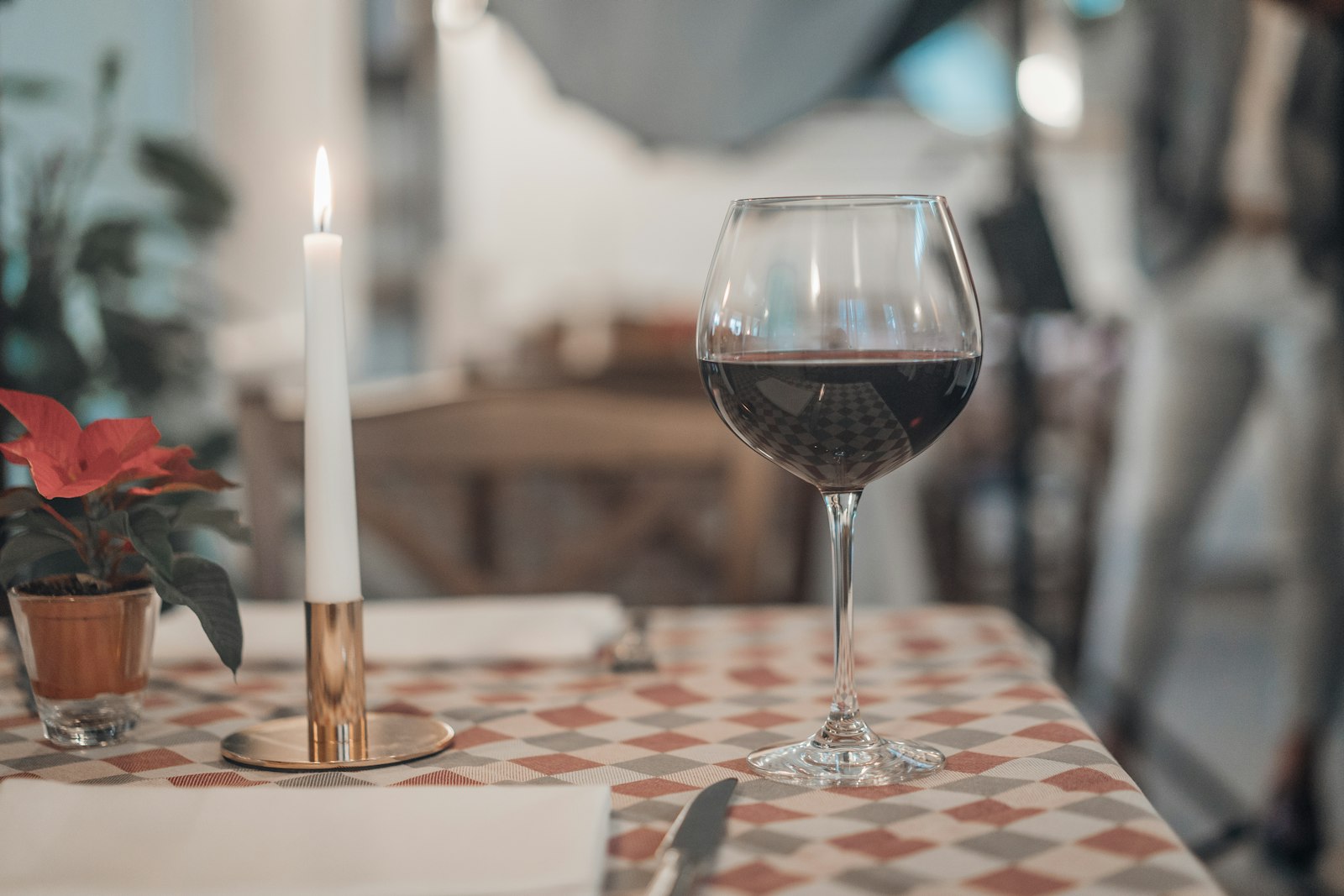
Not intentionally. Not because the setting is romantic in a produced way. But because there's nothing else to do. The Pinot is poured. The bartender has moved to the other end. You've already said what you thought about the drive over. And now it's just the two of you and a candle burning lower than it should be and some silence that needs filling.
That's when someone mentions the thing they've been carrying since Tuesday. Or asks the question they assumed they already knew the answer to. Or just says "I miss this" — meaning not the wine, not the bar, but the specific feeling of sitting across from the other person with nowhere else to be.
The bar didn't create intimacy. It just stopped working so hard to prevent it.
— MLL
What to Actually Look For
When you're choosing where to go, here's the honest shortlist:
The menu fits on one side of a card.
Not because the selection is cheap — because the person curating it knows what they're about. A bar with eight intentional pours and nothing else is more interesting than forty options designed to cover every possible preference. Confidence is attractive in a room.
The lighting is warm but not theatrical.
Edison bulbs staged for Instagram are a different thing than a room that's just genuinely dim. One is set design. The other is the actual weight of the air at dusk, the way skin looks in candlelight that isn't trying.
The bartender doesn't hover.
Service that checks in every four minutes is attention-as-interruption. The best bars have staff who read a table from across the room and stay away when things are clearly going somewhere. That instinct is a form of hospitality that never gets named.
There's nowhere obvious to put your phone.
No ledge. No obvious flat surface at eye level. Nowhere it naturally belongs except face-down on the table or in your pocket. This is not accidental in the rooms that do it. It's architecture making a quiet suggestion.
The Tasting Room Version of This
Tasting rooms are adjacent to this, and some of them get it completely right. The experience at a small producer in Dry Creek Valley where you're tasting from a barrel sample at a wooden table with no itinerary and one person guiding you unhurriedly — that's the format working. The Sonoma tasting rooms that turn into three-hour conversations do so because they stopped performing hospitality and just offered it.
The ones that don't work are the ones that feel like the wine is incidental to the tour, the gift shop, the photo op at the estate gate. You can feel the difference between a place that's inviting you to stay and a place that's moving you through.
The Part Nobody Says Out Loud
Choosing a bar with no distractions is also choosing to find out how you two are doing. Which, depending on the week, can feel like relief or like a very specific kind of test.
Long-term couples sometimes avoid these places unconsciously. The busy, loud, visually interesting bar gives you something to comment on together. A quiet bar with a short menu gives you each other. If that feels risky, that's information worth sitting with.
But most of the time, when people come out the other side of that kind of evening, they say some version of: we should do that more. Not because anything dramatic happened. Because nothing needed to. The wine was good and the room was honest and they remembered that they actually like talking to each other.