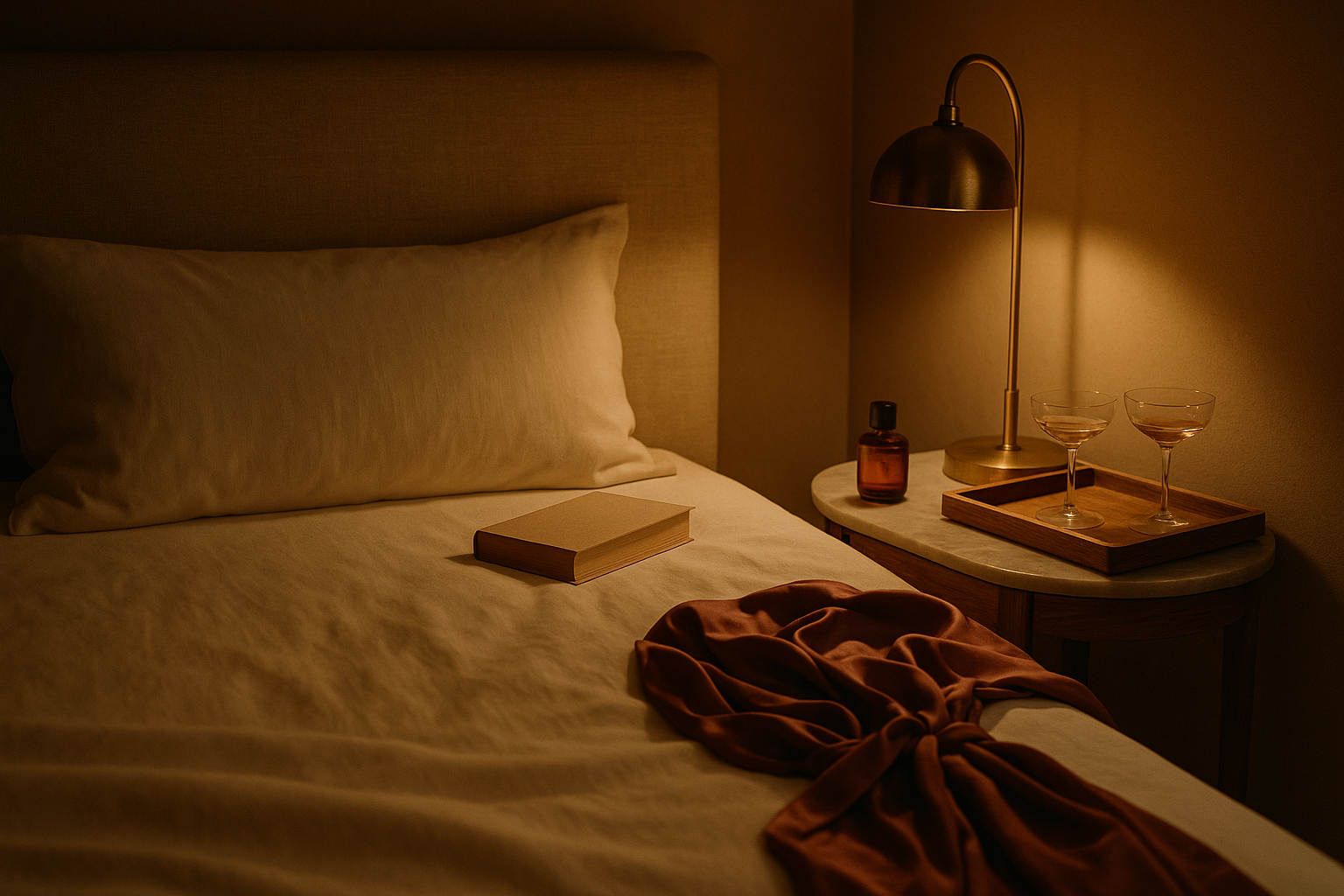
The hotel weekend is the easiest reset most couples never take. You already know this works—you've felt it the moment you step into a room that isn't yours, where the bed is made by someone else and there are no dishes in the sink waiting for you. The nervous system settles. The phone, somehow, feels less urgent. But between the logistics of booking, the guilt about leaving, the mental load of packing, and the pressure to make it *meaningful*, most couples talk about a hotel weekend the way they talk about therapy: something they should do, not something they actually do.
This is the gap we're here to close. Not with a checklist or a romantic itinerary—those already exist, and they add weight. This is about the simplest possible version: forty-eight hours, one suitcase between two, and a single non-negotiable: no email open.
Why This Matters Now
There's research on what happens to couples when they leave. A 2013 study from the Journal of Social and Personal Relationships found that couples who took vacations reported higher relationship satisfaction—but more importantly, the effect lasted weeks after they returned. Not because anything dramatic happened, but because the absence of routine interruption gave the nervous system permission to downregulate. You weren't solving problems. You weren't managing anyone's schedule. You were just... adjacent to each other, without an agenda.
The summer hotel weekend works because it requires almost nothing to set up, yet it interrupts the pattern that's running you both. You're not flying somewhere. You're not hiking. You're not doing anything that requires energy. You're just removing the context in which your relationship normally happens—the house, the responsibilities, the weight of all the things you're both holding. That's the reset. That's the whole point.
The Architecture of a Real Weekend
Start by choosing a hotel within an hour of home. This removes the travel burden—no early morning, no flight anxiety, no three-hour car ride that costs you the whole first day. You want somewhere with a good bed, ideally a view, and nothing else required. A pool is nice. A restaurant downstairs is nice. But these are luxuries, not the point.
Pick a date and book it. Not next month. Next month is when you'll cancel. This summer. Use the calendar app you share so it's real. Then stop planning. This is the hard part. Your brain will want to research restaurants, build an itinerary, figure out what you'll do on Saturday afternoon. Don't. You'll eat wherever you're hungry. You'll do whatever feels right when you're there. The not-knowing is what gives the weekend its lightness.
Pack one suitcase between you. This is not a minimalism flex—it's a practical constraint that prevents you from treating the weekend like a wardrobe test. Throw in jeans, one nice thing you already own, undergarments, your medications, your skincare if it matters to you, and that's it. You're going to wear the same jeans twice. You're going to feel good about it. The less cognitive load you carry into the room, the more space there is for actual presence.
Set one boundary: phones off the table during meals. Not in another room—you're not being punitive about this. Just face-up, screen-down, on the dresser. You're not trying to be a better couple. You're trying to eat without the ambient anxiety of notifications. That's all.
What Actually Happens
You'll arrive and feel strange for the first hour. This is normal. Your body is still in problem-solving mode. You might have an awkward conversation about what to do for dinner. You might sit on the bed and scroll. You might feel, briefly, like you've made a mistake by not planning something. Keep going.
By evening, something shifts. You'll notice it in small ways: you're talking more, or laughing at something small, or you've been quiet together for twenty minutes without it feeling wrong. You're not performing connection. You're not trying to fix anything. You're just in a room with another person, and the context is different, so you are too.
Saturday will feel long in a good way. You'll sleep past your alarm. You'll take a shower without thinking about what comes next. You'll get coffee and sit somewhere and not check your email. You might have sex. You might not. You might spend two hours talking about something you haven't discussed in years. You might spend two hours not talking at all. The point is that whatever happens, it's not happening under the pressure of your real life. It's not a performance. It's just what's true in that moment.
Sunday will feel both too short and perfect. You'll pack the suitcase. You'll drive home. You'll feel different—not transformed, not healed, but lighter. The nervous system has had a break from vigilance. Your partner will feel less like someone you're managing and more like someone you actually like. This will last longer than you think it will.
The hotel weekend isn't a fix. It's a reset. It's proof that the strain you feel in your everyday relationship isn't permanent—it's contextual. Remove the context, and something else becomes possible. You don't need it to be perfect. You don't need it to solve anything. You just need it to be different enough that you remember why you chose this person in the first place. That's the whole thing. That's enough.