Most wine country trips are secretly anxious. You booked the reservation, you're running twelve minutes behind, there's a charge if you cancel. You arrive flushed, order the flight, take the photo, and leave knowing exactly as much about each other as when you pulled off the freeway.
This is the other kind of trip. No reservations. No agenda beyond a loose loop through West Sonoma County and the understanding that the drive itself is the point.
This is the one where something real might actually happen.
Why No Destination Works
There's a specific kind of conversation that only happens in a moving car. No eye contact. Nowhere to go. No performance pressure because neither of you is the host and neither is the guest.
You say things you wouldn't say at a dinner table. Bigger things, stranger things, things that have been sitting in the back seat for months. The road holds them differently.
That's the actual itinerary. The backroads are just the container.
Where to Start: Healdsburg, Before the Plaza Gets Loud
Leave from Healdsburg before ten. Get coffee from Shed or grab something forgettable from a gas station — it doesn't matter, the ritual matters. Warm cups, cold morning, windows slightly fogged.
Head west on Westside Road. It runs along the Russian River, tree cover close on both sides, the occasional vineyard opening up like a slow exhale. Nobody is on this road at nine-thirty on a Saturday.
You'll pass small farms, a few unmarked pullouts with river access. Stop at one. You don't have to swim. Just stand there for a minute. Let the sound of the water do the thing that sound-of-water does.
The Middle Stretch: Cazadero and the Road That Earns Itself
Continue west toward Guerneville and then north on Cazadero Highway. This is where the drive earns its reputation. The road narrows. The redwoods close in. The temperature drops four degrees and the light goes green and diffuse.
It's quiet in a way that most people find uncomfortable for about three minutes and then suddenly want to live inside forever.
Cazadero itself is tiny. A general store, a scattering of cabins, the sense that time is operating on a different schedule. Stop if you need snacks. Stop if you don't. The stopping isn't about hunger.
The places where nothing is happening are where everything happens.
— MLL
What to Talk About (Or Not Talk About)
There are two types of car-conversation. The kind where you process something — a fight, a decision, a thing that's been sitting between you. And the kind where you just talk, loosely, following threads with no obligation to arrive anywhere.
Both are valuable. You probably know which one your relationship needs right now.
The loose talk tends to be more generative: what we'd do if we moved somewhere small, which of these houses we'd pick, what we were each like at twenty-three, whether we believe in anything we didn't used to. Those conversations don't happen on schedule. They happen when you're not facing each other.
A companion for the harder version — if that's what you're doing today — is something like the five-minute check-in done out loud, in the car, without the awkward kitchen-table setup that makes it feel clinical.
The Loop Back: Armstrong Redwoods, Then Wherever the Light Takes You
Come south through Armstrong Redwoods State Reserve. Walk for twenty minutes — you don't have to go deep. The big trees do their work quickly. Something physically shifts in your chest when you've been standing next to something that old.
From there, you can meander back through Occidental and pick up a sandwich at Handline in Sebastopol, or follow Coleman Valley Road up over the coastal hills — one of the most unhinged and beautiful pieces of road in the county — and eat something in Bodega Bay with your feet on a wooden railing and the Pacific doing its thing.
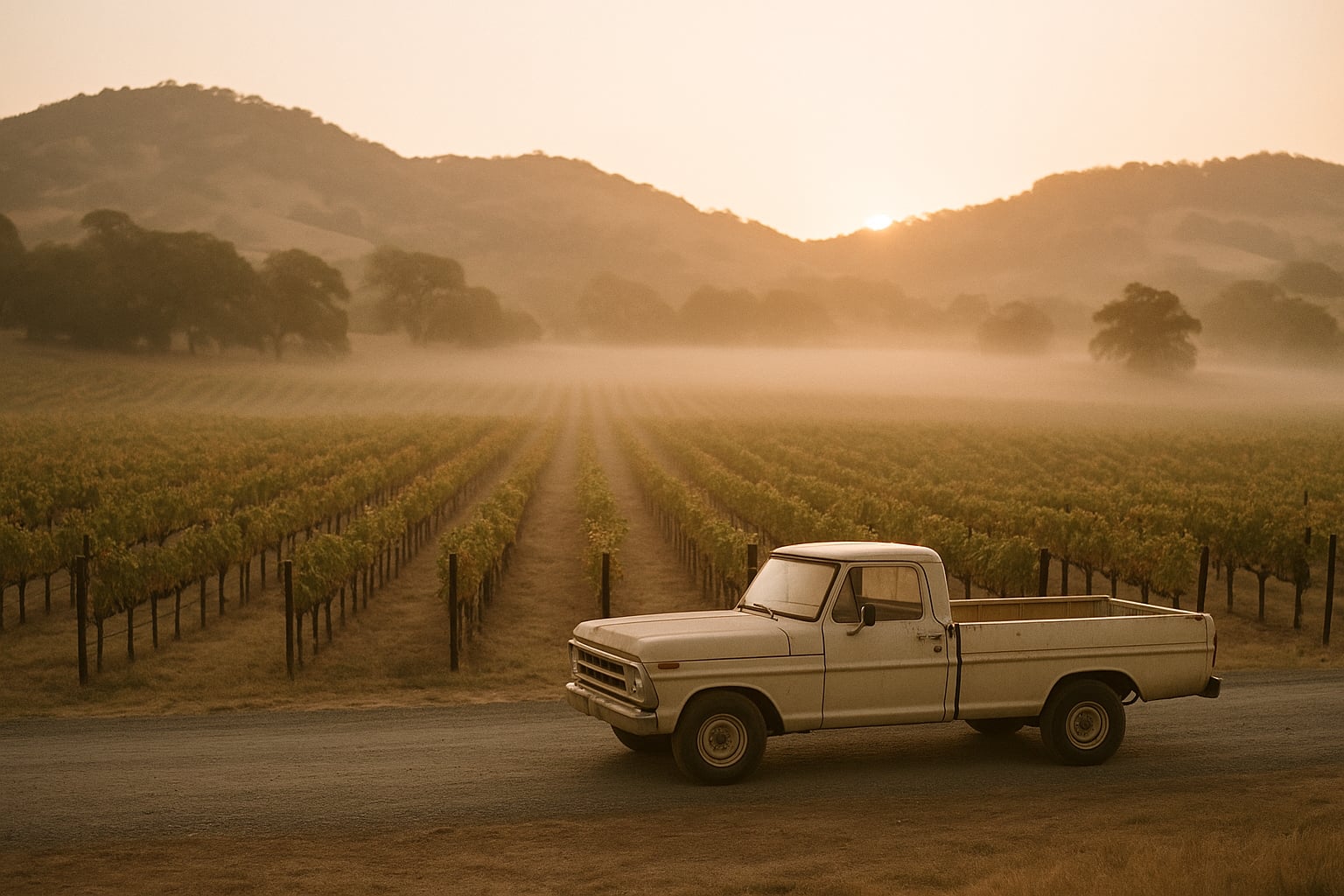
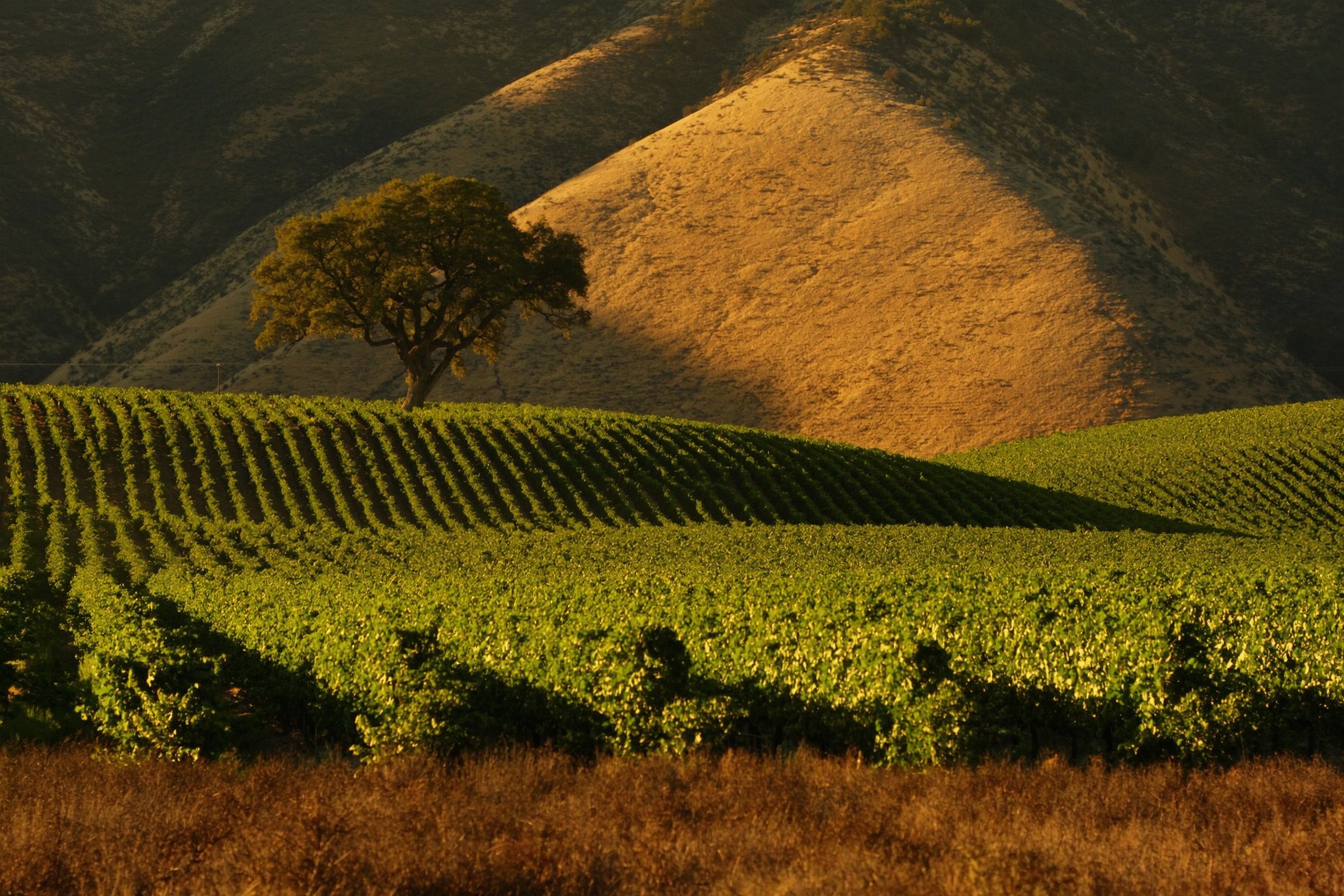
Or keep it inland. Drop back toward Healdsburg on Dry Creek Road, the afternoon light coming through the vineyards at a low angle, the valley quiet and warm. Pull off somewhere with no name and no sign and just sit in the car for a moment before you start the drive home.
The Evening After the Drive
This is important. Don't overschedule the evening.
The drive loosens something. The long unhurried afternoon opens a particular quality of tiredness — not exhausted, just warm and slightly undone. That's the right condition for a slow dinner, a long bath, skin that's been in the sun for a few hours, a room that smells like heat and dry grass.
If you're staying overnight, Forestville's Russian River Valley has small inns with deep soaking tubs and no itinerary pressure. Closer to Healdsburg, the plaza is walkable for a late glass of something, the kind of night where you sit outside and there's nothing left to figure out.
That's the whole point of the day. To get to that feeling — nothing left to figure out — by moving through beautiful country without performing it.
What Makes This Different from a Regular Wine Country Day
Tasting rooms are social environments. You're performing curiosity and refinement and taste. That's fine. But it's the opposite of intimate.
The backroad drive inverts that. No audience. No script. You're in a car, or standing at a river, or eating a mediocre burrito in a parking lot in Guerneville — and somehow that's where you remember you actually like this person.
Frequently Asked Questions
What's the best backroad to drive in Sonoma County?
Westside Road along the Russian River and Coleman Valley Road over the coastal hills are the two strongest options. Westside is quieter and more forgiving. Coleman Valley is more dramatic, narrower, and earns a better view if you're willing to white-knuckle a few turns.
Do you need reservations for a Sonoma wine country day trip?
Not for this kind of day. The intentional decision to skip reservations is what makes it different. Smaller family-run producers along Dry Creek Road and West Dry Creek Road sometimes welcome walk-ins. The goal here isn't wine education — it's unscheduled time.
What's a good couples' road trip near Healdsburg?
This loop. Start in Healdsburg, run west on Westside Road, north through Cazadero, through Armstrong Redwoods, and return via Occidental or Coleman Valley. Three to five hours depending on how long you stop. Bring food so hunger doesn't make you cut it short.
Is this a good trip if we're in a rut?
Yes. Specifically because there's nothing to evaluate or perform. Ruts tend to live in the routines, the apartment, the patterns you run without noticing. A long drive through unfamiliar country interrupts all of that without requiring you to talk about it. Sometimes that's the thing.