You can't go from answering emails at 9:47 PM to being fully, actually present in bed by 10:05. That's not how a body works. It's not how a mind works. And yet that's the plan most people run — every time.
Not because they don't care. Because nobody told them the warmup exists.
What 'Day-Brain' Actually Does to the Evening
Day-brain is still running logistics when you climb into bed. It's tracking tomorrow's meeting, the unanswered text, the weird tone your boss used at 3 PM. It is genuinely not finished yet.
That's not a mood problem. It's a transition problem. The body has been holding tension since roughly 8 AM — shoulders up, jaw set, cortisol doing its job. You can't switch that off like a lamp.
What most couples call a mismatched night — one person ready, one person distant, both a little disappointed — is usually just this. Nobody made the crossing. They just ended up in the same bed with two different heads still living in two different days.
The Hour Is the Thing
Think about the last time intimacy actually felt good — not performative, not effortful, just genuinely good. What was the hour before it like?
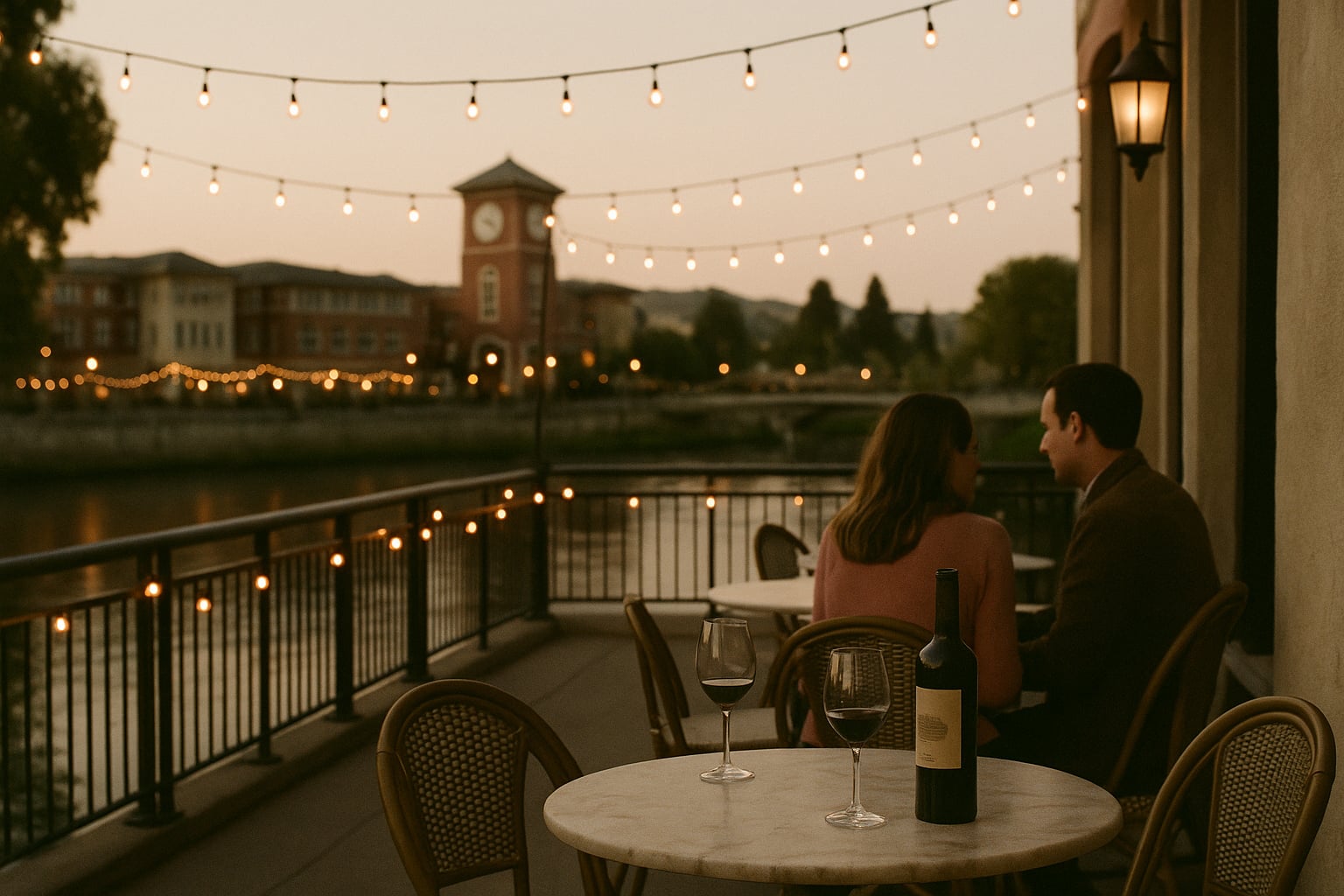
A slow dinner. A long shower. Sitting outside with something cold to drink while the light changed. A conversation that didn't have a point. Something where the clock stopped mattering.
That wasn't the warm-up warming up. That was the whole thing. The intimacy was just where it landed.
The body needs bleed-out time. Actual decompression — not scrolling, which keeps the nervous system in a low-grade alert state. Not TV either, usually. Something that involves the senses more than the screen. Heat. Taste. The weight of a glass in the hand. The smell of something cooking.
What This Looks Like in Practice
It doesn't require a plan. It requires a slight shift in how you treat the 60 minutes before you'd otherwise just end up in bed anyway.
Two people making a simple late dinner together — not performing domesticity, just occupying the same kitchen, passing things, talking about nothing. That's transition. That's the warmup.
One person running a bath while the other finishes a drink on the back step. Skin returning to itself. Steam. The physical sensation of heat pulling the tension out — not metaphorically, actually. Muscle memory for softness.
The change from work clothes into something that feels different on the skin. Not necessarily lingerie. Sometimes it's just a robe that's heavier than expected, or a fabric that registers differently. The act of changing signals the body: we are done with that version of today.
The most underrated thing in a couple's intimate life isn't a technique or a toy. It's forty minutes of unhurried time together where neither person wants anything yet.
— Modern Love Living
Why Couples Skip It
Time, mostly. Or the perception of it. The evening already feels compressed — dinner, kids, work overflow, the thing that needed to get done. By 9 PM the warmup feels like a luxury.
But the irony is that skipping it costs more time than it saves. A stilted, unsatisfying night that leaves both people a little deflated is slower to recover from than the twenty minutes of deliberate unhurrying that could have prevented it.
There's also a weird cultural pressure to be ready. Like wanting should be automatic if you love someone enough. It's not. Wanting is a state you arrive at. And how you spend the hour before is most of the journey.
The Micro-Behaviors That Signal You're Getting It Right
You'll notice them when they start happening. Someone gets up to pour something without being asked. There's a hand on a shoulder in passing that isn't loaded — just contact, easy and incidental. Conversation slows down. Silences stop feeling like gaps to fill.
These aren't romantic gestures. They're nervous system indicators. The body communicating: I am here now. The day is done.
That's the crossing. And once both people have made it, the rest of the evening tends to organize itself.
On Evenings That Don't Start Together
One partner gets home at 6. The other at 9. They're on completely different clocks, different depletion levels. This is where the warmup gets harder and matters more.
The person who's been home longer has often already started their decompression. Sometimes they've finished it. They're ready, in a low-key way, and the late arrival walks in still vibrating from the day.
Waiting is a warmup tool. Not resentfully, not performatively — just giving the other person their twenty minutes without agenda. A drink left out. The shower already warm. No expectation written on anyone's face.
That small patience is more intimate than most things that happen in the bedroom. It says: I see where you are. Take your time. I'll be here.
The Geography Helps If You Let It
There's a reason a weekend in Healdsburg or a night at Solage tends to unlock something that's been locked for months. It's not the thread count or the mineral pool, though both help. It's that you physically cannot bring your regular logistics with you. The crossing happens by default.
You don't have to go anywhere to replicate the mechanism. You just have to understand what travel actually does: it interrupts the conditioned stress state. It forces transition. It gives the body permission to arrive.
You can build a version of that at home. It just requires intention — and the willingness to treat the hour before bed as something other than dead time.
Start Here
Pick one night this week. Not a special occasion. Just a regular Wednesday.
Phones off or face-down by 9 PM. Not as a rule — as an experiment. Make something small to eat or drink. Change out of what you wore all day. Light something or open a window. Let the conversation be unhurried and without a destination.
See where you both are by 10.
That's it. That's the whole intervention. The warmup nobody factors in — done.