Most people build their relationship on a template they didn't choose. Dinner at the same time. Anniversary trips to the same kind of place. Sex that follows a sequence nobody named but everybody knows. The template came from their parents, their culture, their church, the rom-coms they absorbed before they had critical thinking. It wasn't designed. It just settled.
Queer couples, by and large, didn't get that template. Which looked like a loss. Turns out it was a design opportunity.
Without a script, you have to talk. Without inherited ceremonies, you have to invent them. Without a default, you make choices. And the couples who've been doing this for a while — the ones who figured it out quietly, with no Pinterest board and no family precedent — have built some of the most deliberately intimate practices I've encountered.
Here's what they're actually doing.
The Debrief That Isn't a Check-In
Lots of couples do some version of the end-of-day download. Most of it is logistics. How was your meeting, what do we need from the store, did you call your mom.
A number of queer couples I've talked to do something different. They call it different things. One couple in Healdsburg calls it the weather report. You say what's actually in your body right now. Not your day. Not your to-do list. Just: I'm heavy. Or: I feel good but also wired. Or: I've been lonely all day and I don't totally know why.
It takes about four minutes. It's not therapy. It's closer to just... removing a layer before you try to actually be with each other.
Straight couples do this too, sometimes. But when you've spent years learning to translate yourself for a world that didn't assume you, reading your own internal weather becomes survival skill first and intimacy practice second. Eventually the two things blur.
The Anniversary of the Thing, Not the Date
Legal marriage gave everyone the same anniversary. The wedding date. One clean number to remember and forget.
Before marriage equality, queer couples tracked different things. The night we decided. The first time we said I love you out loud to someone else. The morning we drove to Indian Springs and didn't talk the whole way there and realized we didn't need to.
Some couples kept those rituals even after they had a legal date to fall back on. They mark the smaller, stranger moments. Not the ceremony. The turning point.
It sounds romantic in a soft-focus way. In practice it's something harder and better. It means you have to remember which moments actually mattered. You have to name them. You have to agree on them, which sometimes means realizing you remember the same night completely differently — and that conversation is its own kind of intimacy.
Renegotiating on a Schedule
Straight relationship culture tends to treat the early negotiation as the permanent one. You figured out whose family you spend holidays with in year two. So that's just how it is now.
A lot of queer couples, especially those navigating non-monogamy, chosen family dynamics, or changing relationships with their families of origin, built in something different: scheduled renegotiation. Not because anything is wrong. Just because people change and agreements should too.
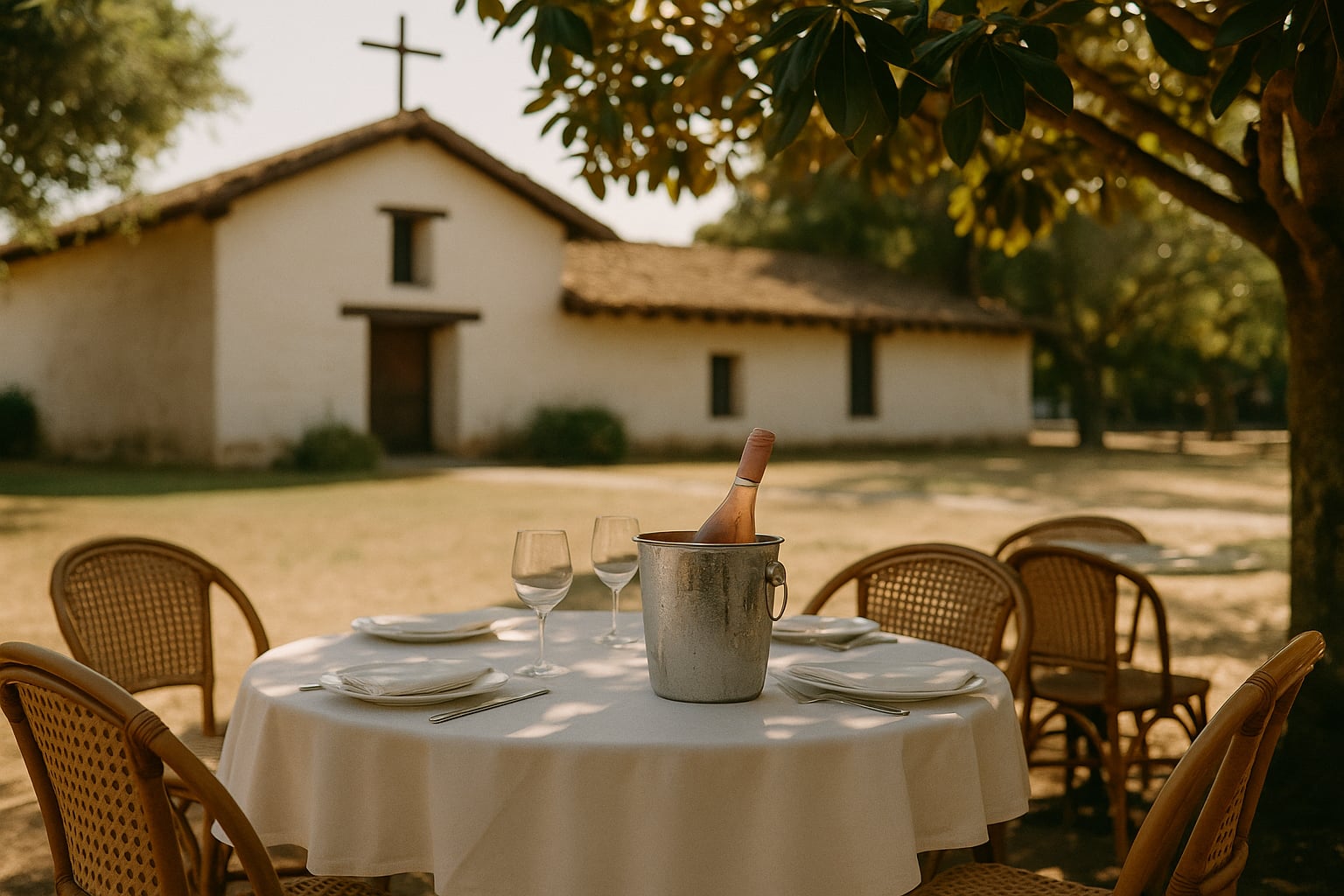
One couple does it every six months, roughly. They sit with a bottle of something they've been saving — usually something picked up along the Dry Creek Road corridor — and they go through what's working, what's shifted, what one of them has wanted to say and hasn't.
It used to feel like a performance review. Now it feels like the opposite. Like we're proving we're still paying attention.
— overheard in Sonoma
The couples who do this say the same thing: the ritual doesn't create problems. It just means problems don't quietly compound for eighteen months until they're structural.
Touch That Isn't Going Anywhere
Here's a pattern that comes up constantly. Queer couples — particularly those who came out in environments where touch was loaded, surveilled, political — often develop a very deliberate relationship with non-sexual physical contact.
Not because they're withholding. Because touch that has no agenda is something they had to claim consciously. It was never just assumed.
The rituals look like: ten minutes on the couch after dinner, fully untangled from phones, one person's feet in the other's lap. Or a daily thing — forehead to the back of a neck before sleep. Or Saturday mornings where both people stay in bed longer than makes sense, not having sex, just occupying the same warm weight of space.
The skin contact isn't foreplay and it isn't nothing. It's its own category. Some people spend their whole relationships never separating those two things and spend years confused about why desire went quiet.
Making the Invisible Visible
Minority stress doesn't clock out when you get home. That's not a metaphor. There's an actual metabolic cost to navigating spaces that weren't built for you — the small calculations, the read-the-room moments, the things you decided not to say at dinner with his parents.
A ritual that shows up in queer relationships that I rarely see named anywhere: the explicit acknowledgment of that invisible labor, to each other.
Not a complaint session. Something smaller. Naming it. That was a lot today. Or: I saw what you did at that table and I want you to know I saw it.
It takes ten seconds. The effect is not ten seconds. Being witnessed by the person you sleep next to, for the specific costs that most people around you can't see — that's a different kind of intimacy than most relationship advice ever touches.
The Ritual You Build Together Is the One That Holds
None of these are techniques. They're not hacks. They're just what happens when two people can't fall back on assumption and have to actually design their life together.
The irony is that the couples who didn't get a template are sometimes the ones most fluent in their own relationships. They know what they built and why. They remember which version of their agreement they're currently in. They can tell you when the ritual started and what it replaced.
That's not automatically queer. Plenty of straight couples do this too. And plenty of queer couples default to inherited patterns without thinking. Identity doesn't guarantee intentionality.
But absence of template does create a forcing function. You can't be passive about something you had to construct from scratch.
Most couples, if they're honest, are running a mix of both. Some things chosen, some things just accumulated, most of it unexamined. The invitation here isn't to overhaul anything. It's just to look at what you're actually doing — and decide if it's yours.
A Few Places to Start
If you want to try the weather report: Do it before you talk about anything practical. Tonight, after work, before dinner. Don't ask how their day was. Ask what's actually in their body right now. See what happens.
If your anniversaries feel empty: Think about which date actually mattered. Not the official one. The real one. Tell your partner which moment you'd mark if you could only pick one. Then ask them theirs.
If desire has gone quiet: Before you address desire, try separating touch from expectation for a few weeks. See if that shifts anything. It usually does.
If you want to renegotiate: You don't need a crisis to call a conversation. Pick a bottle you've been saving. Set aside two hours. Start with what's actually working — genuinely, not as a warm-up to complaints. The rest will follow.