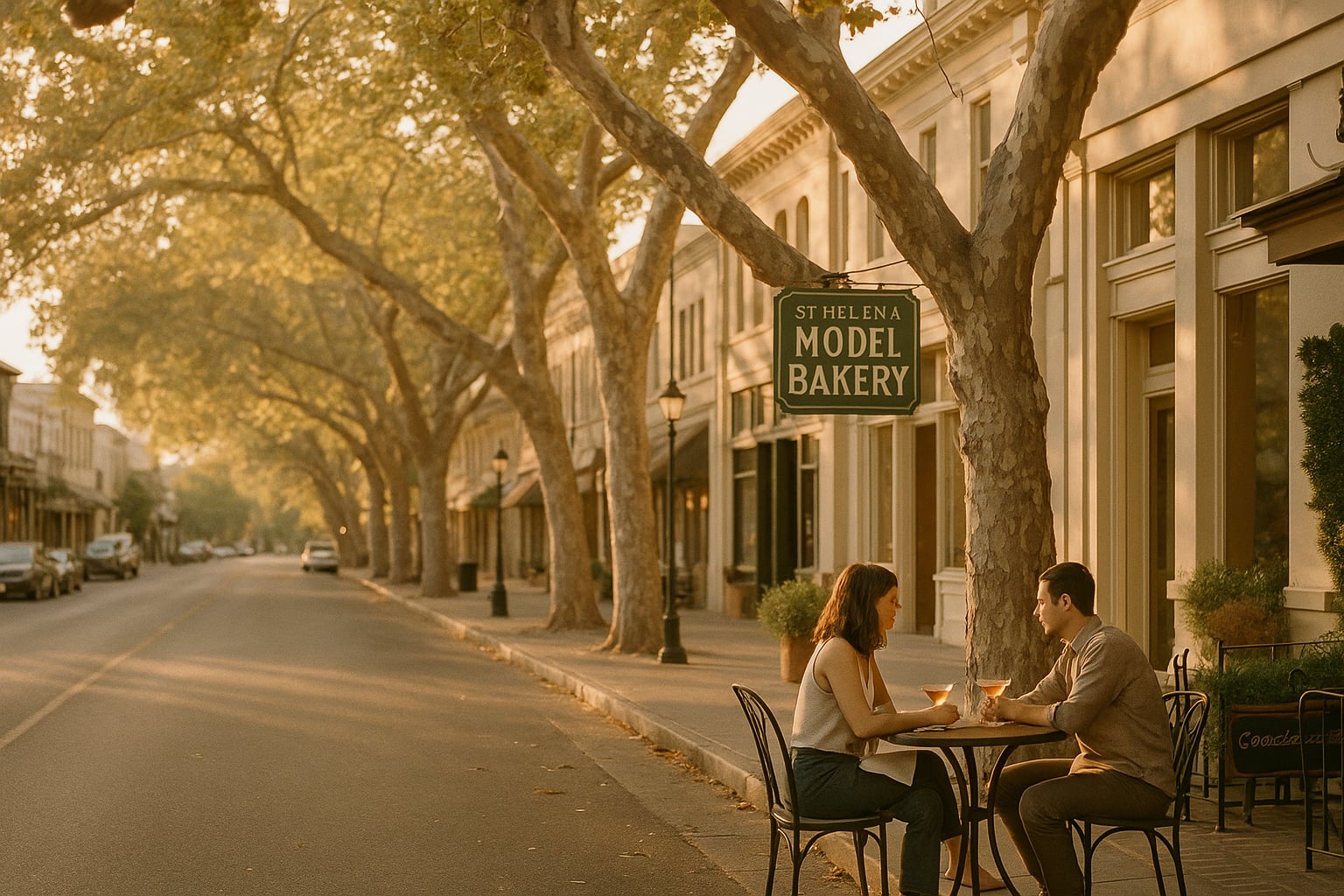
There's a moment — you'll know it when you hit it — where you look at your partner and realize you have absolutely no idea what comes next. Not because the relationship is failing. Because there's no version of this moment in any movie, any family photo album, any well-meaning advice column. The straight roadmap has run out. You're off the edge of it.
This is the queer milestone problem. And it's not really talked about, because from the outside it looks like freedom.
The Roadmap Everyone Else Gets
Heterosexual couples absorb a sequence before they ever fall in love. Date. Get serious. Meet the parents. Move in. Get engaged. Marry. The order might shuffle, the timeline might stretch, but the landmarks exist. They've seen them performed a thousand times. At the wedding, someone gives a toast that hits the same beats, and everyone laughs at the same moments.
Queer couples don't get that. Or they get a warped version of it: the template exists now, technically, but it was written for someone else and retrofitted. The blueprint arrived about five minutes ago. The emotional muscle memory is still being built.
And so you improvise. Which sounds romantic. It is, sometimes. It's also exhausting in ways that are hard to explain to someone who's never had to think about which pronoun to use when telling a coworker about the person they love.
What 'Meeting the Family' Actually Costs
Take one of the simpler milestones on paper: meeting each other's families. For a straight couple this is nerve-wracking. For a queer couple it often involves a calculation that runs silently before the car is even packed.
Who knows? Who doesn't? Does his mom actually accept this or does she just tolerate it because she misses him? Will there be a separate guest room? Will there be a moment, over someone's good china, where a question gets asked that makes you both go very still?
This connects directly to what happens when one partner is further out than the other. The asymmetry is real, and it shapes everything about how a milestone lands. One person is walking into the living room. The other is already doing math about the exits.
We spent more time planning how to act at my parents' house than we did actually being there. And we'd been together three years.
— reader submission
Moving In: When 'Whose Stuff?' Is a Gender Question
Moving in together is supposed to be a logistical problem. Whose couch. Whose neighborhood. Whose lease runs out first. For queer couples, there's often another layer: whose identity is visible in this shared space, and to whom.
Two women moving in together will be read as roommates by the landlord, the neighbors, sometimes their own families. Two men sharing a one-bedroom might be assumed to be making a financial arrangement. A non-binary person moving in with their partner might find that the apartment itself becomes a negotiation: what gets displayed, what stays in a drawer, what version of yourselves this space is allowed to hold.
It's a small thing. It's not a small thing. The framed photo on the bookshelf is a statement. For some couples in some places, it's a risk assessment.
Inventing the Engagement
Legal marriage has been accessible to same-sex couples in the US for less than a decade. The cultural infrastructure, the soft rituals, the language — those are still catching up. Who proposes? Both of you? Neither of you? Does a ring mean the same thing? Do you want it to?
Some couples find this genuinely liberating. They get to decide what engagement means for them, untethered from anyone else's expectation. Some couples find it destabilizing in ways they didn't anticipate: when you've spent your whole life watching an example of how this goes, the absence of it leaves a stranger kind of silence than you expected.
There's grief in that silence sometimes. Not for the heteronormative version. For the ease of knowing.
Chosen Family Fills Some of the Gap
Here's what often replaces the missing template: the people who were there before any of the milestones happened. The friend who helped you come out. The group chat that knew about your relationship before your biological family did. The small Saturday dinners where nobody needs to explain anything.
Chosen family isn't a consolation prize. For many queer people it's the primary relationship infrastructure: the ones who witness the milestones, who give the toast that actually sounds like you, who held the context long before there was anything to celebrate.
But even that structure requires invention. It doesn't self-assemble. It gets built, deliberately, over years. And for couples navigating it together, the queer friend group becomes a kind of institution. One that you maintain, protect, and keep showing up for.
The Milestone Nobody Names
There's one that doesn't show up on any list. The moment you realize your relationship has its own internal logic, its own rituals, its own grammar. When you stop looking for the version of yourselves that would make sense to someone else.
It can happen over something small. A Sunday routine you've built together in a rented house in Healdsburg. The way you've learned to read a room before you walk into it as a couple, and then look at each other after, and not need to say anything. The Sunday morning quality of the light. The coffee order you've memorized for both of you.
That's the milestone. Not the ring, not the lease, not the dinner with the parents. The moment the relationship stops needing external confirmation that it's real.
Frequently Asked Questions
Why do LGBTQ+ couples struggle with traditional relationship milestones?
Because most milestone rituals, including who proposes, how families are introduced, how cohabitation is announced, were built around a heterosexual framework. That framework is still the cultural default. Queer couples often have to decide from scratch what each milestone means, which takes more than logistics. It takes a kind of emotional labor the template was supposed to absorb.
What does it feel like to hit a milestone with no queer reference point?
Disorienting, often. Sometimes freeing. Sometimes quietly grief-adjacent, even when things are going well. You can want the milestone and feel the absence of the cultural scaffolding around it at the same time. Both are valid. Both are common.
How do queer couples build their own relationship rituals?
Mostly by showing up and paying attention to what actually works for them, not what's supposed to. Some couples formalize milestones in unconventional ways: a dinner with chosen family instead of a party, a private commitment before any legal step, a trip together that marks something. The form follows the relationship, not the other way around.
Does minority stress affect how LGBTQ+ couples experience milestones?
Yes, and significantly. The background calculation of safety, of who knows and who doesn't, of how a space will receive you as a couple, doesn't disappear for milestones. It often intensifies. Meeting a family, announcing a move, wearing visible symbols of commitment: each of these can carry a safety calculus that straight couples don't have to run. That's not dramatic. It's just real.
The thing about inventing the path is that you actually have to walk it first to know if it holds. That's scarier than following someone else's footprints. It's also, eventually, how you end up somewhere that's actually yours.