You walk into the room. You've already done the math. Queer-friendly venue, friends of friends, someone you trust vouched for it. The flags are literal. The bartender has a pronoun pin. You ordered a drink and found a wall to stand near, and you are fine.
Except your jaw is still tight. You keep checking the door. You're laughing at the right moments but from somewhere slightly outside your own body, monitoring the room the way you've always monitored rooms — exits, energy, who's watching, who might.
This is the part nobody puts on the invite. Safe space, 8 PM. Bring your nervous system. Allow two to four hours for it to believe you.
The Brain Says Safe. The Body Has Its Own Opinion.
Hypervigilance isn't paranoia. It's a skill you developed because at some point — in a classroom, a family dinner, a relationship, a parking lot — not reading the room had consequences.
For a lot of queer people, that skill got honed young and honed hard. You learned to scan before you entered. To modulate your voice, your hands, your laugh. To calculate. And the body gets very, very good at things it practices for years.
The problem is that a nervous system trained on threat doesn't immediately stand down when the threat is gone. It needs evidence gathered over time, not assurances delivered once.
Intellectual safety and felt safety are not the same event. They're not even on the same timeline.
— MLL Editorial
You can know something is safe and still feel unsafe in your chest. That's not a failure of logic. That's biology doing exactly what it was built to do.
What the Lag Actually Looks Like
It looks like being the last to stop watching the door. It looks like holding your partner's hand and then letting go, not because you wanted to, but because your hand made that calculation before your brain did.
It looks like laughing harder than necessary to prove you're relaxed. Like keeping the jacket on. Like ordering a second drink before you've finished the first because your hands needed something to do.
It looks like getting home and only then, in the shower or half-asleep, feeling the tension release from your shoulders and realizing: that's how tight I was the whole time.
Why 'Safe Space' as a Label Doesn't Quite Cover It
The term does real work. It signals intent. It tells you something about who the organizers thought about when they planned the room. That matters.
But a label addresses information, not experience. And the body doesn't process safety through information. It processes it through repetition, through evidence, through what actually happens and then keeps happening. Through the bartender who didn't flinch. Through the couple at the next table who touched each other like no one was watching. Through time.
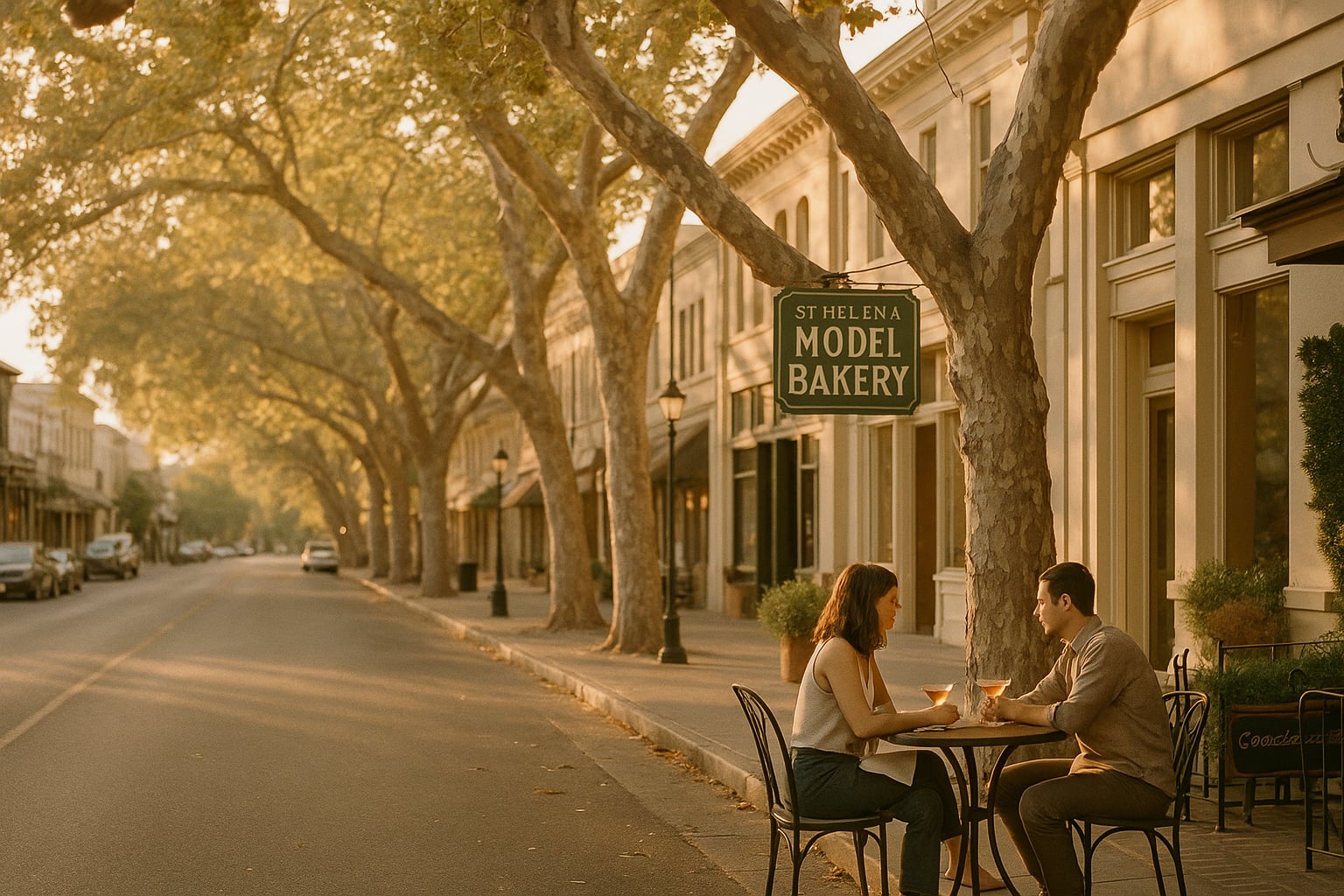
Some of the safest spaces I've ever been in weren't labeled anything. A back patio at a wine bar just off the Healdsburg plaza, a small table, late afternoon, nobody performing anything for anyone. The absence of performance was the signal.
The Exhaustion Nobody Mentions
There's a specific tiredness that comes from being in a room and working hard to be in a room at the same time. It doesn't feel like physical exhaustion. It feels like arriving home and not wanting to speak to anyone, not because the night was bad, but because you spent it at a low hum of readiness.
Partners notice this and sometimes take it personally. You seem distant. And the real answer — I spent six hours being slightly braced against a threat that never came — is hard to explain to someone whose body doesn't do that.
This is where the articles about nervous system regulation earn their keep. Not as wellness content. As actual information about why you're depleted after an objectively good night.
What It Takes to Actually Land
Landing in a space — not just entering it — is a different thing than arriving. It requires the body to release the scan. To stop gathering data. To decide: okay, this one is real.
Here's what actually moves that needle, based on no clinical framework whatsoever, just years of watching what works.
One Person Who Already Knows You
Not necessarily a best friend. Just someone whose face you can find. Whose presence tells your body: we've been safe here before, or someone we trust is already comfortable. The nervous system co-regulates. That's not metaphor. One settled person genuinely helps settle another.
Time, Without an Agenda
Landing takes longer than arriving. Twenty minutes, sometimes forty. If you're in a good space, you can often feel it: a moment where the room becomes less a set of calculations and more just a room. Most people leave before that moment, because the calculation part felt like the event.
Something Sensory to Hold
Warmth of a glass. The weight of a jacket left on by choice, not defense. Condensation on a bottle. The body comes back through the senses, not through reasoning. A good venue understands this: low light, warm surfaces, something that smells like cedar or leather or an open window. Solage gets this right. So does the Indian Springs bathhouse on a slow Tuesday when there are only six people in the water and nobody has anywhere to be.
Permission to Take the Time
This is the one nobody gives you. You're allowed to take a while to settle in. You're not broken for needing it. You're not less queer, less confident, less healed than someone who seems to walk into rooms fully themselves in thirty seconds.
That person may have a different history. Or may simply be better at looking relaxed than being it.
The Part That's Worth Naming With Someone You're Close To
If you have a partner, a person, a chosen-family member who moves through the world differently than you do — it's worth telling them about the lag. Not as a wound to manage. Just as information.
I take a while to feel like myself in new spaces. It's not about the space being bad. It's just how my body works.
That sentence alone changes things. It means they stop asking why you seem quiet. It means you stop performing ease for their comfort. It means you can actually land instead of managing the room and their perception of you managing the room simultaneously.
That's a lot of simultaneous work. You don't have to keep doing it silently.
That feeling, when it comes, isn't dramatic. It's just your shoulders. The way they finally drop. The way the room, all at once, becomes somewhere you actually are.