It starts around 5:45. You're not even home yet and you're already thinking about it. The bottle on the counter. The particular sound of the cork. The way the first sip tells your shoulders they can stop being a necklace.
Nobody questions this. It's normal. It's adult. It's practically a personality trait with a French word attached to it.
But here's the thing about rituals that feel earned: they're usually solving a problem you didn't consciously name.
What the Pour Is Actually Doing
Your nervous system has been in low-grade fight-or-flight since approximately 9 AM. Not the dramatic kind. The ambient kind: the Slack notification that landed wrong, the meeting where you performed being fine, the drive home where you replayed three conversations you can't fix.
By the time you reach for the wine, you're not looking for pleasure. You're looking for a door out of your own head.
Alcohol is genuinely good at opening that door. It depresses the central nervous system, quiets the prefrontal cortex — the part of your brain doing all the narrating and worrying and evaluating — and gives you approximately 20 minutes of feeling like yourself before the rebound kicks in.
The Ritual Has a Shape. Notice It.
Most people don't drink wine because they're thirsty. They drink it at a specific time, in a specific room, after a specific transition. That's not appetite. That's a coping architecture.
There's nothing shameful about that. You built it because it worked. The problem is when the architecture becomes load-bearing without you noticing. When skipping it feels like deprivation. When the ache starts earlier in the day. When one glass is fine but you pour a second before you've consciously decided to.
These aren't moral failures. They're data.
What It's Standing In For
The 6 PM glass is usually a placeholder for one of three things that didn't happen earlier.
A real transition
Work doesn't end anymore. It softens into evening. The laptop is still open. The phone is in your hand. Your body is in your kitchen but your brain is still in the 4:30 meeting. The wine creates a boundary your schedule didn't.
Physical release
Stress lives in the body as tension: jaw, shoulders, upper back, the specific ache behind your sternum that you've stopped noticing because it's just always there. You needed to move, or be touched, or breathe differently at some point. You didn't. The wine is doing a version of that job — badly, and on a short clock.
A moment that belongs only to you
If you have a partner, kids, a household that requires you to perform competence the moment you walk in — the glass of wine might be the only thing you do all day purely for yourself. That's not nothing. That's actually the most important thing on this list.
The ritual is real. The need underneath it is real. What's worth questioning is whether wine is the best available answer, or just the most convenient one.
— MLL
This Isn't About Stopping
This piece isn't going to tell you not to drink. That's not the conversation.
The conversation is: what does the ache underneath the wine o'clock ritual actually need? Because if you can give it something before 6 PM, the wine — if you still want it — becomes a pleasure instead of a mechanism.
That's a meaningful difference. One you can feel.
What Can Actually Move the Needle
None of these are revelations. They work because they address the nervous system directly, before the accumulation becomes unbearable.
A hard stop ritual. Ten minutes. Close the laptop, leave the room, change clothes. The physical act of changing out of work clothes is legitimately effective at signaling transition. Your nervous system is not sophisticated. It responds to costume changes.
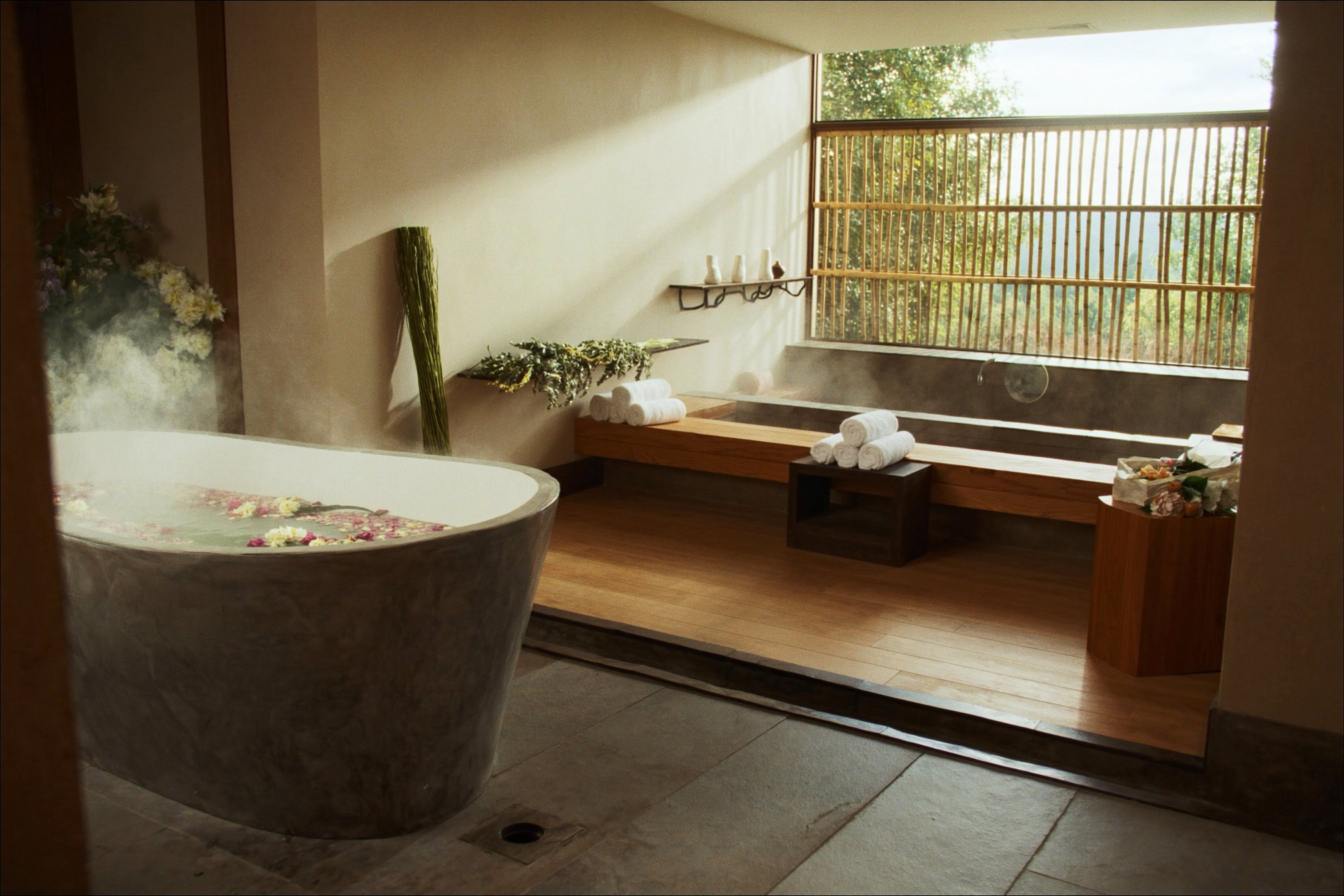
Cold or heat. A cold splash of water on your face, a hot shower, standing in steam. Temperature shock is one of the fastest known nervous-system resets. It's unglamorous and it works. Indian Springs has built an entire economy around the concept — but you have a bathroom.
Movement before sitting down. Not a workout. A walk around the block. The transition from car to couch without any physical interlude is part of what makes the ache so loud.
Something that requires nothing of you. Music. A specific playlist that signals you're off the clock. Not a podcast about improving yourself. Not the news. Something that just exists alongside you.
When It's More Than a Ritual
There's a version of this that's a simple habit in need of examination. And there's a version where the wine is doing very heavy lifting for something underneath: chronic stress with nowhere to go, loneliness inside a full life, a relationship where you're disconnected but still sharing a bed, a body that's been running on cortisol for so long it's forgotten what calm feels like.
If you notice that skipping a night feels genuinely hard — not inconvenient, but hard — it's worth sitting with that. Not with judgment. Just with curiosity about what's underneath it.
The wine isn't the problem. The ache it's answering is the thing worth understanding.
There's a version of 6 PM that isn't a countdown to relief. Where the end of the workday doesn't feel like escaping something. That version isn't about drinking less wine. It's about building a life with enough real release in it that the ritual gets to be a pleasure instead of an infrastructure system.
That's worth more than any pour.