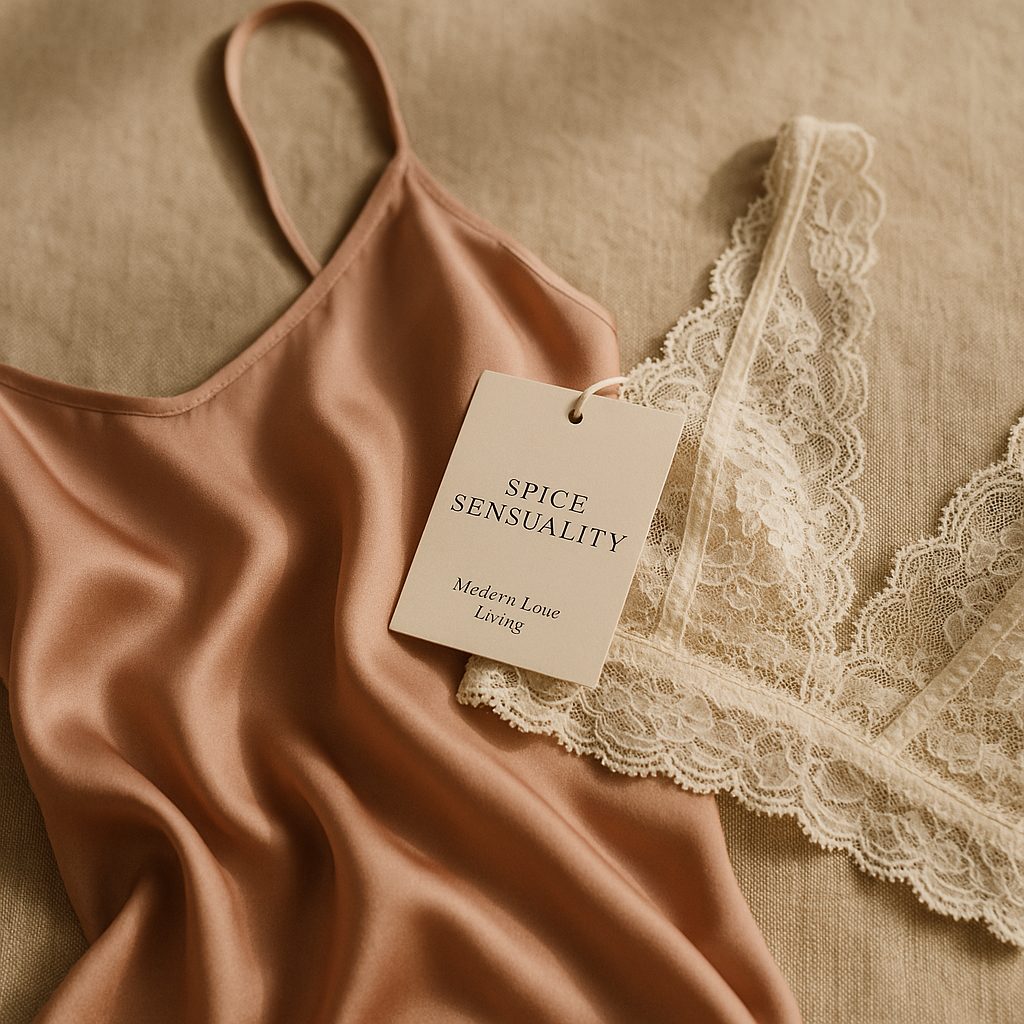
There's the version of you that gets dressed for other people. And then there's the version that exists after the door closes, after the bra comes off, after the day stops requiring anything from you. Most conversations about lingerie, about fabric, about what you wear close to your skin — they're about the first version. The performance. The seduction. The reveal.
Nobody talks much about the second version. Which is strange, because that's the one you spend the most time in.
The Quiet Wardrobe Nobody Sees
Think about what you actually reach for at 9 PM on a Tuesday. The apartment is empty. No one is coming over. You've been in work clothes since 7 AM and you finally get to just — stop. What do you put on?
For a lot of people, the answer is whatever's softest and least thought-about. An old T-shirt. Elastic-waist shorts. Something that used to belong to someone else and just stayed. Not bad, necessarily. But also not chosen. Not deliberate.
That non-choice is the thing worth looking at.
What you wear when no one is watching is the most honest thing in your closet.
Seduction Taught You to Dress Outward
We learn to dress for effect before we learn to dress for ourselves. You wore the red thing because someone responded to the red thing. You bought the lace because there was someone to appreciate lace. The feedback loop was external, so the compass pointed outward.
That's not a moral failing. It's just what happens when your body has spent years being a site of other people's attention instead of your own.
The problem is that when the audience disappears — partner traveling, relationship ending, just a long stretch of being solo — the wardrobe doesn't know what to do. Without someone to dress for, a lot of people stop dressing at all. They default to comfort-as-erasure: nothing that fits quite right, nothing with any weight to it, nothing that requires acknowledging the body at all.
What Reclaiming Actually Looks Like
It doesn't look dramatic. It's not a whole lifestyle overhaul. It's smaller than that.
It's the silk robe you stop saving for overnight guests. It's the good underwear you wear on a Wednesday because you like the way the waistband sits. It's the slip that isn't for anyone — it's just cool against your skin in July, and that's enough.
There's a particular kind of morning — slow, no agenda, maybe a coffee going — where you make the decision to not just throw on whatever's closest. You take twenty seconds and choose something with intention. Not performance. Intention. The difference is that performance needs a witness. Intention only needs you.
Fabric as a Private Declaration
What you put against your skin when you're alone is a statement you're making to yourself. That's not a poetic abstraction. It's almost physiological: the weight of good fabric, the feel of a seam that actually fits, the warmth of something soft after cold air — these things register in the body before the brain catches up.
When you choose something that feels good rather than something that just exists in the drawer, you're telling your body that it matters even without an audience. That is not a small thing.
Plenty of people are waiting. Waiting until they lose the weight, until the relationship settles, until they feel more comfortable in their own skin. Meanwhile, the good robe hangs on the back of the door. Still tagged. Or worn out of guilt, quickly, and then put back.
That article on the size you're waiting to be before you buy anything lives in the same neighborhood as this one. The body you have right now — this Tuesday body, tired and real — it also deserves good fabric.
The Body You're Actually Living In
There's a scene that plays out in a lot of relationships, years in. Saturday morning. No plans until noon. One person is still half-asleep. The other's in the kitchen. And whoever picks up the worn-out college shirt instead of the soft robe is making a choice about how much the moment deserves — which really means how much they deserve the moment.
It sounds small. It is small. That's exactly the point. It's the accumulation of small non-choices about your own body that add up to something larger: a quiet estrangement from the physical self.
Intimacy with a partner is easier, or at least different, when you've maintained some baseline intimacy with yourself. Not performance. Just: knowing what you like against your skin. Knowing how you want to feel in a quiet room.
A Few Specific Things Worth Knowing
What makes something worth wearing alone?
It fits your actual body, right now. It has some sensory quality you notice: weight, softness, temperature. You'd wear it again tomorrow without needing a reason. That's it. That's the whole list.
Does it have to be lingerie?
No. A silk robe is not lingerie. A well-made cotton slip is not lingerie. A cashmere sweater worn against bare skin at 7 AM in Healdsburg with fog still on the creek is not lingerie. This isn't a category conversation. It's a texture conversation. A deliberateness conversation.
What if choosing feels like too much effort?
That feeling is information. Not judgment. If putting on something that feels good seems like effort you can't justify for yourself alone, that gap is worth sitting with. It usually means the body has been on an approval economy for a while. The way out is gradual: one thing, chosen for you, worn without performance.
Does this connect to desire?
Yes, but not the way people expect. It's not that wearing the silk thing makes you feel sexy for someone else. It's that staying connected to how your body feels — its weight, its heat, what it wants to be wrapped in — keeps desire from going fully dormant during long stretches of low-contact. Your own body stays familiar to you. That matters.
The Only Witness Is You
There's something quietly radical about buying the thing you want, wearing it on a random Thursday, and not mentioning it to anyone. Not photographing it. Not saving it for when someone deserves to see it.
Just wearing it. Because your skin is there. Because the evening is yours. Because the body that does everything you ask of it, all day, every day — it earns a little weight of good fabric now and then, regardless of who's in the room.
That's not a beauty ritual. It's not self-care in the marketed sense. It's closer to a private agreement: that you exist when no one is watching. That the body isn't on standby, waiting for someone to switch it on.



