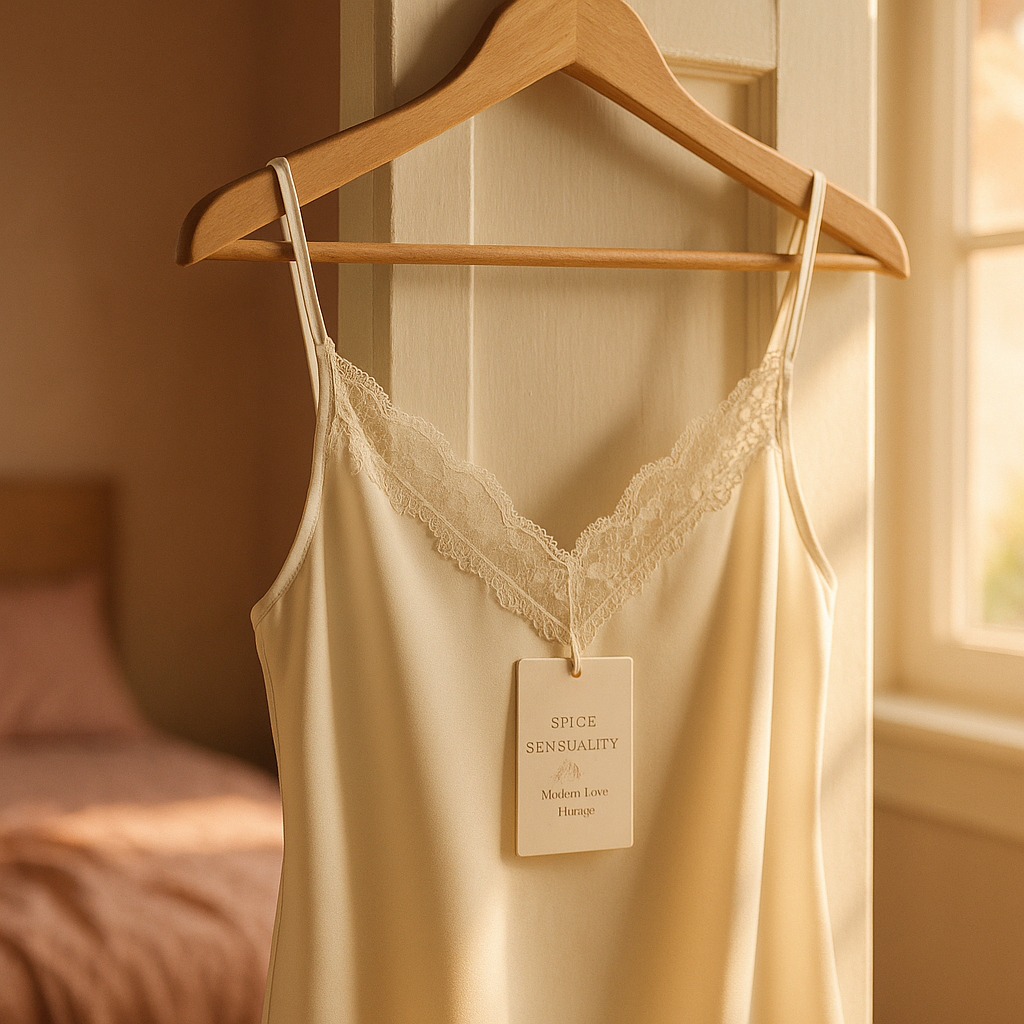
Nobody talks about the one you wear on a Wednesday when no one's coming over. The set that lives in the drawer and gets put on not for a date, not for a partner waiting in the next room — but because getting dressed in something that actually touches your skin right changes the specific texture of a regular day.
Most of us were taught that lingerie is a prop. You buy it for something. A night, a person, a reveal. The packaging practically insists on it: gift boxes, tissue paper, the whole theater of anticipated receipt.
But there's a quieter reason people keep buying it. And it has almost nothing to do with anyone else.
The Feeling Comes First
Think about what actually happens when you put something on that fits the way it's supposed to. Not the moment someone sees it. The moment before. The weight of a silk slip settling against your shoulders. A band that sits exactly right. Lace that you chose because you liked the way it looked flat in your hand in a dressing room or on a screen at midnight.
That's a sensory event. It happens to your body, privately, before any other variable enters.
The reveal is optional. The feeling is the product.
Why We Frame It As Performance
There's a reason the lingerie drawer gets called "the good stuff" and the cotton drawer gets called everything else. We've organized intimate wear around occasion, and occasion almost always means witness.
That framing is worth interrogating. Because what it quietly implies is that your pleasure in the thing — the sensory experience of wearing it — is secondary. An appetizer to something else.
It also explains why so many people own pieces they never wear. Bought for a specific night. That night came and went. The piece stays folded. Now it carries a slightly weird charge — too loaded to put on for a random Tuesday, too unused to throw out.
The garment that costs the most emotional energy is the one waiting to be deserved.
— MLL editorial
This is where the practice breaks down. When you're waiting to earn the thing, the thing stops being yours.
What "Dressing for Yourself" Actually Means
It's not a self-help slogan. It's a specific, repeatable behavior.
It means putting on the silk set on a morning you're working from home. Not because you're performing anything, but because the way it moves when you reach for your coffee is a different quality of morning than the one where you stayed in whatever you slept in.
It means buying the thing in the color you actually like — not the one that photographs well, not the one a partner mentioned once. The deep green, the oxblood, the ivory. The specific one your hand kept returning to.
It means understanding that the body you're dressing right now, today, is the one that deserves the good fabric. Not the body you're planning to have. Not the body you had. This one. Here.
The Body Before the Audience
There's a version of this that's purely functional: wearing something that makes you feel put-together changes how you move through your own space. Posture shifts. You take up slightly more room. The morning runs a little differently.
And then there's the more specific version, the intimate one. The set you put on because it makes you aware of your own skin in a way that's pleasurable without needing to go anywhere from there.
That's not a minor thing. It's actually the whole foundation of what we talk about when we talk about body confidence, desire, and feeling present in your own physical experience. It starts here: in private, in a garment, before anyone else is involved.
When a Partner Is Involved: The Order Matters
None of this is anti-partner. Desire that has somewhere to go is good. The reveal can be electric. That's real.
But there's a meaningful difference between choosing something because you love it and then sharing it — versus choosing something for the express purpose of being received a certain way. The first one keeps your ownership of the experience. The second one hands it over before you've even worn it.
Partners tend to notice the difference too, even if they can't name it. There's a quality to someone wearing something they genuinely chose — not performing comfort, actually in it.
That's the version worth bringing into a shared space.
The Small Practical Shift
Stop organizing your intimate drawer by occasion. That's the whole move.
When everything in it is "for something," you stop actually using any of it. It becomes a museum. Archived desire.
Instead: buy for texture, for color, for how something feels against your skin on a morning with nothing planned. Wear it then. Build the habit of the private sensory experience first. Let the rest follow when it does.
And if something's been in the drawer for fourteen months and you're still waiting for the right moment — that is the moment. Put it on. Make coffee. See what happens to the next hour.
The lace, the silk, the thing you almost didn't let yourself buy: it was never really about the reveal. It was about whether you'd let yourself have the feeling at all.
Start there.



