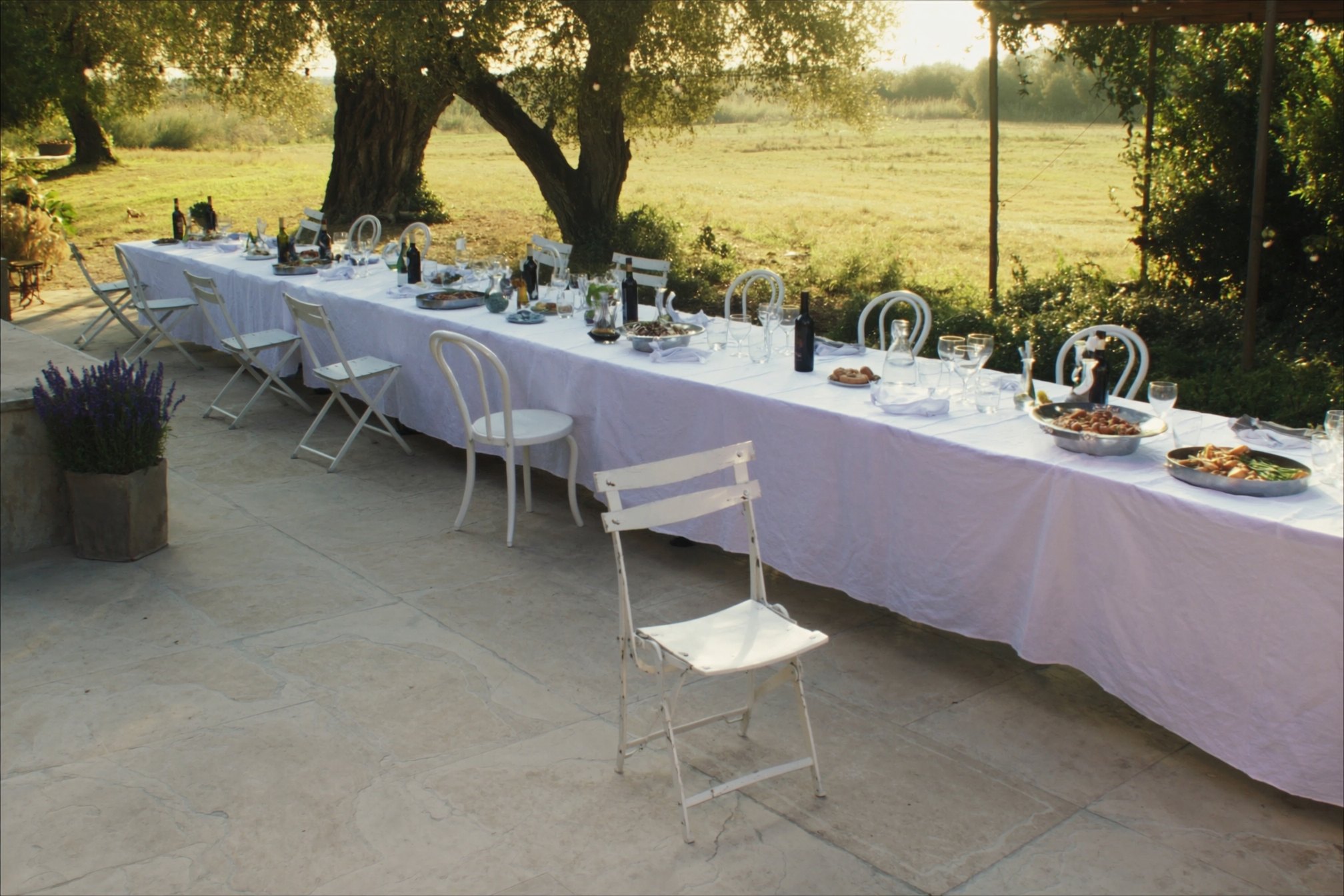
You notice it one Tuesday without meaning to. The light coming through the bedroom window looks different. Lower angle. Amber where it used to be white. It lands on the sheets like it has somewhere to be but isn't rushing.
That's October doing its thing. And most of us immediately check our phones.
There's a version of autumn that gets sold to us: candles, sweaters, playlists, the aesthetic. And then there's what October is actually offering, which is quieter and more useful and completely free. It's a seasonal argument for recalibration. And it starts with the morning you keep cutting short.
What the Light Is Actually Doing
By mid-October, the sun rises later and sits at a lower arc. The light that reaches you is longer-wavelength. Warmer. Less activating. Your body reads this differently than it reads July's six-a.m. blaze through the blinds.
Cortisol still rises. You still wake up. But the ramp is gentler, and if you don't immediately override it with caffeine and a task list, there's a small window where your nervous system is doing something rare: transitioning slowly.
Most people don't live inside that window. They pass through it at speed. They miss it entirely, then wonder why they feel vaguely behind all day, vaguely irritable, vaguely like something's missing.
The Relationship Lives in the Morning Margins
If you've been together long enough, you know the rhythm. One of you is up first. Coffee starts. The other drifts out twenty minutes later, already in their head. You move around each other in the kitchen like a dance you've stopped noticing.
In summer, that's fine. There's momentum. There's somewhere to be. October changes the pitch of it.
The couple who lets themselves stay in bed an extra thirty minutes — not scrolling, not strategizing, just slowly waking up in the same space — is doing something that looks like nothing and functions like maintenance. Skin contact in the morning when cortisol is low registers differently than it does at ten p.m. when you're both already spent. The body is more open. The conversation, if it happens, tends to land.
This is related to something covered in sleep-is-foreplay — the idea that what happens before intimacy matters as much as the intimacy itself. The slow morning is pre-everything. Pre-coffee, pre-email, pre-the version of yourself you perform for the day.
What You're Resisting (And Why)
The honest answer is that slowing down feels unearned. We're trained to believe the morning has to be productive to justify the rest of the day. A slow start feels like starting behind.
But that calculus is costing something. The people who get to Healdsburg for a weekend in October and spend Saturday morning on a porch with coffee and no agenda — they're not slacking. They're doing something their nervous system has been asking for since March.
You don't need to drive to Sonoma to access this. You need to stop treating the first forty-five minutes of the day like a resource to be optimized.
Rest that requires you to leave town first isn't rest. It's an expensive workaround for not being able to stop at home.
— MLL
The Sensory Case for Autumn Mornings
There is a specific texture to an October morning done right. The weight of a heavier robe. The smell of something warm: coffee, toast, the faint cedar coming off a blanket that's been folded on the chair since September. The particular quiet of a morning when the birds have shifted patterns and the neighborhood hasn't fully started yet.
Steam from a mug. The light on the wood floor moving slowly. Bare feet on cool tile before the heat kicks in.
These aren't decorative details. They're sensory data your body processes as safe. As now. They pull you into the present in a way that a hundred dollars of supplements and twenty minutes of breathwork are trying to replicate.
October is doing it for free. It's asking one thing: that you not immediately leave.
How Two People Can Actually Use This
Not every morning. That's not realistic and it's not the point. But one or two mornings a week in October where neither of you performs urgency — where breakfast is slow, where the phone stays face-down for the first hour — those mornings do something that a date night can't fully replace.
Date nights carry expectation. There's a shape to them, a beginning and an end, a sense that something should happen. The slow morning has no agenda. It's just two people existing in the same space without needing to produce anything.
That's rarer than it sounds. Related: saturday-morning-after-eleven-years gets into what that looks like after the shine is off and the rhythm has calcified. The answer, it turns out, involves very little effort and a lot more presence.
If You're Doing This Alone
The slow morning is not couple-specific. It might actually be more powerful alone.
There's a kind of solitude that October mornings offer that other seasons don't. Something about the light and the cooling air creates a container. It doesn't feel lonely the way a summer morning alone can. It feels deliberate. Still. Like the world made a small agreement to wait.
Sit with the window open for ten minutes longer than feels comfortable. Let the coffee go slightly cool. Don't fix anything. Don't decide anything. October will do the recalibrating if you stop interfering.
The Practical Version of This
If your mornings are structured around school runs and meetings and all the legitimate architecture of a real life, the slow morning looks like carving fifteen minutes earlier and spending them doing nothing useful.
A window. A warm drink. No screen. That's the whole protocol.
If you have more room, you build from there. The fall afternoon explored in the-fall-afternoon-with-no-agenda-that-costs-nothing is the daytime version of this same argument. The season is offering something. Most of it is free. The barrier is permission, not access.
What Changes If You Let It
People who protect one slow morning a week in autumn tend to report the same thing, though they rarely name it clearly: they feel more like themselves by November. Less reactive. Slightly more interested in other people. Slightly more patient with their own body.
That's not magic. That's what happens when a nervous system gets some actual downtime before the holidays accelerate everything into chaos.
October is brief. The light at this angle only lasts a few weeks before it gets cold and flat and the quality changes. You can spend it checking things off, or you can spend a few mornings inside it, actually present, letting it do what it came to do.
The light will not wait. It never does.



