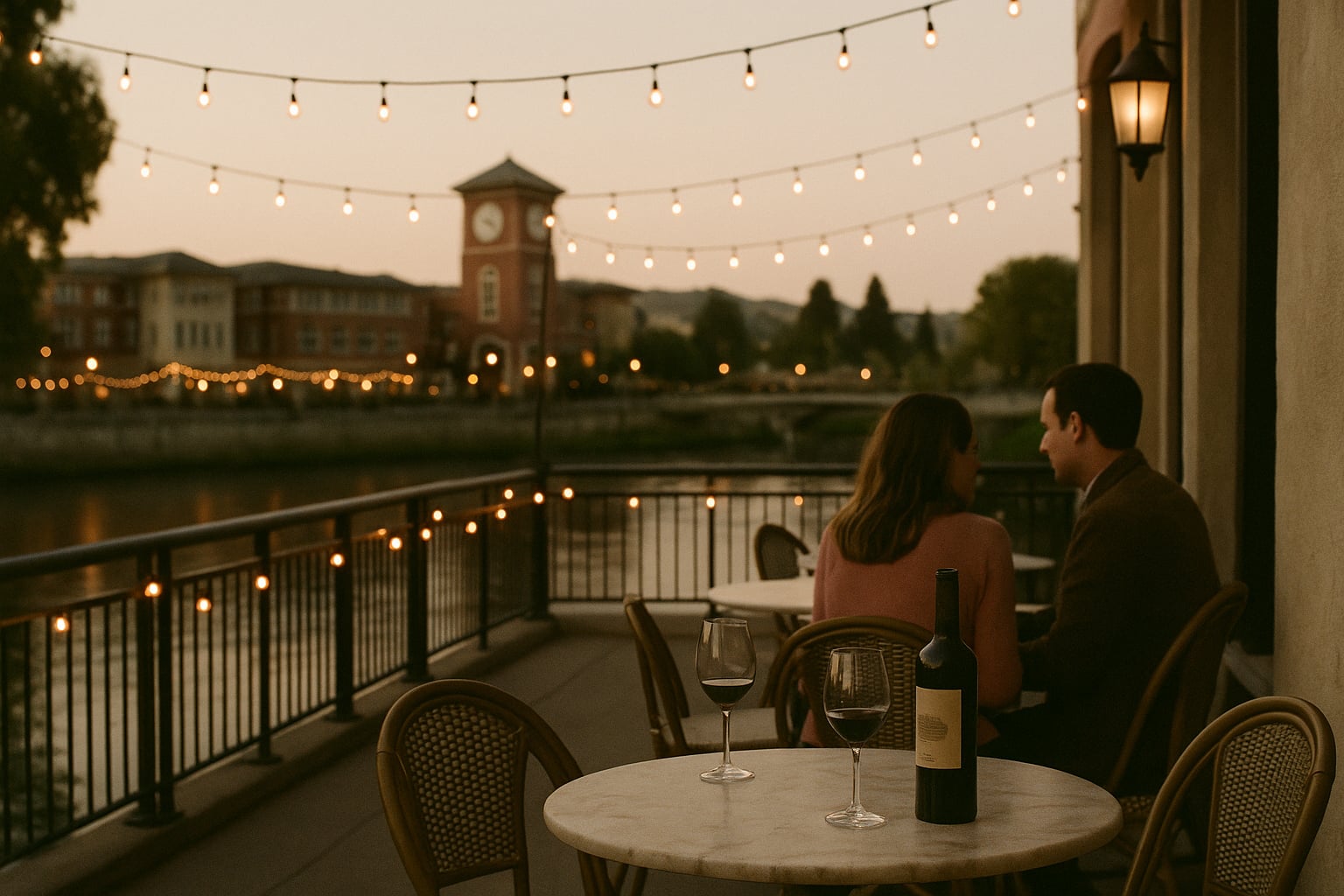
There's a version of the holidays where you walk in the door and you're just you. No pronoun briefings. No strategic seating. No pre-dinner text to your partner that says let's just keep it low-key tonight, okay? You set a dish down, someone fills your glass, and the table accepts you the way tables are supposed to accept people: without conditions.
A lot of queer people have never had that version. They've had the other one. The one where belonging is a negotiation that starts in the car on the way over and doesn't fully end until they're back home, shoes off, exhaling into the quiet.
The Calculation That Starts in October
It usually begins around the time the weather turns. Who are we going to? For how long? Do we split it — your family Thursday, my people Friday? What do we call each other in front of your aunt? The logistics sound logistical. They aren't. They're about safety.
The word safety gets used loosely these days, but here it's specific. It's the safety of not having to perform a smaller version of yourself for four hours while passing the rolls. It's the safety of your partner being introduced with full weight — this is the person I love — rather than the deflected hand-wave of my friend.
Most queer adults are running this calculation in some form, even the ones who swear they've made peace with their families. The calculation doesn't always mean conflict is coming. It just means the terrain requires more attention than it should.
What Chosen Family Actually Means in December
Chosen family gets treated like a consolation prize. Like: couldn't get the real thing, so here's a substitute. That's not what it is.
A chosen family holiday looks like six people crammed into a rental in Guerneville, someone's dog on the couch, a playlist nobody agreed on, wine from a Healdsburg tasting room someone drove to last weekend just for this. It looks like a table that doesn't require you to translate yourself before sitting down.
There's a particular ease in that room. Not because there's no friction — chosen family has its own drama, its own history, its own year of accumulated tension that someone will bring up after the second bottle. But the friction is between equals. Nobody at that table holds power over your sense of self.
The table that feels like home isn't always the one you were born to.
— Modern Love Living
The Biological Table Isn't Always the Enemy
This is where it gets complicated. Because some queer people do have biological families who genuinely show up — families who learned, adjusted, corrected course. Those families deserve credit for the work. And the holiday table can be genuinely good there.
But genuinely good and fully easy aren't always the same thing. A parent can love you completely and still introduce your partner with a half-second hesitation. A sibling can be an ally all year and still go quiet when grandma says something sideways at dinner. Love and full acceptance don't always arrive at the same speed.
The thing most people don't say out loud: sometimes you're mourning the version of the table you wanted, even while sitting at a table that's trying. Grief and gratitude can occupy the same chair.
The Annual Negotiation of Whose Version of You Wins
Here's the part that doesn't get said in the how to survive the holidays pieces: the negotiation isn't just with your family. It's with yourself.
There's the version of you that exists in your actual life. Confident, specific, known. And then there's the version that shows up at certain tables. Softer. More careful. Watching the room for cues. Gauging whether tonight is a night to correct a misgendering or let it pass to keep the peace.
That self-management is exhausting in a way that's hard to explain to people who've never done it. It's not drama. It's not weakness. It's the accumulated weight of reading every room for years, because the rooms required it.
The negotiation some people are slowly winning isn't about changing the family. It's about deciding how much of themselves they're willing to fold up at the door — and at what point that number becomes unacceptable.
Building the Table That Doesn't Need a Briefing
The queer holiday table that doesn't need to explain itself isn't a fantasy. It exists. People build it on purpose, usually after a few years of choosing something smaller over something easier.
It might be Friendsgiving on a Thursday night in November — mismatched chairs, someone's good cast-iron, the silk of a good Pinot against a cold evening. It might be a deliberately small Christmas: you, your partner, a video call with the friends who are scattered. It might be choosing a table somewhere else entirely. Indian Springs in Calistoga has hosted more than one quiet holiday couple who needed two nights and zero performance.
The common thread is intention. These tables don't happen by default. Someone decided. Someone said: this year, let's build the version that doesn't cost us anything to sit at.
What Partners Need to Know Going In
If you're the partner being brought to a complicated family table: pay attention in the car. Not to the logistics. To the tone. Your person is telling you something about what the next few hours will cost them, even if they're minimizing it.
Your job isn't to be charming enough to fix the family dynamic. It isn't to challenge the uncle or educate the grandmother. It's to stay close. A hand on the back when they're at the kitchen counter. Finding each other's eyes across the table. Leaving when they're ready to leave, not when the dessert is done.
The drive home matters as much as the table. Sometimes more. Let it be quiet if it needs to be. Let them decompress without having to narrate the whole thing immediately. The debrief can wait until the shoes come off and the weight of the evening starts to settle.
The Table You Actually Want to Host
At some point, the conversation shifts from how do we survive the holidays to how do we build something worth coming home to. That's the real work. Not managing the difficult table. Building the good one.
It's a table where your partner's name sounds right when you say it. Where someone refills your glass before asking. Where the conversation goes somewhere real before midnight because everyone at the table trusts each other enough to go there.
Where no one needs an introduction. Where this is my family doesn't require a footnote. Where belonging is just — the default state of the room.
That table exists. You might already be building it. And someday — maybe this December — you'll set something down, someone will fill your glass, and you won't spend a single second of the evening managing who you are. You'll just be there. Fully. Without the calculation.
That's worth more than any version of the table you were born to but never fully fit.