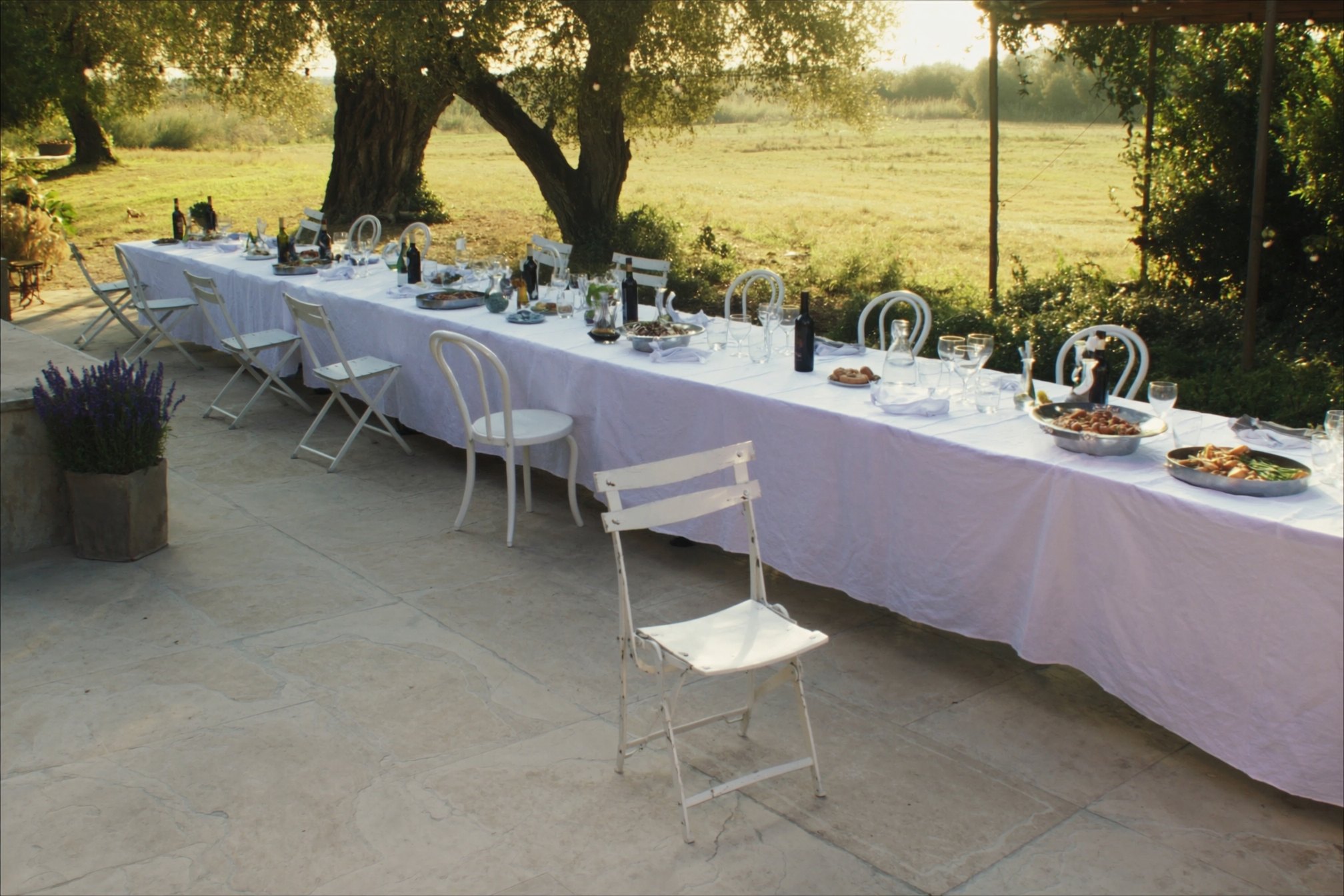
Most people set a harvest table to perform abundance. Long boards, too many candles, guests who will leave by ten. That's not what this is.
This is the version you cook together on a Saturday when the light goes gold by four o'clock and neither of you has anywhere to be. No audience. Just the two of you, a cutting board still warm from the oven, and the bottle you bought at a cave tasting in Calistoga and said you'd open for something worth it.
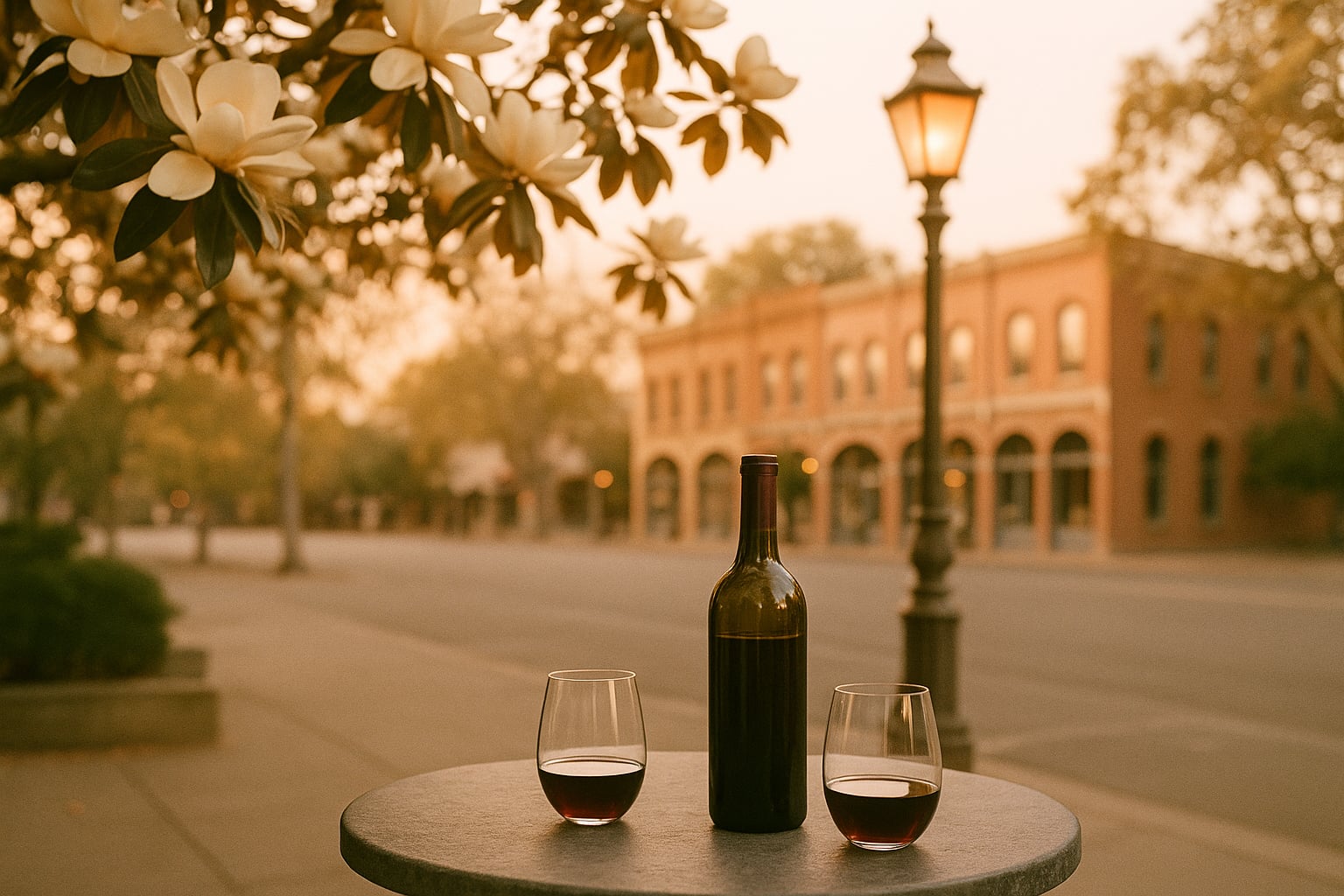
Late October and early November in the valley have a specific quality. The crush crowds have thinned. The air has actual weight. The Healdsburg plaza empties out by six and something quieter takes over. It's the right season to stop performing hospitality and actually practice it — on each other.
Why Two People Specifically
A harvest table for a crowd is logistics. Who's bringing what, who's dietary, who's already annoyed before they arrive. The meal becomes management.
For two, the whole thing is different. There's no division of labor forced by a deadline. You can taste as you go. You can abandon one direction and take another. One person handles the fennel while the other reduces the wine down to something syrupy and serious, and you check in not because you have to but because you're curious what the other one is doing.
That's not nothing. That's actually a version of intimacy most couples don't plan for.
The Architecture of the Table
You're building one long, loose spread rather than a plated dinner. The goal is abundance that invites grazing, touching, refilling — a table you sit at for two hours without any single course forcing a transition.
What Goes On It
Start with texture and temperature contrast. A wedge of aged Vella Dry Jack from Sonoma — dense, slightly salty, crumbles under pressure. A good brie left out long enough to be soft at the center. Marcona almonds roasted in rosemary butter, still warm. Honeycomb if you can find it, because the wax pulls a little when you press into it and that tactile thing matters more than it should.
Then something roasted. Whole heads of garlic, split and oiled, gone bronze in the oven. Delicata squash in half-moons with brown butter and sage. A small dish of burrata if you want something that undoes itself when you break into it.
Bread that has real crust — the kind that makes noise. Sliced thin enough to layer but not so thin it disappears.
Something preserved: a small bowl of cornichons, or fig jam you actually like rather than the kind you bought because it looked right. Prosciutto folded loosely, not arranged.
The Bottle
This is where the occasion becomes real. You've been saving something. Maybe it came from one of the cave tastings near Calistoga where the temperature dropped ten degrees underground and the winemaker talked about the 2019 drought with the specific grief of someone who watched it happen. Maybe you bought it at a small Yountville producer and carried it home in your lap because you didn't trust the trunk.
Open it an hour early. Pour a small amount into a wide glass, set it on the counter near the steam from whatever's roasting, and let it breathe while you cook. This is not precious wine behavior. It's giving something that was sealed for years the chance to open up — which is, if you want to be obvious about it, the same thing you're doing tonight.
A late-harvest Napa Cabernet is the obvious choice. A Sonoma Coast Pinot if you want something lighter. Or something unexpected: an orange wine, a skin-contact white, the kind of bottle that makes you say it's weird but I think I love it after the second glass.
The Part That Actually Requires Two People
Here's the thing about cooking this together: it won't work if one person does it while the other scrolls. This spread has enough components that you genuinely need to divide and tend. The squash burns fast. The burrata needs to come out at the right moment. The roasted garlic has to be caught before it goes too far.
So you're moving around each other in the kitchen, reaching past, tasting off each other's spoons. There's a choreography to cooking with someone you know well. You know which side they favor. You know when to stay out of the way.
That familiarity is the ingredient most dinner party recipes skip entirely.
The best meals we've made together were never about the food. The food was just the reason to be in the same room, doing something with our hands, not talking about anything that mattered yet.
— Overheard at a Healdsburg wine bar, late November
Setting the Table for Two
Don't set it formally. One end of the table, not the middle. Close enough that you're passing things rather than reaching. Cloth napkins — the heavyweight linen ones that feel like something when you unfold them, not the ones you save for guests.
Candles: yes, but unmatched. Three different heights, melted down to different points. The table shouldn't look like a photo. It should look like it already has history.
Phones face-down or in the other room. Not as a rule — as a choice you make out loud, together, so it means something.
What You're Actually Doing
You're not hosting. You're not performing a date night. You're building a ritual — a specific, repeatable thing that belongs to the two of you and the season you invented it in.
That distinction matters. Hosting is for other people. A ritual is a reference point. Next October, one of you will say the harvest table and the other will know exactly what that means: the squash going soft, the good bottle finally opened, the candles at that particular angle when the kitchen smelled like rosemary and brown butter and something fermenting in a glass.
It's a slow dinner. It will run long. And at some point you'll both notice the food is mostly gone and the bottle is mostly gone and neither of you has moved from the table in two hours, and that will be the best part.
A Few Specifics Worth Knowing
On timing: Plan two hours of cooking, two hours at the table. Start earlier than you think. The squash takes longer than the recipe says and you'll want to be at the table before you're hungry enough to be impatient.
On the cheese: Vella Dry Jack is worth seeking out. If you're making a day of it, the Sonoma Cheese Factory in Sonoma Plaza usually has it. Buy more than you think you need — it keeps, and it's better the next morning with coffee than almost anything else.
On the wine: If you don't have a bottle you've been saving, this is the right occasion to go find one. A cave tasting in Calistoga or a small producer off the Silverado Trail usually yields something with a story attached — which is what you actually want when you open it two months later.
On what comes after: That's up to you. But if you've done this right, you'll both be warm and slightly unhurried, and the night will suggest its own direction.