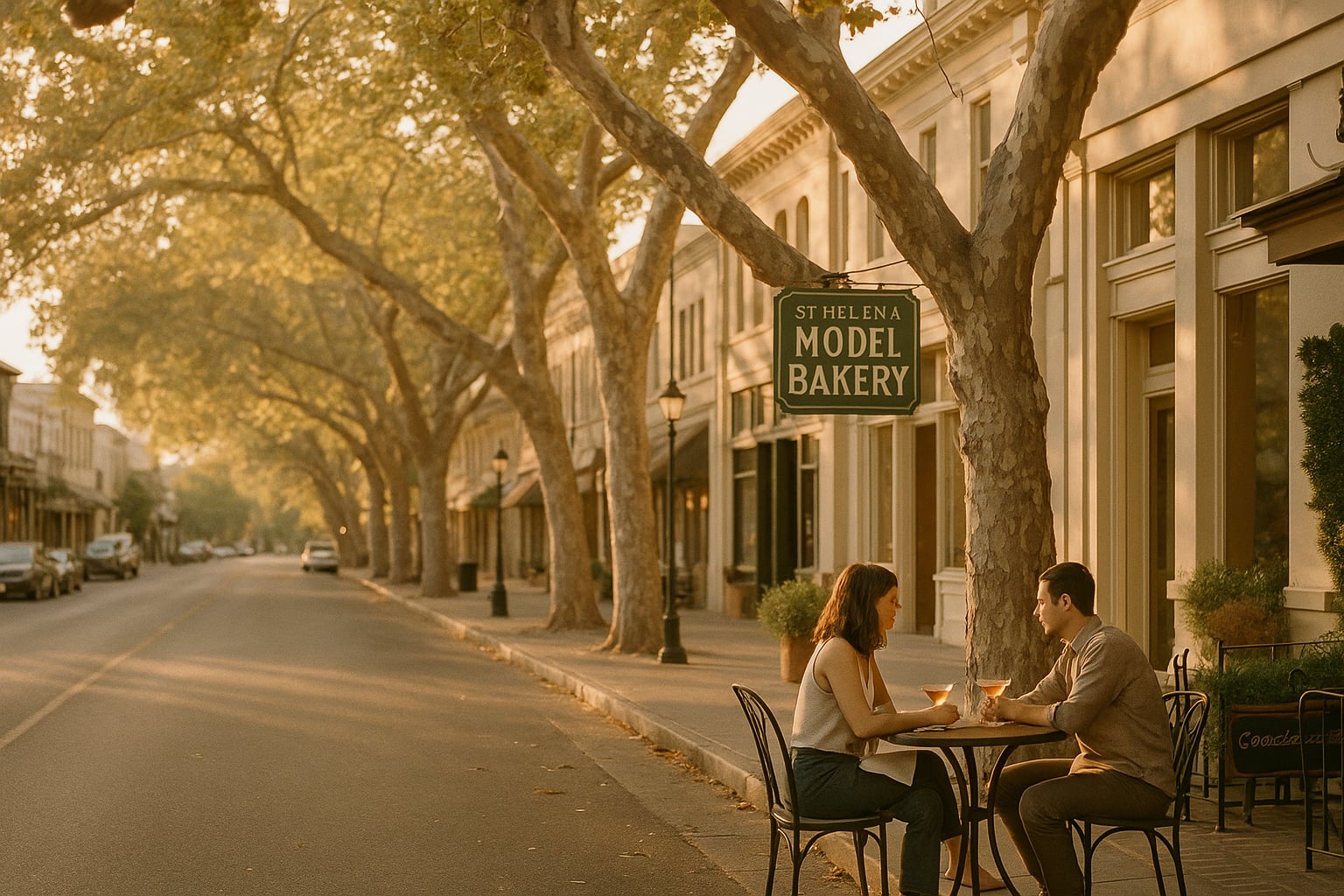
You brought it up somewhere between the second glass of wine and the lights going low. Maybe not explicitly. Maybe as a joke that wasn't quite a joke. And your partner didn't say no — they said tell me more. And something shifted.
That shift is the thing. Not the fantasy itself. Not the scene you may or may not ever actually stage. The shift.
Most of the advice around roleplay skips straight to logistics: costumes, safe words, how to stay in character. As if the whole project is a performance you're either bold enough to attempt or too inhibited to pull off. That framing misses what's actually happening when couples talk about fantasy — which is that the talking is the intimacy. The negotiation isn't pre-game. It's the game.
Why Most Couples Stop Before the Scene
Here's what actually happens. One person mentions something — vague, half-formed, offered lightly so it can be taken back. The other person responds with curiosity. There's a conversation. It's charged in a way that Tuesday nights usually aren't. They go to bed different than they woke up.
And then they never do the thing.
They file it as unfinished business. A desire that almost surfaced. Evidence of something slightly mismatched between them. They don't clock what they actually built that night: a new room in the relationship. One they walked into together, willingly, with all the lights on.
What's Actually Happening in the Negotiation
When you describe a fantasy to someone, you're not just sharing a preference. You're showing them how your imagination works. The specific texture of what excites you. The version of yourself you've kept quiet, maybe for years.
That's not nothing. That's enormous.
And the person receiving it is doing something just as exposed: deciding, in real time, how to respond. Whether to match the energy or deflect. Whether to offer something back. Whether to say I've thought about something like that too — and mean it.
The negotiation creates a kind of protected space. Inside it, you're both allowed to be a little different — more honest, more curious, more willing to want. It doesn't require costumes. It requires a willingness to be seen wanting something specific. Which is, for most people, much harder.
The Scenario That Never Happened (And Why That's Fine)
Imagine this: A couple, together eight years, staying at Solage in Calistoga for a long weekend. Mineral pool, late evening, nobody else around. One of them mentions, almost offhandedly, a fantasy involving strangers. Not a request. More like a thought released into warm water.
They talk about it for an hour. Who the strangers are. What the setting looks like. What each of them would want in that version of reality. It gets specific. It gets a little hot. Nobody acts on it — not that night, not ever.
But something changed. They'd looked at each other's interior life and not looked away. That's not a consolation prize for failing to execute the fantasy. That is the intimacy.
The conversation where you both stay present — curious, not flinching — is the closest most people will ever get to the thing they were actually looking for.
— MLL
The Micro-Behaviors That Tell You It's Working
You're not imagining it when the negotiation feels different from normal intimacy. There are actual signals.
One of you speaks more slowly than usual. Like you're choosing words carefully not because you're uncertain, but because you want to get it right. The other person asks a question that isn't a deflection — it's a follow-up. What does it look like? Where are we? What do I do in this?
There's physical stillness. Nobody's scrolling. The dog goes ignored. It's the body's version of attention.
And at some point, someone crosses from listener to participant. They stop just receiving the fantasy and start building it. That's the moment. That's when the negotiation becomes something you're doing together instead of something one person is confessing to the other.
When the Conversation Matters More Than the Scene
There are fantasies that genuinely benefit from being kept as language. Not because they're wrong or dangerous or unfeasible. Because they exist at a temperature that only language can hold.
The second you stage something, you introduce logistics. Lighting that's wrong. Someone who breaks character because they're laughing. The moment where the other person's elbow is in an awkward place and suddenly you're problem-solving instead of present. Reality is specific in ways that don't always serve the fantasy.
But the negotiation lives in the imagination, which has no logistics. It's all signal, no noise. You can be exactly who you want to be in it, and so can they.
How to Have the Conversation Without Making It a Project
The worst thing you can do is schedule it. Friday night, we're going to talk about fantasies. That turns it into something you have to perform instead of something you let happen.
These conversations tend to open in transition: a drive with no particular destination through the Sonoma backroads, a bath, the period right after sex when the guard is already down. Not at the kitchen table while someone is half-distracted by their phone.
Start vague and let it sharpen on its own. I've been thinking about something is enough of an opening. What happens next depends on your partner's response — and their response will tell you more about where you actually are in the relationship than most conversations you'll have all year.
If they meet it with curiosity: stay there. Ask questions back. Build the thing together in language before you decide whether to do anything with it.
If they deflect or shut it down: that's information too. Not a verdict on your desire — information about the current temperature between you. Which is worth knowing.
The Question Worth Asking Before Any Scene
Not: can we do this? That makes it a negotiation of permission.
Try: what version of this sounds interesting to you? That makes it a collaboration.
The difference in how your partner's body responds to those two questions will tell you everything.
The fantasy you've rehearsed alone for years doesn't need to be executed to mean something. Sometimes it just needs to be spoken — to the right person, at the right temperature, with enough quiet around it to land.
That's not settling for less than the scene. That's understanding what you were actually after.