Most people think seduction starts with a sentence. A suggestion. A hand on a knee with clear intent. It doesn't. By the time anyone says anything out loud, the moment has already been decided — in both directions.
The mood got set when you walked in and dropped your bag on the kitchen counter with the weight of the entire workday still on you. Or it got set when you dimmed something without being asked, poured two glasses instead of one, and sat down slowly like the night actually had somewhere to go.
Non-verbal signaling isn't a technique. It's not a trick from a list. It's the accumulation of small physical choices that either open a room up or close it down. Most couples have stopped making those choices consciously. They're waiting for desire to arrive on its own and announce itself.
It rarely does.
What Your Body Is Already Broadcasting
Before language, there's posture. There's pace. There's whether you're facing toward something or angled slightly away from it.
When one person is moving fast — still answering texts, still in work clothes at 9 PM, still narrating tomorrow's schedule — the other person reads that. Not as a rejection, exactly. More as a signal that the channel isn't open. So they don't try.
This is how two people who genuinely want each other can spend an entire evening at a distance of four feet and feel like they're in different time zones.
The invitation was never the problem. The invitation just never got sent.
Physical slowing-down is one of the most legible signals a body can send. When you stop rushing — not because you're tired but because you've decided the next few hours matter — something in the room shifts. The other person notices, even if they can't name what changed.
The Environment Is Doing Half the Work (If You Let It)
Light is not décor. Light is instruction.
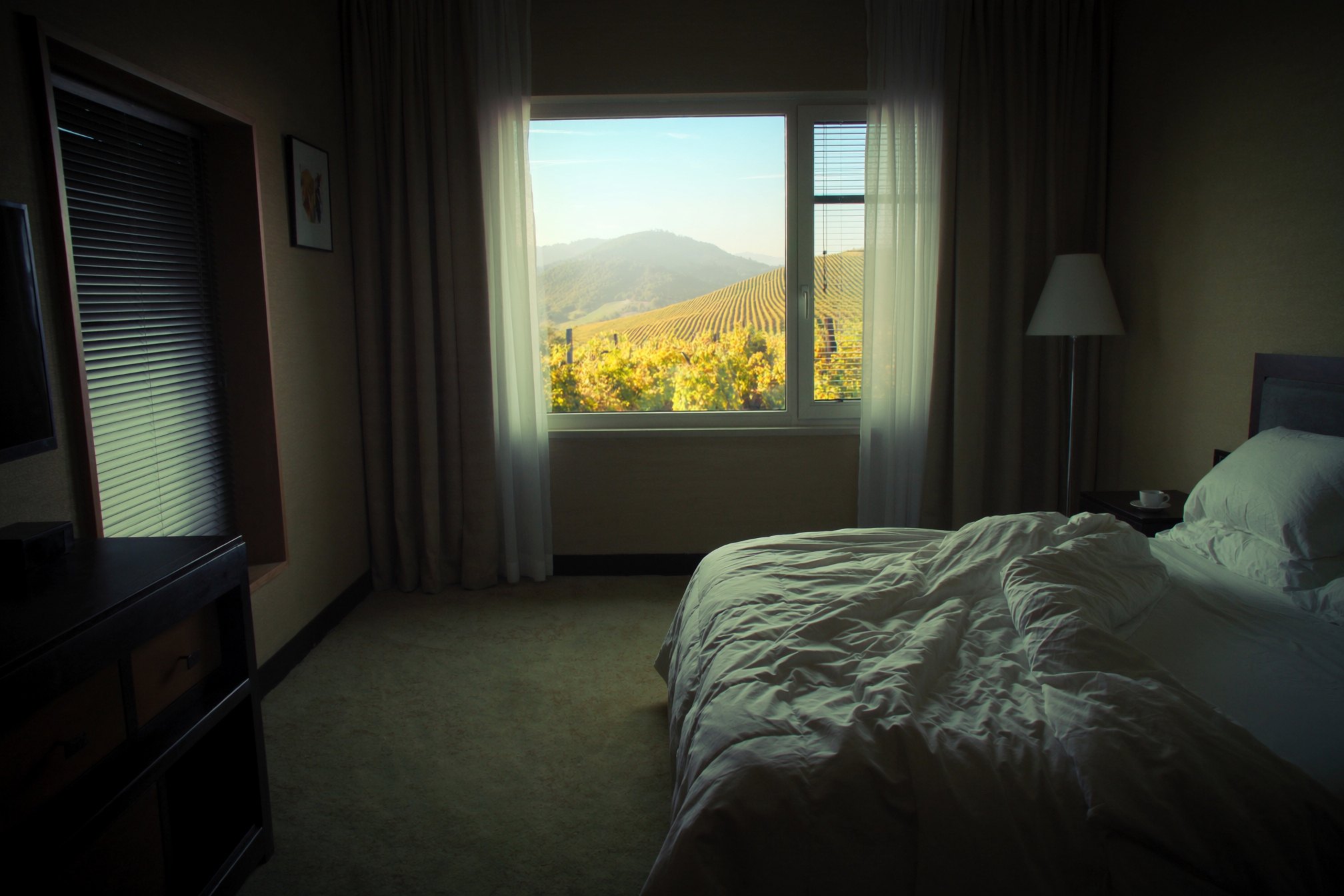
Overhead lighting in a bedroom tells the nervous system it's time for productivity or problem-solving. Warm, low, indirect light tells it something else. Not because it's romantic in the movie-poster sense — because it physiologically lowers alertness and signals that the performance part of the day is over.
Same logic applies to temperature. A room that's slightly too cool keeps people brisk and slightly armored. The warmth of a bath, a heated towel, skin that's been oiled and left to absorb — these aren't spa indulgences. They're the body being told it's safe to slow its own defenses.
Scent is the most underestimated one. Not perfume applied at 7 PM and mostly gone by 10. The ambient scent of a room: a candle that's been burning for twenty minutes before anyone walks in, sheets that smell like something intentional rather than just clean. This isn't about aromatherapy. It's about whether the room smells like effort was made.
Pacing Is a Form of Attention
Here's a real scenario. Two people, together six years. One of them cooks on a Tuesday night — not a special occasion, just decides to make something that takes longer than it needs to. Opens a bottle early. Doesn't check their phone while the other person is talking.
Nothing was said. No suggestion was made. But the other person felt something they hadn't felt in a while: the sense that they were being prioritized in real time, not in theory.
That's what pacing does. Moving slowly through an evening, not filling every silence, not reaching for the remote the second dinner ends — it communicates that you're not trying to get through the night. You're trying to be in it.
That is seductive. Not because it's calculated, but because presence is increasingly rare and the body knows it.
Why Most Couples Skip It
Because it takes longer than asking. And because most of us have quietly decided that the ask — direct, efficient, deniable if it doesn't land — is easier than the setup.
The setup requires a kind of vulnerability that feels unnecessary when you're with someone you already know. You stop lighting candles for each other around year three, not because you stopped wanting each other but because the ritual started to feel like a performance. Like you were pretending.
But here's the reframe: the ritual was never pretending. The ritual was the signal. And when you stopped sending it, the other person stopped waiting for it. Both of you started assuming desire had to arrive spontaneously or not at all.
Spontaneous desire is real. It also statistically peaks in new relationships and drops off sharply after sustained familiarity. Responsive desire — where your body responds to an environment already in motion — is how most long-term couples actually work. They just never got told that.
What Non-Verbal Signaling Actually Looks Like
Not elaborate. Not staged. Specific small things.
You change out of work clothes before they get home — not into lingerie, just into something that says you've drawn a line between work and tonight. You pour the wine before they sit down. You touch the back of their neck in passing without making anything of it. You sit closer than you need to on the couch.
None of these things are asks. They're more like a door being left open.
The difference between a door left open and a direct invitation is that the open door doesn't require an answer. There's no potential rejection. No pressure on either person. Just a signal going out and the other person deciding, freely, whether they walk through.
That freedom is, paradoxically, what makes the signal work. People move toward things that feel chosen rather than obligated. The lower the pressure in the room, the more likely both people are to actually want to be in it.
One Thing You Can Do Tonight
Not a list. One thing.
Arrive somewhere in your home — bedroom, living room, wherever the evening ends up — twenty minutes before you'd normally be there. Change the light. Pour something. Leave your phone in another room. Just exist in that space without an agenda for a few minutes before they arrive or before you go find them.
That's it. You haven't said anything. You haven't made any move. You've just made the room a place someone might want to stay in.
See what happens.
Related: Sleep Is Foreplay explores why the hour before bed is doing more relational work than most people realize. And if you're thinking about how your physical space actually reads to both of you, The Room You Forgot Could Be Seductive is worth an honest look.