You almost said it. You were right there — warm, close, the sheets still wrinkled from earlier — and the thought surfaced. Clear. Specific. A little electric. And then, in the space of about four seconds, you ran it through a filter so fast you barely noticed you were doing it.
Will this make them uncomfortable? Is it too weird? What does it say about me if I want that? And by the time you opened your mouth, what came out was something softer. Something safer. Something that was technically true but was also, quietly, a lie.
That edit. That's the one worth talking about.
The Cut Happens Before the Conversation
There's a version of this problem that gets framed as a communication issue. It isn't. Or not primarily. The gap between what you want and what you say isn't a skills gap. It's a shame gap, and it runs so deep that most people don't even register the edit as a choice.
It feels like discretion. Like knowing your audience. Like being a reasonable adult who doesn't just blurt things out. But there's a difference between timing and erasure. One is thoughtful. The other is a slow, steady disappearing act — performed mostly on yourself.
The most censored person in most relationships isn't either partner. It's the version of desire that never made it to the room.
— MLL
What the Edit Actually Sounds Like
It's rarely dramatic. It doesn't sound like suppression. It sounds like: "Something a little different tonight?" when what you meant was something completely specific, vivid, and slightly terrifying to admit you'd been thinking about for six months.
It sounds like changing the subject when your partner mentions a fantasy adjacent to yours, because getting close to the truth felt more dangerous than staying far from it.
It sounds like reaching for a toy you're comfortable with, rather than the one you actually want to try, because buying it would mean admitting you'd already imagined using it.
The edited version of desire is still desire. It's just been resized to fit an imagined tolerance. And the problem is: you don't actually know what that tolerance is. You're preemptively managing a reaction you've never tested.
The Stories You Tell Yourself in That Four-Second Window
"They'll think it's weird." Maybe. Or maybe they've been sitting on something equally strange and have been editing it for the same reason. The research on couples and fantasy isn't subtle: what people think their partners find acceptable is almost always more conservative than what their partners actually feel.
"It means something about me." It does. Everything does. But wanting something in bed doesn't make you a particular kind of person in the way you're afraid it does. Fantasy is exploratory, not confessional. The thing you want to try isn't your identity. It's just a Tuesday-night curiosity that you've been treating like evidence in a case against yourself.
"It'll change how they see me." This one is the most honest fear, and it's worth sitting with. Revealing desire does change things — but almost never the way you imagine. The shift is usually toward more intimacy, not less. What distances people is the closed-door version of you, not the open one.
What Gets Lost in the Cut
The immediate loss is obvious: the thing you wanted, you didn't get. But there's a slower, quieter loss underneath that.
Every time you edit yourself before speaking, you train your body to expect less. Desire becomes smaller, not because you've changed, but because you've practiced shrinking it. The fantasy that felt electric at 11 PM feels embarrassing by morning, and you file it under not really me until eventually you half-believe that.
This connects to something larger than any single conversation. If you've read We Overshare Everything and Disclose Nothing, you already know the paradox: we live in maximum-visibility culture and still manage to hide the things that matter most. Desire is the clearest example of that.
The Part Your Partner Doesn't Know They're Missing
Here's the angle most people don't consider. When you self-edit, your partner isn't just missing out on your fantasy. They're missing out on the experience of being trusted with it.
Being chosen as the person someone tells the real thing to — not the palatable version, the actual thing — is one of the more intimate experiences a relationship can hold. You're not protecting them by editing. You're protecting yourself, and quietly withholding something from them in the process.
Think about the last time someone told you something they'd never told anyone else. The warmth of that. The slight weight of being trusted. That's what's on the other side of the edit. For both of you.
How to Actually Start Saying the Thing
Not a script. Not a framework. But a few real entry points.
Give it a container, not a confession
"I've been thinking about something — I don't know if it's your thing, but I wanted to say it out loud." That framing does a lot of work. It signals that you're not issuing a demand. You're opening a door and letting them decide whether to walk through.
Start with the adjacent thing
If the full fantasy feels like too much of a leap, name the thing that lives next to it. The texture, the mood, the dynamic — not the whole scene. You're not editing again; you're pacing. There's a difference. One is self-protection, the other is attention to how things unfold.
Say it before the moment, not in it
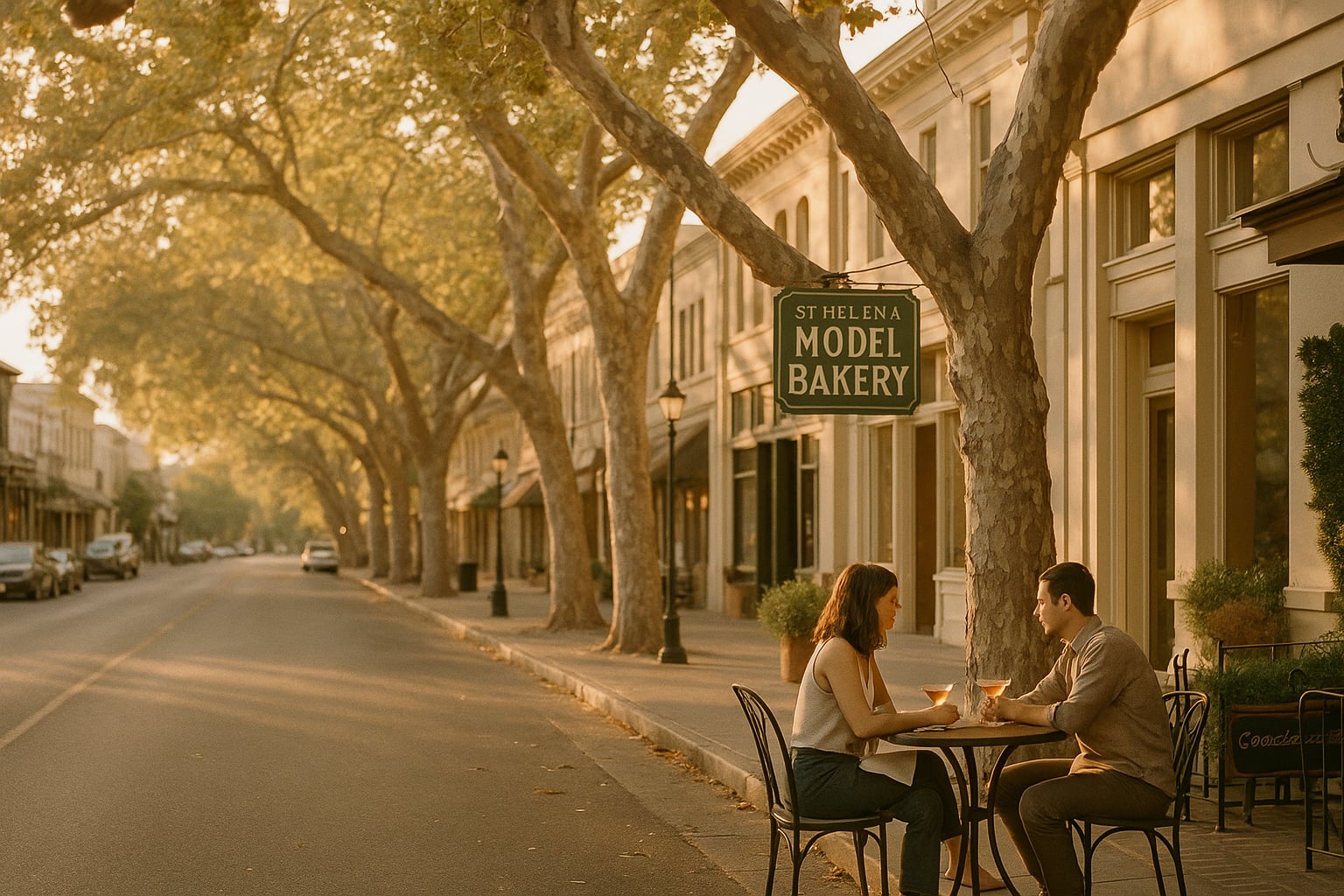
The hardest time to introduce a new desire is mid-intimacy, when both of you are already in a particular mode. The easiest time is boring and mundane: in the car, over coffee at the Healdsburg plaza, on a walk that has no agenda. Low stakes context makes high-stakes content easier to land.
The Real Question Underneath All of This
Why did you edit it? Not as a rhetorical question. As an actual one worth answering slowly.
Because the answer is usually more specific than shame or fear in the abstract. It's a particular memory of a reaction you got once. A comment made years ago that lodged somewhere. A quiet assumption about what kind of person you're supposed to be inside a relationship versus who you actually are.
The fantasy you edited isn't just about sex. It's about whether you believe you're allowed to want things — clearly, specifically, without apology — and whether the person next to you is actually a safe place to find out.
The unedited version is still in there. It didn't go anywhere. And unlike a lot of things that get deferred in a relationship — the weekend trip you keep postponing, the conversation you keep almost having — this one gets harder to retrieve the longer it waits.
Say the thing. Not all of it, if that's too much. But more of it than you did last time.