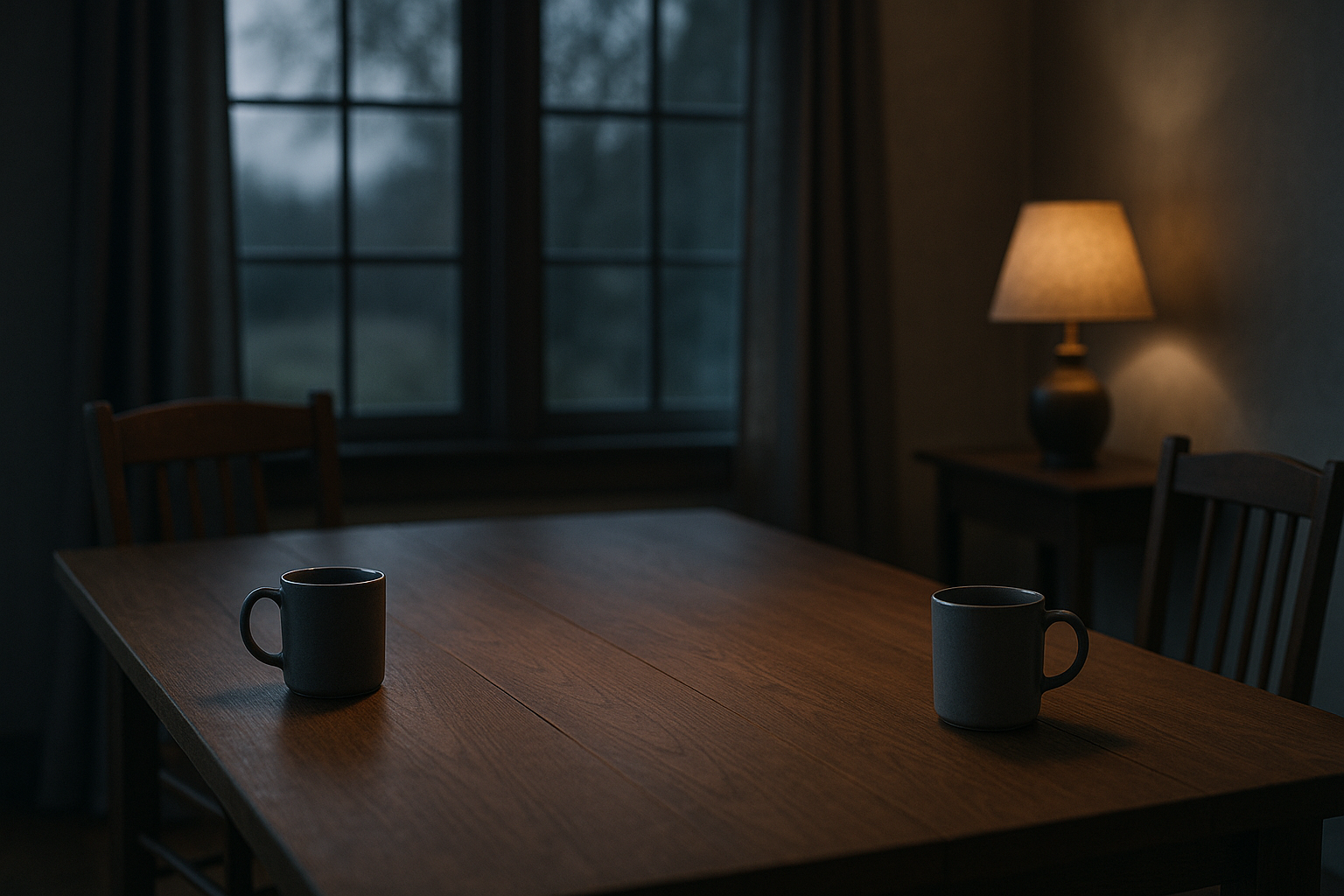
The fantasy has been running for a while. Months, maybe longer. You know exactly how the light looks in it. You know the room, the order of things, who says what first. It's perfect precisely because nothing about it is negotiable.
And then you try to explain it to your partner.
Something happens in that gap. Between the version that lives in your head and the version that comes out of your mouth. The charge drops. The specifics that made it electric start to sound like instructions for assembling furniture. You watch their face. They're trying. You're already grieving the thing you wanted.
This is not a communication failure. It's an architecture problem. And it's fixable.
Why the Translation Always Feels Like a Downgrade
Fantasies work because they're frictionless. No one has to go to the bathroom at the wrong moment. No one says the slightly wrong thing. The version in your head has been edited a thousand times without you noticing.
Real life has friction. That's not the problem. The problem is treating the fantasy like a script that needs to be performed accurately, rather than a feeling that needs to be approximated.
The goal isn't to recreate the mental film exactly. It's to build something that generates the same sensation. That distinction changes everything about how you approach the planning.
Step One: Name the Feeling Before You Name the Scenario
Before you describe a single detail to your partner, sit with this question: What does this fantasy make me feel? Not what happens in it. What it produces.
Surrender. Power. Being chosen. Being a little dangerous. Being seen in a specific way. Being anonymous. Being known completely. These are the real targets.
A scenario where you're a stranger in a hotel bar who doesn't know each other: the feeling might be desire without history, want without obligation. That feeling can be created a dozen different ways. The hotel bar is one option. It's not the only door in.
When you lead with feeling, you give your partner something to work with. When you lead with plot, you give them something to get wrong.
Step Two: Separate the Bones from the Decoration
Every fantasy has a structural core and surrounding atmosphere. Most people try to protect both equally. That's where it collapses.
The bones are non-negotiable. The specific power dynamic. Who initiates. Whether there's a character or whether it's just you two turned slightly differently. The thing that, if it were missing, would make the whole experience feel hollow.
The decoration is everything else. The setting, the exact dialogue, the outfit, the time of day. These matter — atmosphere is real — but they're adjustable. They serve the bones. They don't are the bones.
Figure out which is which before you open the conversation. Write it down if you need to. You don't have to show it to anyone. But knowing what you'd trade and what you won't changes how you explain it.
The Conversation Itself
Timing is real. Not a soft suggestion. Having this conversation while one of you is half-asleep, or directly after something went sideways in the day, is a setup for the kind of awkward that lingers.
Find a moment that isn't charged with anything else. A long drive works. A slow dinner that's already going well. The second glass of wine at a Healdsburg spot when there's nothing on the agenda after. Somewhere with no screens and no timeline.
Start with want, not apology. Not this is probably weird, but — that framing asks your partner to reassure you before they've even heard it. Try: There's something I've been thinking about that I want to try with you. Then pause. Let them arrive.
The charge dies in the hedging. Say the thing. Then give them room to respond without filling the silence.
— MLL
If they need a minute, that's good information. It means they're taking it seriously. Don't interpret a pause as rejection.
What to Actually Hand Them
Some people talk through fantasies. Some people can't — too self-conscious, too aware of the other person's face in real time. Both are fine.
If speaking it feels like too much, write a version. Not a screenplay. Just a paragraph — the feeling, the bones, one or two specifics you care about most. Send it as a voice memo if that's easier. Some things land differently when they're not eye contact.
There's also the reference approach: a book, a film, a moment you both already know. Remember that scene. Something like that. That feeling. It gives them an entry point without requiring you to narrate the whole interior.
For couples who've done some of this work already, the yes/no/maybe list is genuinely useful. Not as a form to fill out but as a way to explore laterally — sometimes you find your partner has been sitting with something adjacent to yours, and suddenly the whole map opens up.
Building the Stage Without a Rehearsal Schedule
Planning without over-planning is a skill. The details that matter are logistics: private space, enough time, no hard out on either end. Everything else is optional until it's agreed on.
If the scenario involves a specific setting: a hotel room works harder than you expect. Not a chain property. Somewhere with weight to it — good sheets, a real bathtub, windows that do something. Solage in Calistoga if you want mineral pools and silence. A Sonoma inn if you want something that feels like it belongs to no one's real life. The unfamiliarity of the room helps. You're already somewhere outside your routine.
If the scenario involves costume, character, or role: give yourself a single prop that anchors it. One piece of clothing, a different name for the night, a rule about how to address each other. The prop does more than you think. It signals the start without a formal announcement.
Agree on one clear, easy out word. Not because things will go wrong — because having it makes both of you freer inside the scenario. This is the most practical sentence in this entire piece.
The Part Nobody Talks About: After
The thing that actually kills the next attempt isn't a bad experience. It's a silent one afterward.
What happened in the room stays in the room emotionally if neither of you acknowledges it. Not a debrief. Not a rating. Just: that was good, or I liked that part, or even just staying in the same orbit physically for a few minutes. Weight of a hand on a hip. Not moving yet.
If something landed differently than expected: say it once, gently, sometime in the next day or two. Not that night. The night belongs to what happened, not to analysis.
Common Questions
How do I bring up a fantasy without making it weird?
Lead with the feeling, not the plot. Find a low-stakes moment with no time pressure. Say it plainly and without apology, then give your partner room to respond. The framing matters more than the words.
What if my partner isn't into it?
Ask what specifically isn't working for them. Sometimes it's the scenario itself; sometimes it's a single element that's adjustable. A no to the whole thing is information. A not sure is usually an opening.
Does planning a fantasy kill the spontaneity?
Only if you over-rehearse it. Agree on the bones, set the stage, then let it breathe. Spontaneity inside a structure is still spontaneous. The structure is just the room you're being spontaneous in.
What if I can't articulate what I actually want?
Start with the feeling it produces. Surrender, power, risk, safety — one word is enough to start. Your partner doesn't need the full scenario to meet you in the right direction.



