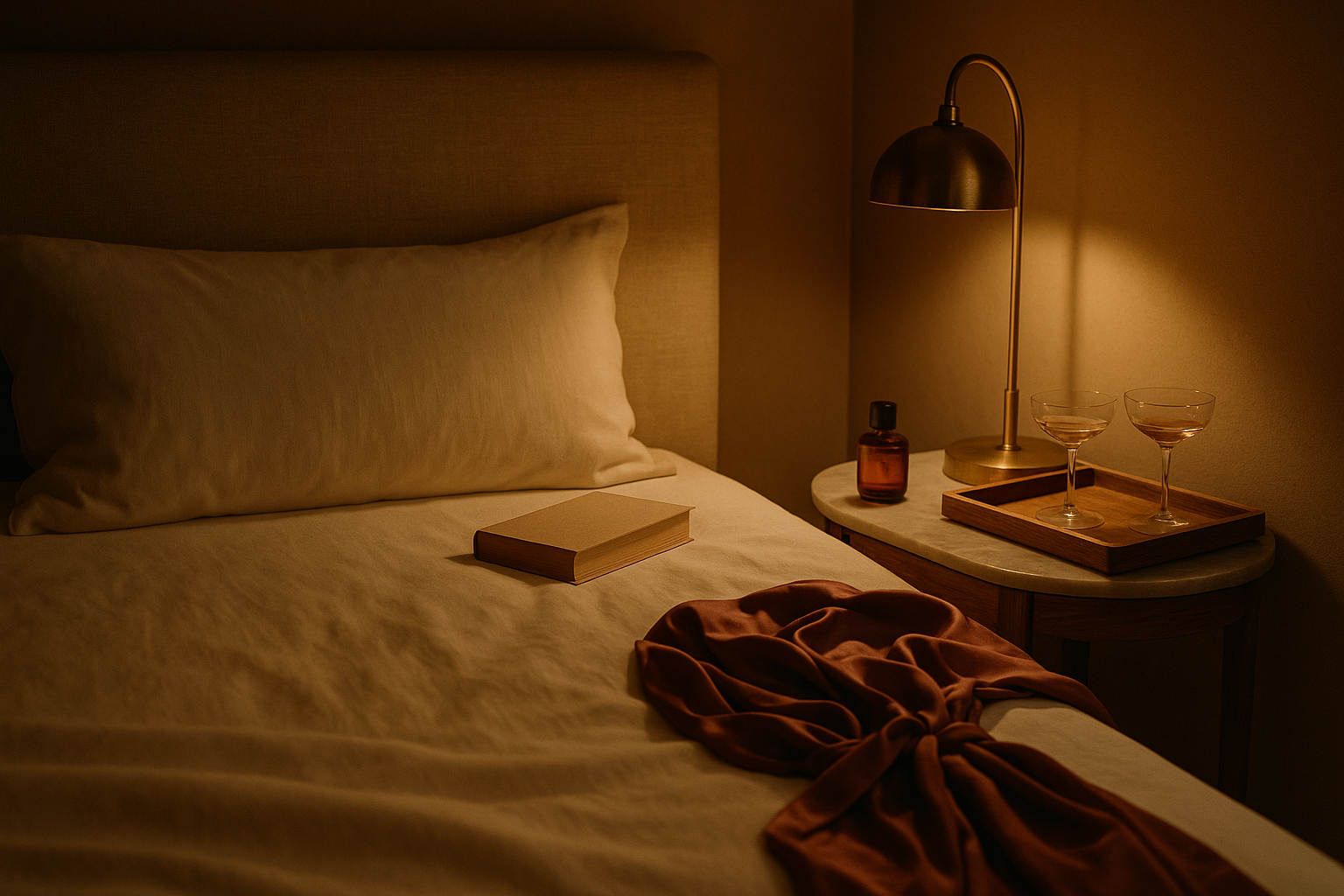
It wasn't a costume, technically. It was a robe. Champagne-colored silk, bought on a whim at a boutique off the Healdsburg plaza during a weekend that was supposed to be about wine. She put it on in the hotel bathroom, walked out, and something shifted. Not in the room. In her.
Her partner noticed. But that's almost beside the point.
The robe didn't make her sexy. It reminded her that she already was — and that she'd been storing that particular version of herself somewhere she couldn't easily reach.
The Object Isn't the Point. The Permission Is.
We talk about fantasy and play like they require elaborate setup. A whole scenario. Agreed-upon characters, negotiated roles, possibly a safe word and a mood playlist.
Sometimes it's just a pair of heels you never wear outside the apartment. A stranger's vintage leather jacket you put on as a joke and then don't take off. A slip dress that's technically sleepwear but makes you stand differently.
The object gives you cover to try on a self you're not sure you're allowed to be yet.
The prop doesn't create desire. It creates permission. There's a difference.
What's Actually Happening When a Costume Works
Your nervous system is wired to read context. A different setting, a different sensation against your skin, a different silhouette in the mirror — and your brain starts reaching for different behavioral scripts.
This isn't performance. It's closer to what happens when you walk into Solage in a linen blazer and suddenly feel like someone who has their life together. The blazer didn't do anything. You did. But the blazer gave you a place to stand while you did it.
In intimacy, a small costume does the same work. It interrupts your default self-narrative — the one that says you're tired, or too familiar, or not particularly hungry tonight — and briefly installs a different one.
The Version of You That Only Certain Clothes Know About
Most people have one. A piece of clothing that accesses a self that doesn't get much airtime.
The boots that make you walk like you own the sidewalk. The particular scent that brings back who you were at 26, before everything got so managed. The silk camisole you keep in the back of the drawer because it feels like too much for a Tuesday.
That tucked-away version isn't a fantasy character. It's still you. It's just a you who hasn't been getting enough oxygen.
The costume — the prop — is just the match. You were already the kindling.
Why This Works Even in Long Relationships
After a few years together, you know each other's tells. You know what they look like when they're actually tired versus when they're just saying they're tired. You know the sounds, the rhythms, the patterns.
That familiarity is good. It's also the thing that can make desire go a little flat — not because you're less attracted, but because you've both stopped surprising yourselves.
A small costume introduces novelty without requiring anyone to become someone else entirely. You're still you. But you're you in a garter belt on a Saturday night, and that's a slightly different equation.
Your partner sees it too. Not just the object — the fact that you chose it. That you were curious enough about your own desire to try.
It Doesn't Have to Be Lingerie
Though lingerie absolutely qualifies. So does a robe. So does a pair of driving gloves you wear for exactly one stretch of highway and then leave on the seat.
Props that have worked for real people, in real bedrooms and real weekend escapes: a tailored shirt worn with nothing else. A particular playlist that means something specific to only the two of you. A single candle in a room that's always been lit by overhead lights. Perfume you only wear when you're not at home.
The category is broader than you think. The common thread: it's specific, it's deliberate, and it signals — mostly to yourself — that tonight is categorically different from last Tuesday.
The Costume You've Been Avoiding
There's usually one. The thing you bought and never wore. The piece that felt like too much, too obvious, too much of a statement about what you want.
The reason you haven't worn it isn't that it's wrong for you. It's that wearing it would require you to take your own desire seriously. And that is, for a lot of people, genuinely harder than it sounds.
Because wanting is vulnerable. Dressing for what you want is even more so. It's evidence. It's on record.
The thing at the back of the drawer isn't waiting for a special occasion. It's waiting for you to decide you're allowed.
How to Actually Try This
Start smaller than you think you need to.
Not a full character, not a whole production. One piece. One object. Something that makes your skin feel different or your posture shift or your internal monologue go slightly quieter.
Wear it alone first, if that helps. Put on the silk slip and make coffee. Sit in the robe and read. Let the object get familiar with your body before you ask it to do any work.
Then wear it when it matters. Not to perform anything. Just to see which version of yourself shows up.
The robe from Healdsburg lived in a drawer for six months before she wore it again. Then one ordinary Wednesday night, for no particular reason, she put it on. Her partner looked up from a book.
Nothing about the night was planned. Nothing was performed. But the robe reminded her that she was someone who owned a robe like that, and wore it, and meant it.
Sometimes that's the whole thing. The costume changes nothing. And it changes everything.