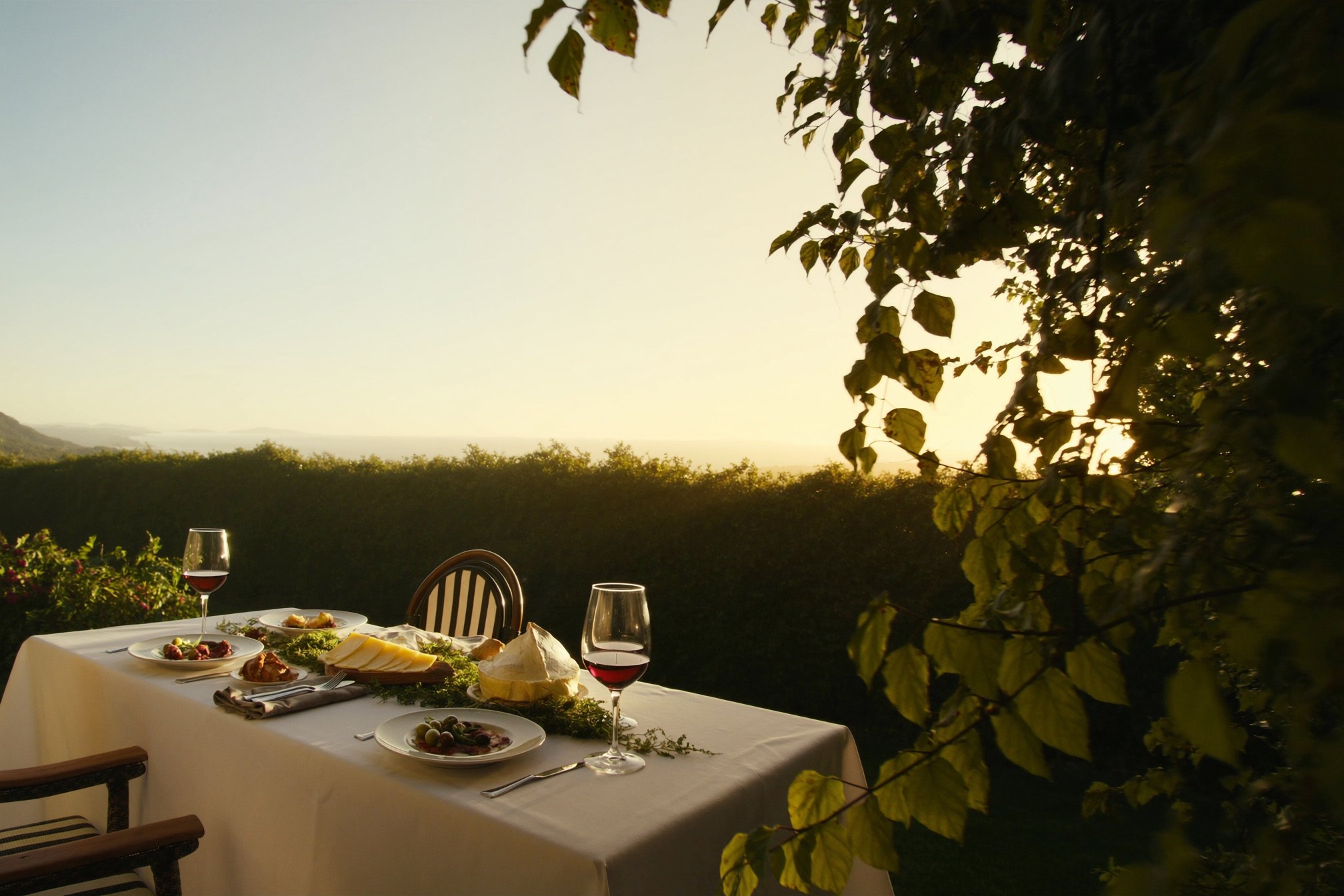
At some point in a long relationship, you stop making reservations unless there's a reason. A birthday. An anniversary. A rough patch you're trying to smooth over with good lighting and a bottle you wouldn't usually order. The calendar starts to run your romantic life, and you don't notice until you're already in it.
Then someone — you, them, whoever blinks first — opens an app on a Tuesday afternoon and books a table for two on Thursday. No occasion. No asterisk. Just: I want to sit across from you somewhere that isn't our kitchen.
That's the one. That's the reservation that matters.
What the Calendar Did to Your Relationship
The occasion-based dinner isn't nothing. But it comes with a context that shapes everything: the expectation that this night is supposed to deliver something. You show up carrying the weight of the occasion. The conversation feels auditioned. The check arrives and you both feel like you either did it right or didn't.
The midweek dinner has none of that freight. It's just Thursday. The restaurant is quieter. The server isn't on a script about specials designed for celebrants. You can order the thing you actually want instead of the thing that matches the moment.
More importantly: you showed up because you wanted to, not because the date on the calendar told you to.
The gesture isn't the dinner. The gesture is the choosing.
The Micro-Behavior Nobody Talks About
Here's what actually happens when someone makes that reservation. They look at an ordinary week and decide it deserves something. They think about their person in the middle of the day — not in a crisis, not because something's wrong — and act on it.
That's not nothing. That's a small, deliberate refusal to let the week be just the week.
In longer relationships, the drift isn't dramatic. It's incremental. The dinners out thin. The nights become efficient. You get good at coexisting, which is its own skill, but coexisting isn't the same as choosing each other on a Wednesday for no good reason.
Where to Go (And Why It Shouldn't Be Complicated)
The place matters less than people think. It doesn't have to be the restaurant you'd take someone's parents to. A counter seat at a neighborhood wine bar works. A corner table somewhere dimly lit enough that you're not performing for the room.
If you're anywhere near wine country: the bar at Valette in Healdsburg on a weeknight is a different experience than a weekend reservation. Less noise. More room between the sentences. Solage in Calistoga has a dining room that feels like it was built for people who aren't trying to prove anything. Indian Springs' restaurant in Calistoga does the same thing with less fuss.
These aren't special-occasion restaurants. That's exactly the point. You can walk into them on a Thursday in October and feel like you made a good call without anyone making a fuss about it.
Yountville in the early evening, when the tourist hour has passed. The Sonoma Plaza at dusk when it's still warm enough to sit outside and the square empties out a little. You know these places. You've just been saving them.
What the Night Actually Looks Like
You text from separate offices at 4 PM: I made us a reservation. Thursday at seven. Wear something you feel good in.
Not: wear something sexy. Not: dress up. Wear something you feel good in — which is a different instruction, and they'll know the difference.
Thursday arrives. You don't cancel because the week got hard. That matters more than people admit: the follow-through on the low-stakes thing.
You get there and order a drink before you look at the menu. There's no agenda for the conversation. You might talk about something real. You might spend twenty minutes on something stupid and laugh more than you have in two weeks. Both are correct.
At some point you'll reach across the table — to pass the bread, to touch their hand, whatever — and it will feel like something without needing to be made into something.
The Reframe: It's Not Romance. It's Attention.
Romance is a mood. Attention is a practice. The spontaneous dinner reservation isn't about being romantic. It's about paying attention to the relationship the same way you'd pay attention to anything else you care about: with some regularity, before it needs it.
You don't wait until your body breaks down to take care of it. You don't wait until the plant is dying to water it. The midweek dinner is the watering — before the drooping, before the drought.
It also changes the texture of the week. Monday through Wednesday carries the knowledge that Thursday is coming. There's something to look forward to that you made, not something that arrived on the calendar by obligation.
One More Thing About What You Order
Order the wine you want, not the one that makes sense given what you spent last month. Order the dish that sounds interesting, not the safe one. This is a weeknight; the stakes are low. Let them be.
The point of keeping it ordinary is that ordinary becomes the baseline. You start to live in a relationship where Tuesday can become Thursday can become an evening with no asterisk, no occasion, no reason except that you're still choosing this.
The anniversary dinner is about the past. The spontaneous Thursday is about right now. Both have a place. But one of them tells your partner something the other can't: I didn't need a reason. You were reason enough.



