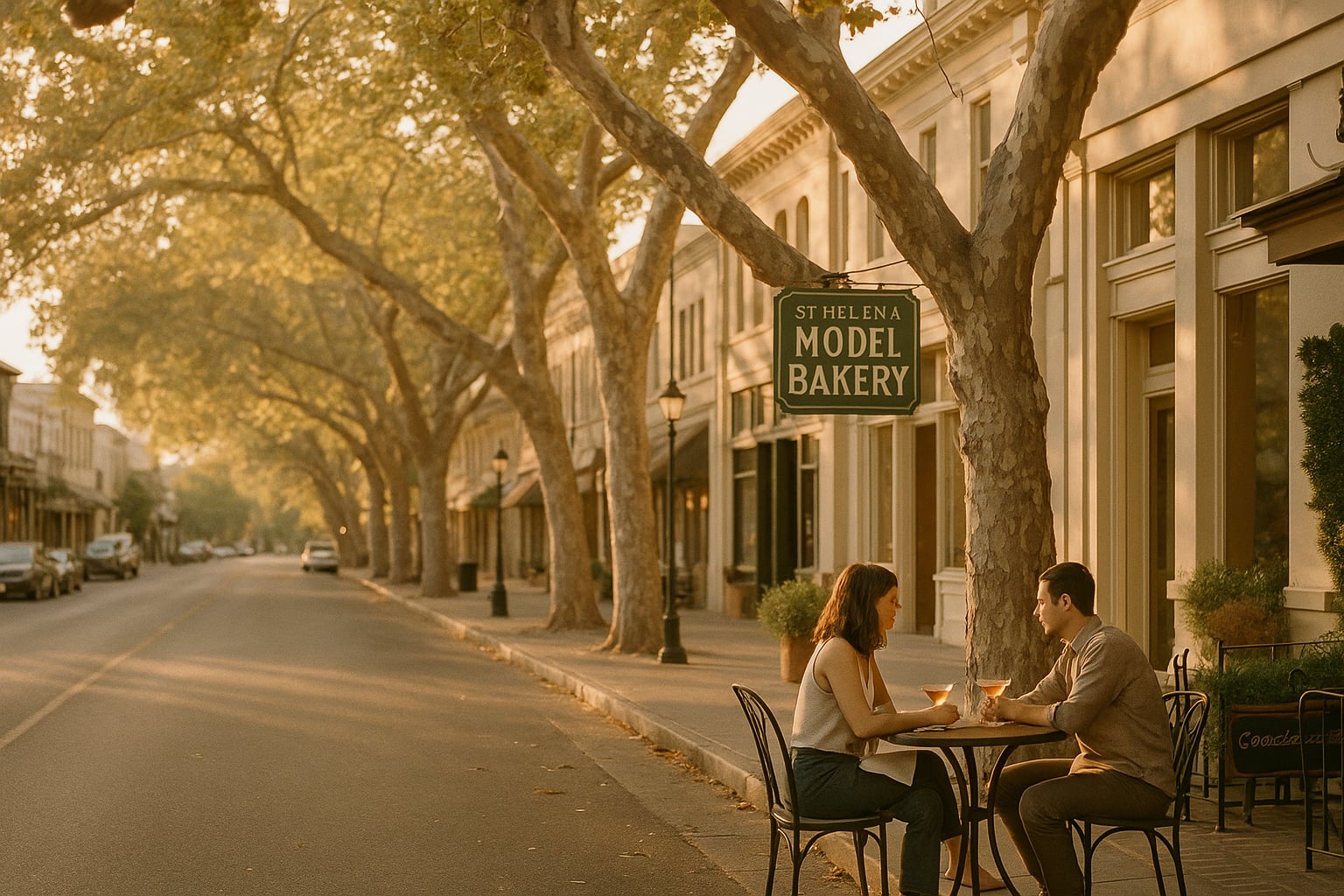
At some point, dinner together became a debrief. Who had the harder day. What's happening Thursday. Whether you remembered to call back whoever it was you were supposed to call back.
Nobody decided this. It just happened, the way a lot of things happen in long relationships: incrementally, then completely.
You're not bored with each other. That's the thing. You're bored with the format.
The Format Is the Problem
The workday recap exists for a reason. It's warm-up. It's reentry. It's two people who've been in separate lives all day gently establishing that they're back in the same room.
But warm-up that never ends isn't intimacy. It's small talk with someone you sleep next to.
The problem isn't that you talk too little. It's that the conversation has a groove worn so deep you can't see over the sides of it anymore.
You know each other's schedules. You don't always know each other's interior weather.
The Question
This is it. Write it down if you want, or just ask it tonight over whatever's on the table:
That's the whole thing. No follow-up required. No structure, no prompt, no topic.
Just: what's actually moving around in your head right now, below the surface of everything functional?
Why It Hits Differently
Most dinner conversation is task-adjacent. Even when it's personal, it's personal about something: a problem, a plan, a reaction to an event. The question above doesn't ask for any of that.
It asks for the unattached thought. The one that floated up in the shower or on the drive home and didn't go anywhere because there was no obvious place for it to go.
People almost always pause before answering. That pause is the point. It means they're actually reaching for something real instead of serving up the first prepackaged response.
The constraint matters too. Doesn't have anything to do with us, work, or anything you need to do. That phrase quietly removes about 80 percent of usual conversational territory. What's left is the person, not their role.
What People Actually Say
Here's a small sample of what this question has surfaced, in real kitchens and on real restaurant patios and once, reportedly, at a corner table at Valette in Healdsburg with a glass of Trousseau and nowhere to be:
Someone said they'd been thinking about a teacher they had at eleven and whether that person knew how much they mattered. Someone said they'd been trying to figure out when they stopped caring about being right in arguments and whether that was growth or just tiredness. Someone said they'd been thinking about water: how it moves, how rivers are one continuous thing from snowpack to delta and nobody really talks about that.
None of those conversations were planned. All of them went somewhere.
The Resistance You'll Feel
Asking it cold can feel awkward. That's fine. Awkward usually means you're near something true.
Some people will deflect the first time. They'll laugh or say they don't know or turn it back on you. That's not failure. That's just the conversational equivalent of blinking at a bright light.
Answer it yourself first if you need to. Not to model the right answer, but because the question only works if both people take it seriously. If you're already reaching, they'll reach too.
It Works Especially Well When Things Have Been Flat
There's a specific kind of relational flatness that isn't conflict and isn't distance. It's just: fine. Everything's fine. You're coexisting at a high level of functional competence and occasionally watching the same show.
This question doesn't fix that. Nothing fixes that in one dinner. But it's a thread you can pull, and sometimes pulling a thread is how you find your way back to the fabric.
It's also good for early dating, when both people are performing a version of themselves that's adjacent to but not quite the real thing. The question makes performance harder to sustain. That's useful information.
One More Thing
You don't have to turn this into a practice or a ritual or a tool you deploy on date nights. That would ruin it.
Just ask it sometime when the conversation has hit its groove and you feel yourself going through the motions. Ask it between the bread and the main. Ask it on a Tuesday when there's nothing special about the night and that's exactly why.
The best conversations happen when neither person is trying to have one.
You already know how to talk to each other. You just forgot you were allowed to talk about anything.